0%

Selective Pallet Racking remains a practical choice for warehouses that need direct access to individual pallets. For global buyers planning a 2026 purchase, the right system depends on more than price. Pallet dimensions, load weights, forklift type, aisle width, and future growth all shape the decision. A rack that looks efficient on a drawing may feel cramped once a reach truck turns between loaded bays.

Warehouse design expert Edward Frazelle has emphasized the importance of matching storage methods to operational needs. A useful way to apply that principle is simple: “Choose the rack for the work, not the brochure.” This is a practical paraphrase, not a verified direct quotation. Buyers should still confirm capacity figures, component compatibility, installation requirements, and inspection arrangements with qualified suppliers. Small details matter. A misplaced beam level or an unclear load sign can affect daily work.

This guide compares Selective Pallet Racking options through the details buyers can check: usable pallet positions, steel and finish specifications, adjustability, supplier documentation, and delivery support. It also considers trade-offs. Selective access is flexible, but it may use more floor space than some denser storage systems. No single layout suits every warehouse. Even experienced buyers can overlook a change in pallet size or forklift fleet. That deserves a second look.
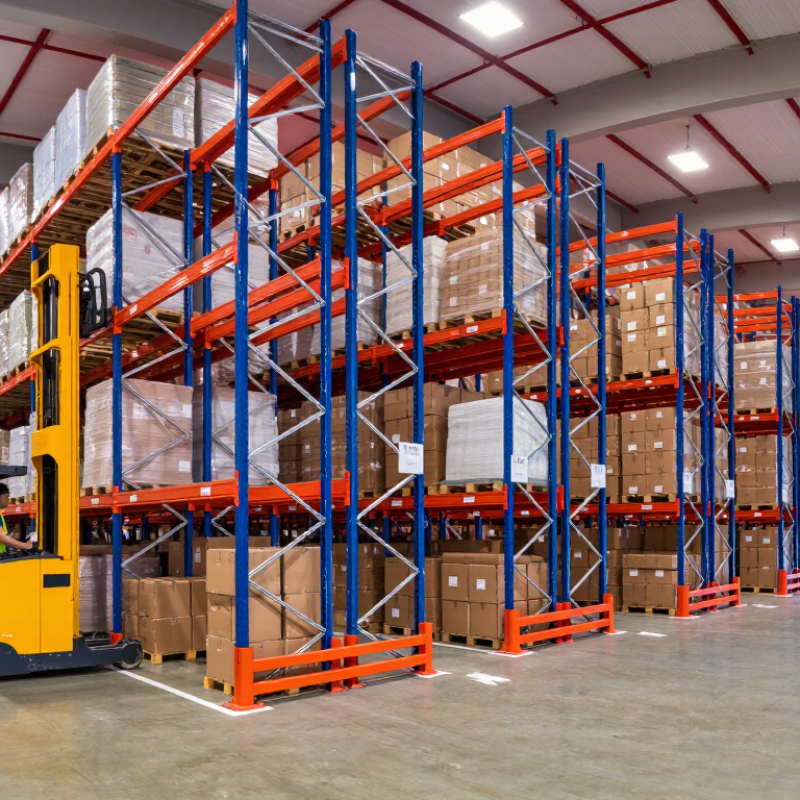
2026 Best Selective Pallet Racking for Global Buyers?

What Is Selective Pallet Racking and How Does It Work?

Selective pallet racking is a warehouse storage system built for direct access to individual pallets. It uses steel upright frames, horizontal beams, and adjustable levels. A forklift enters each aisle and places pallets on the selected beam position. This layout suits warehouses holding many stock-keeping units with moderate quantities. Every pallet remains reachable. That is its main advantage.

The system does not automatically provide first-in, first-out rotation. Warehouse teams must control picking sequences through procedures or software. A layout also depends on pallet dimensions, forklift turning radius, beam capacity, floor condition, and seismic risk. The 2024 MHI Annual Industry Report surveyed more than 1,300 supply-chain professionals; 55% planned to increase technology investment. That finding supports better inventory visibility, but software cannot correct weak rack design. Safety guidance from the UK Health and Safety Executive’s HSG76 report stresses competent design, inspections, and protection against vehicle impact. In practice, calculations are never perfect. A theoretical capacity can still fail when pallets are uneven, damaged, or loaded off-center. Global buyers should verify load plaques, engineering drawings, anchoring details, and local installation requirements. Cheap access may become expensive aisle congestion. Wide aisles improve handling, but reduce storage density. Narrow aisles increase capacity, yet require compatible equipment and disciplined driving. The right choice is therefore a measured balance, not simply the highest number of pallet positions.

2026 Best Selective Pallet Racking for Global Buyers

What Is Selective Pallet Racking and How Does It Work?

Selective pallet racking is a storage system made of upright frames and horizontal beams. Each pallet position can be accessed directly from the aisle, making it suitable for warehouses that handle many SKUs and require high selectivity. The chart shows typical clear aisle-width planning ranges for common forklift types used with selective pallet racking.

Typical planning ranges are shown in metres. Actual aisle requirements depend on the forklift specification, pallet dimensions, rack height, load size, floor conditions and local safety rules.

Which Types of Selective Pallet Racking Suit Different Storage Needs?

Selective pallet racking suits warehouses needing direct access to every pallet. Single-deep racks work well for mixed products, frequent picking, and changing stock levels. They require wider aisles, though. Double-deep racking stores more pallets in the same footprint, but operators must manage deeper inventory carefully. It fits stable products with several pallets per SKU. For high-density storage, drive-in racking reduces aisles and supports last-in, first-out movement. That makes it useful for uniform goods, but unsuitable for fragile or date-sensitive inventory.

Narrow-aisle and very-narrow-aisle systems improve floor utilization. They need suitable trucks, precise floor conditions, and disciplined operator training. Mobile racking can increase capacity further by opening only one working aisle. However, its higher mechanical complexity deserves realistic maintenance planning. MHI’s 2024 Annual Industry Report, based on more than 1,000 supply-chain professionals, identifies labor pressure and inventory visibility as continuing operational challenges. Rack choice should therefore support both space efficiency and reliable handling. A crowded warehouse is not automatically efficient.

Tips: Measure pallet dimensions, load weights, SKU turnover, and clear height before selecting a system. Keep fast-moving goods near dispatch lanes. Use beam safety locks, rack protection, and documented inspections. Review local engineering requirements with a qualified specialist. I would avoid choosing double-deep storage only because it looks denser. Retrieval delays may quietly erase the expected savings. Data from the report should guide decisions, but site experience still matters.

How Should Global Buyers Evaluate Selective Pallet Racking in 2026?

Global buyers should evaluate selective pallet racking by risk, not by price alone. The 2024 MHI Annual Industry Report found that 83% of supply chain professionals expect technology investment to increase. That pressure makes adaptable storage more valuable. Buyers should measure pallet dimensions, load weights, forklift turning space, and future SKU changes before requesting quotations. A rack that fits today may restrict tomorrow’s operation.

Check the engineering evidence carefully. Ask for load tables, beam-deflection limits, upright calculations, anchoring details, coating specifications, and inspection procedures. EN 15635 provides practical guidance for rack use and inspection, while local seismic and fire requirements may change the design. In earthquake-prone regions, anchoring and frame bracing deserve special attention. In humid facilities, coating quality matters. Small corrosion marks can become expensive problems.

Tips: Compare total operating cost, not only steel weight. Request a sample bay or detailed 3D drawing. Confirm replacement parts, inspection training, and delivery capacity. The World Bank’s 2023 Logistics Performance Index shows wide differences in logistics reliability between countries. Therefore, buyers should examine local installation skills and spare-part access. One weakness remains easy to miss: a technically strong rack can fail operationally when workers receive unclear loading rules. Recheck assumptions with warehouse staff before approval.

What Safety Standards and Installation Factors Should Buyers Consider?

2026 Best Selective Pallet Racking for Global Buyers?

Safety begins with the standard, not the catalogue image. Buyers should check whether the design follows EN 15635, ANSI/RMI MH16.1, AS 4084, or the applicable local code. Requirements differ by country. A qualified structural engineer should verify load capacity, beam deflection, seismic risk, and connection details. Never rely only on a supplier’s stated pallet capacity.

Installation conditions matter just as much. Inspect the concrete slab for levelness, thickness, cracks, and load-bearing strength. Anchors must suit the slab and local engineering requirements. Leave enough aisle space for the actual forklift, not the smallest model in a brochure. Protect exposed uprights near turning points. Add clear load plaques at each rack row. Small labels can prevent serious mistakes.

Experienced installers use calibrated tools, approved drawings, and controlled torque checks. They also inspect frame plumbness before handover. Warehouse staff need practical training on loading, impact reporting, and damaged components. A monthly inspection is useful, but busy sites may need more frequent checks. That detail is easy to underestimate.

One honest concern remains: real warehouses rarely stay unchanged. Pallet weights, forklift routes, and storage heights often shift after installation. A rack system that was safe last year may need reassessment today. Buyers should request inspection records, installation credentials, engineering calculations, and replacement-part guidance. Local review is still essential, even when the design looks technically complete.

2026 Best Selective Pallet Racking for Global Buyers? — Safety Standards and Installation Factors to Consider
Decision Area Relevant Standard or Requirement What Buyers Should Verify Installation and Operating Check
Structural design and rated capacity Use the applicable national or regional racking design standard. Examples include EN 15512 for adjustable pallet racking in Europe, ANSI MH16.1 for applicable U.S. projects, and AS 4084:2023 in Australia. Request project-specific design documentation showing the intended configuration, design assumptions, component specifications, and rated beam and frame capacities. Confirm the edition and local adoption required for the project. Do not exceed posted load limits or change beam levels, frame layouts, or bracing without approval from a qualified rack designer or engineer.
Rack configuration and clearances EN 15620 addresses tolerances, deformations, and clearances for adjustable pallet racking. Applicable local codes and project specifications may add requirements. Provide accurate pallet dimensions and weights, handling-equipment details, aisle widths, building dimensions, and required operating clearances before final design. Check that installed aisles, flue spaces, and clearances match the approved layout and suit the actual forklift or handling equipment.
Equipment specification and layout EN 15629 covers specification of storage equipment. The project specification should also identify operating conditions and interfaces with the building and material-handling system. Confirm pallet type and condition, maximum unit load, storage heights, load placement, environmental conditions, and any special risks such as seismic activity or cold-store operation. Install only the specified components and configuration. Keep drawings and component identification available for future inspection and maintenance.
Use, inspection, and maintenance EN 15635 provides guidance on the use and maintenance of steel static storage systems. In the United States, OSHA 29 CFR 1910.176(b) requires stored material to be stable and secure against sliding or collapse. Establish written operating rules, staff training, damage reporting, inspection responsibilities, and a process for restricting access to unsafe areas. Inspect regularly and after significant impacts or changes. Record damage and actions taken; have a competent person assess defects and arrange repairs or replacement as needed.
Floor slab and foundations Slab suitability and anchorage must be checked against the rack design, site conditions, and applicable building requirements. There is no single slab capacity suitable for every rack installation. Obtain reliable information about slab thickness, concrete strength, reinforcement, joints, condition, and any under-slab services. Ask the responsible engineer to confirm the floor can support the designed loads. Position baseplates as designed, install the specified anchors using the approved method, and verify anchor installation and concrete conditions before loading.
Anchors, bracing, and connections Connection and anchorage requirements depend on the engineered rack design and applicable local regulations. Confirm anchor type, size, embedment, spacing, frame bracing, beam connectors, and any required locking devices from approved drawings and installation instructions. Do not omit, substitute, or alter structural components. Resolve conflicts between drawings, site conditions, and supplied parts before the rack is loaded.
Impact protection and site hazards Protection requirements are determined by the risk assessment, rack design, traffic routes, and local rules; impact protection does not replace sound rack design or safe operation. Assess forklift routes, end-of-aisle exposure, columns, pedestrian crossings, fire protection, lighting, and emergency access. Install specified guards without obstructing anchors, aisles, sprinklers, or egress. Repair rack damage promptly and reassess protection where impacts recur.
Load notices and traceability Capacity communication and workplace safety duties vary by jurisdiction. The installed system should be operated within its approved design limits. Require durable load notices stating the approved configuration and applicable load limits, in a language understood by site personnel. Display notices where operators can see them. Update drawings and notices after approved changes, and remove obsolete capacity information.
Supplier and installer documentation Applicable conformity, building, workplace, and product requirements depend on the destination country and project scope. Check technical submittals, design calculations where required, installation instructions, component details, inspection guidance, warranties, and evidence of installer competence. Request as-built drawings and a documented handover inspection. Do not assume a generic certificate proves that the specific installed layout is compliant.
Global project compliance European EN standards, U.S. ANSI/RMI and OSHA requirements, Australian standards, and other national rules are not automatically interchangeable. Identify the project location, authority having jurisdiction, adopted standard editions, seismic and building requirements, and any customer or insurer specifications before procurement. Have a locally qualified professional review the design and installation. Verify current editions and local requirements at the time of project approval.

How Can Buyers Compare Suppliers, Costs, and Long-Term Value?

Global buyers should compare selective pallet racking by total cost, not the lowest quotation. MHI’s 2024 Annual Industry Report found that 83% of supply chain professionals expect technology and innovation to create competitive advantage. That pressure also affects storage design. A supplier should provide load calculations, seismic assumptions, beam deflection limits, and clear installation drawings. Ask for evidence from comparable warehouses. Photos help, but inspection records matter more.

Request three comparable quotations. Separate steel, transport, customs, installation, protection, and future changes. A cheap frame can become expensive when replacement beams arrive slowly. Check steel grade, coating quality, warranty limits, and spare-part availability in your region. EN 15635 and ANSI/RMI guidance can support inspection and maintenance decisions, but local engineering approval may still be necessary. Confirm this before signing.

Long-term value depends on usable capacity. Measure clear aisle width, forklift turning space, pallet dimensions, and sprinkler clearance. MHI’s report also identified workforce shortages as a major supply-chain challenge, making simple, reliable layouts increasingly valuable. I have seen buyers calculate pallet positions perfectly, then lose capacity around columns and fire exits. That mistake is common. It deserves a second review. Suppliers should model expansion, relocation, and damaged-component replacement. A five-year cost sheet should include inspections and downtime, not only purchase price.

FAQS

When is single-deep selective pallet racking a suitable choice?

It suits warehouses needing direct access to every pallet. Mixed products, frequent picking, and changing stock levels fit well. It needs wider aisles. That space cost can be easy to underestimate.

What products work well with double-deep pallet racking?

Double-deep storage suits stable products with several pallets per item. It stores more pallets within a similar footprint. However, deeper inventory requires careful control. Retrieval delays may cancel the expected savings.

When should a warehouse consider drive-in racking?

Drive-in racking supports high-density storage and last-in, first-out movement. It suits uniform goods with predictable handling patterns. It is less suitable for fragile or date-sensitive inventory. Dense is not always efficient.

How can narrow-aisle systems improve warehouse space?

Narrow-aisle and very-narrow-aisle systems reduce wasted floor space. They require suitable trucks and precise floor conditions. Operators also need disciplined training. A small steering mistake can cause impact damage.

What are the practical benefits and concerns of mobile racking?

Mobile racking can increase capacity by opening one working aisle. It may fit warehouses with limited floor area. Its mechanical complexity requires realistic maintenance planning. More capacity means more responsibility.

What information should buyers measure before choosing a rack system?

Measure pallet length, width, height, and load weight. Record SKU turnover and available clear height. Check forklift dimensions and actual turning space. Measure twice, perhaps.

Which installation details affect rack safety?

Inspect the concrete slab for levelness, thickness, cracks, and strength. Choose anchors suited to the slab and local engineering requirements. Protect uprights near turning points. Add clear load plaques to every rack row.

What inspections and training should warehouse staff follow?

Staff should learn safe loading and damaged-component reporting. Inspect frame plumbness, connections, beams, and protection barriers. Monthly checks may be insufficient for busy sites. Routes and pallet weights change. Reassessment matters.

Conclusion

Selective Pallet Racking is a versatile warehouse storage system that provides direct access to individual pallet loads, making it suitable for operations handling a wide range of products. Different configurations can support varying aisle widths, storage capacities, and throughput requirements, so buyers should match the system to their inventory, equipment, facility layout, and plans for future growth. In 2026, global buyers can evaluate options by comparing usable storage density, load capacity, adaptability, and compatibility with existing handling equipment.

Safety and long-term performance depend on sound system design, clear load information, suitable installation, and regular inspections by qualified personnel. Buyers should also consider local requirements, delivery and installation arrangements, warranty coverage, replacement components, and supplier support. Comparing the full costs—not only the initial purchase price—can reveal which solution offers the best value over its working life. A careful assessment of operational needs, safety practices, and ongoing service helps buyers select a reliable racking system for their warehouse.

Ethan

Ethan

Ethan is a dedicated marketing professional with a deep understanding of the company’s products, customers, and industry landscape. With a strong combination of strategic insight, market awareness, and practical communication skills, he helps present complex product information in a clear, useful,......