0%

Global buyers entering the 2026 warehouse market need more than a familiar product name. Standard Pallet Racking remains a practical foundation for warehouses handling cartons, pallets, and mixed inventory. Its value depends on load weight, pallet dimensions, aisle width, ceiling height, forklift movement, and future expansion. A rack that fits today may restrict tomorrow’s operation.

Kenneth B. Ackerman, a respected warehouse-management author, has stated, “Storage decisions must serve the entire flow of goods, not just the available floor space.” That principle still matters. A 2.7-meter aisle may appear efficient on a drawing, yet feel dangerously tight beside a loaded reach truck. Beam levels should match real pallet heights, not idealized measurements. Uprights need protection near turning points. Small details become expensive problems.

The leading Standard Pallet Racking types for global buyers include selective, drive-in, double-deep, push-back, pallet flow, and narrow-aisle systems. Each design balances accessibility, density, equipment needs, and budget differently. Selective racking offers direct access to every pallet, while drive-in systems sacrifice selectivity for higher storage density. Pallet flow can support organized stock rotation, but it demands careful installation and maintenance.

No single type wins everywhere. That is the uncomfortable truth. Buyers may also underestimate local floor conditions, seismic exposure, corrosion, and operator training. Reliable sourcing requires verified specifications, documented testing, experienced installation, and clear after-sales support. This guide examines the main 2026 options through practical warehouse conditions, not showroom photographs. Mistakes remain possible, but informed comparisons can reduce them.
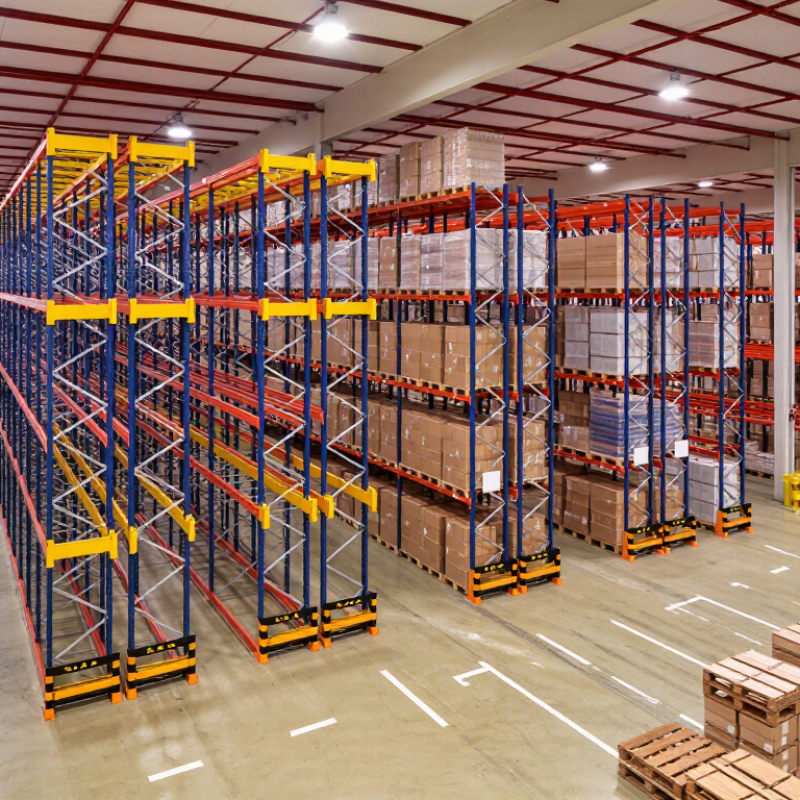
2026 Top Standard Pallet Racking Types for Global Buyers

What Standard Pallet Racking Is and Why Global Buyers Use It

Standard pallet racking is a modular storage system built from upright frames, horizontal beams, and pallet supports. It usually serves common pallet sizes, making procurement easier across multiple countries. Selective racking offers direct access to every pallet. Drive-in racking stores more pallets in less aisle space. Double-deep and pallet-flow systems suit higher volume operations, but they require stricter loading discipline.

Global buyers use standard systems because replacement parts, inspections, and installation skills are easier to source. MHI’s 2024 Annual Industry Report found that 76% of supply chain professionals expect talent shortages to affect operations. Simple rack layouts can reduce training pressure, although “simple” does not mean risk-free. Local pallet dimensions, seismic conditions, fire rules, and forklift clearances still require technical review. EN 15635 and ANSI/RMI guidance can support that review, but neither replaces local engineering advice.

Tips: Measure the actual pallet first. Check load labels at every bay. Keep damaged beams out of service. Ask suppliers for structural calculations, inspection procedures, and corrosion details. Grand View Research identifies warehouse racking as a growing global market, yet faster growth can encourage rushed purchasing. A cheaper rack may become expensive after poor installation, unusual pallets, or frequent product changes. Leave room for adjustment; warehouses rarely stay unchanged.

How to Classify the Main Types of Standard Pallet Racking

2026 Top Standard Pallet Racking Types for Global Buyers

Standard pallet racking is best classified by access, storage density, and inventory rotation. Selective pallet racking offers direct access to every pallet position. It suits warehouses with many stock keeping units and frequent picking. Its upright frames, horizontal beams, and adjustable levels support flexible layouts. However, it uses more aisle space than dense systems.

Measure twice.

Drive-in racking stores pallets on continuous rails inside deep lanes. Forklifts enter the structure, so it provides high density for similar products.

Double-deep racking places one pallet behind another, reducing aisle numbers but requiring compatible handling equipment.

Push-back racking uses nested carts or rails. It supports several pallets per lane and works well for medium-turnover goods.

Pallet flow racking uses inclined rollers and gravity, making loading and picking occur from opposite sides. This design supports first-in, first-out rotation when installed correctly.

A practical classification should also consider pallet dimensions, load weight, forklift reach, ceiling height, and fire protection requirements. Warehouse experience shows that density alone can produce poor results. A dense lane may slow replenishment or hide damaged pallets. Engineers should verify beam capacity, floor loading, rack protection, and local safety requirements before installation. Actual operating habits matter. A plan that looks efficient on paper may feel awkward during a busy shift. Room for inspection is often underestimated.

How Each Racking Type Works in Different Warehouse Operations

2026 Top Standard Pallet Racking Types for Global Buyers

How Each Racking Type Works in Different Warehouse Operations

Selective pallet racking suits warehouses handling many stock-keeping units with frequent access. Forklifts reach every pallet directly, but aisle space reduces storage density. It works well for mixed cartons, regional distribution, and changing inventory.

The MHI 2024 Annual Industry Report states that 55% of respondents planned to increase supply chain technology investment. That pressure makes adaptable layouts increasingly valuable.

Drive-in racking stores pallets several positions deep on guided rails. It suits large quantities of identical products with limited product rotation. Push-back racking improves selectivity because each lane can hold different pallets. Pallet-flow racking uses gravity rollers, supporting first-in, first-out movement for food, beverage, and dated goods.

The 2024 Warehousing Vision Study from Zebra Technologies reported that 58% of warehouse decision-makers planned modernization investments by 2028. Racking choices should support that future, not block it.

Double-deep racking increases density, but it needs specialized reach equipment and accurate inventory control. Cantilever racking handles long materials, such as pipes, timber, and profiles, better than standard beams.

In practice, the cheapest system is not always the safest or fastest. Aisle width, pallet condition, floor capacity, fire protection, and local engineering rules must be checked together. A perfect layout rarely exists.

My practical concern is simple: buyers often calculate pallet positions first and operator movements later. That decision can create hidden costs.

How to Compare Load Capacity, Space Use, and Accessibility

For global buyers, standard pallet racking should be compared by operating conditions, not appearance. Selective racking offers direct access to every pallet and suits many SKUs. Double-deep systems improve cube use, but forklifts need suitable reach and tighter inventory control. Drive-in racking uses fewer aisles, while pallet-flow designs support first-in, first-out movement.

Capacity must be verified at the bay level. Check pallet weight, beam span, upright height, floor condition, and impact protection. ANSI MH16.1 provides design guidance for steel pallet racks, while OSHA 1910.176 requires stable storage and clear handling areas in U.S. workplaces. Do not treat a catalogue rating as universal. Actual capacity can change after a beam replacement or floor settlement.

Space use needs measured proof. The 2024 MHI Annual Industry Report identified labor shortages as a continuing supply-chain challenge, making fast, safe access more valuable. A 2024 industrial property report from CBRE also recorded persistent pressure on warehouse availability, which increases the value of vertical storage. Still, maximum density is not always efficient. A narrow aisle may slow picking, create turning risks, or require specialized trucks. I would map one real aisle with a loaded forklift before approving the layout. That test can expose uncomfortable assumptions. Keep at least one practical escape and inspection route. Poorly maintained racks waste more space than expected.

How to Select the Right Pallet Racking System for Global Requirements

Selecting the right pallet racking system starts with your warehouse reality, not a catalog image. Selective racking suits mixed stock, frequent access, and forklift movement. Drive-in racking increases density for uniform products with limited rotation. Double-deep layouts save floor space, but they require suitable forklifts and stronger inventory planning.

Measure clear height, aisle width, pallet dimensions, and maximum load weight before choosing a frame. Check floor capacity and local seismic conditions with a qualified engineer. Global projects may also require specific safety labels, beam locks, column guards, and inspection procedures. These details often decide whether a system performs reliably after installation. A supplier should provide load calculations, drawings, material specifications, and installation guidance. Ask for evidence, not promises.

Tips: Leave space for sprinklers, lighting, and maintenance access. Confirm forklift turning radius with a real vehicle. Recheck pallet quality, because damaged pallets can change the risk profile. One mistake is assuming every “standard” pallet has identical dimensions. They do not. I would also test the proposed layout with peak-season inventory, not average stock. A practical trial can reveal blocked aisles, hidden picking delays, and uncomfortable operator movements before steel is ordered.

FAQS

What is standard pallet racking?

It is a modular system with upright frames, horizontal beams, and pallet supports. It stores common pallet sizes. Parts are usually easier to replace across countries.

Why do global buyers choose standard pallet racking?

Replacement parts, inspections, and installation skills are often easier to source. Simple layouts can reduce training pressure. Simple does not mean risk-free.

Which racking type provides direct access to every pallet?

Selective racking provides direct access to each pallet position. It suits warehouses with many product types and frequent picking. The trade-off is wider aisles.

When is drive-in racking suitable?

Drive-in racking suits large quantities of similar products. Forklifts enter deep lanes on guided rails. It saves space but reduces selectivity.

How does pallet-flow racking support inventory rotation?

Inclined rollers move pallets by gravity from loading to picking sides. This can support first-in, first-out movement. Correct installation matters.

What should buyers measure before selecting a rack?

Measure the actual pallet, including its length, width, and load weight. Check forklift reach, aisle width, ceiling height, and floor capacity. Measure twice.

Can higher storage density always improve warehouse performance?

No. Dense storage may reduce aisles but slow replenishment and inspection. A hidden damaged pallet can create delays. More positions are not always better.

What safety details require technical review?

Review beam capacity, floor loading, rack protection, fire systems, and local conditions. Seismic conditions and forklift clearances may change the design. Local engineering advice remains important.

What documents should buyers request from suppliers?

Request structural calculations, load labels, inspection procedures, and corrosion details. Keep damaged beams out of service. Labels should stay visible.

How can buyers avoid rushed purchasing decisions?

Leave room for changing products, pallet sizes, and operating habits. A low purchase price may become expensive after poor installation. The cheapest layout may disappoint.

Conclusion

Standard Pallet Racking is a practical storage solution designed to organize palletized goods, improve warehouse visibility, and support efficient handling in facilities of different sizes. Global buyers commonly use it because its modular structure can adapt to various building layouts, inventory volumes, and operational goals. The main types include selective pallet racking, drive-in racking, double-deep racking, push-back racking, and pallet flow racking. Each system offers a different balance between access, storage density, product rotation, and handling efficiency.

Choosing the right system requires a careful comparison of load capacity, available floor and vertical space, forklift access, inventory turnover, and safety requirements. Selective racking is suitable when direct access to every pallet is important, while high-density systems are more effective for large quantities of similar products. Buyers should also consider pallet dimensions, warehouse conditions, expansion plans, installation standards, and long-term operating costs. A well-matched Standard Pallet Racking system can improve space utilization, inventory control, workflow consistency, and overall warehouse performance.

Elara

Elara

Elara is a dedicated marketing professional with a deep understanding of the company’s products, customers, and industry landscape. Through thoughtful research and clear communication, Elara regularly contributes expert articles to the company website, helping readers better understand product......