Choosing Heavy Duty Pallet Racking begins with understanding your warehouse, not browsing attractive product photos. Every decision should reflect pallet weight, load dimensions, forklift movement, ceiling height, and available floor space. A rack that looks strong may still be unsuitable for uneven loads or frequent impact. Small details matter.
In practical warehouse projects, accurate measurements often prevent expensive redesigns. Record the heaviest pallet, the average pallet, and unusual loads separately. Check beam capacity, upright strength, aisle width, floor condition, and required clearance. Confirm every rating with the manufacturer or a qualified storage-system engineer. Load labels should remain visible from operating aisles. Damaged frames, loose anchors, and bent beams require immediate attention.
Heavy Duty Pallet Racking should support safe, efficient handling without creating hidden weaknesses. Selective racking may suit varied inventory, while drive-in or double-deep systems can improve density. However, higher density may reduce access and increase handling risks. More storage is not always better.
A reliable plan also considers future growth. Today’s pallet profile may change next year. Review forklift turning paths with real equipment, not only drawings. Test the layout during busy periods when staging areas become crowded. That uncomfortable review often reveals the real problem. Professional installation, documented inspections, and trained operators strengthen long-term reliability. Still, no rack system is maintenance-free. Conditions change, and assumptions must be checked.
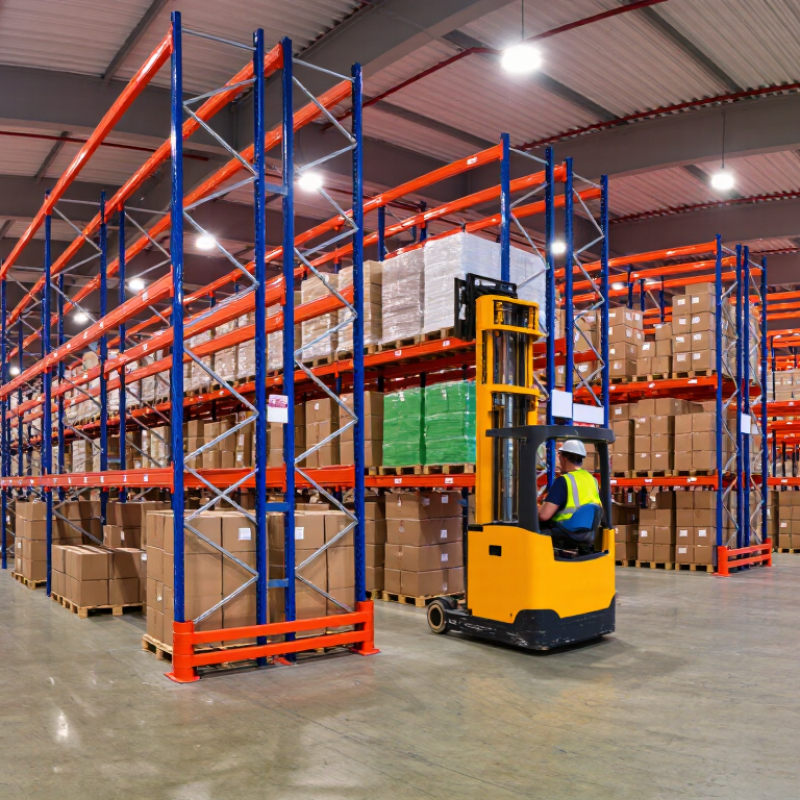
Choosing heavy duty pallet racking starts with the goods, not the rack itself. Walk through daily operations and record pallet dimensions, weights, and turnover rates. A standard pallet may not fit every load. Measure length, width, height, and any overhang. Note damaged pallets too. They often need wider support and safer handling space. Ask how many pallets must remain accessible at once. Access comes first. Storage density matters, but access speed matters more.
Calculate the heaviest realistic pallet load, not the average. Include the pallet, packaging, and uneven weight distribution. A 1,000-kilogram load can behave differently when its center of gravity shifts. Check forklift aisle width, lift height, slab capacity, and clear ceiling height before selecting beam levels. Rack capacity depends on beam length, upright spacing, and the number of loaded levels. Request documented load tables and installation guidance from a qualified supplier. Do not rely on a label alone. It may describe a different configuration.
Leave room for growth, but avoid buying empty steel. A practical plan may reserve 10 to 15 percent for seasonal volume changes. Separate fast-moving products from slow stock, and keep fragile loads in safer positions. Mark each bay with its permitted load and inspect frames, beams, anchors, and protectors regularly. During one warehouse review, a small upright dent revealed repeated forklift contact. Measure twice. The rack was not the only problem; aisle behavior needed attention. Recheck measurements after operations begin, because real pallets rarely match the spreadsheet.
Define storage needs and pallet load requirements before selecting rack components. The chart shows practical planning loads for common warehouse storage profiles; actual beam and upright capacities must be verified against the rack layout, pallet dimensions, load distribution, and local safety requirements.
Planning rule: select a rated rack capacity above the maximum combined pallet load per beam level, while maintaining adequate aisle clearance, load stability, and safe working limits.
Heavy-duty pallet racking starts with structural capacity, not appearance. Select selective racking for varied stock and direct access. Choose drive-in systems for dense, uniform pallets. Cantilever racks suit long loads such as pipes or timber. Mobile systems can increase storage density, but they require stronger floors and controlled movement.
Check upright frames, beams, bracing, anchors, and floor strength as one system. Rack Manufacturers Institute guidance requires load ratings to reflect beam spans, connection details, and frame height. Never rely on a supplier’s generic capacity chart. Record pallet weight, dimensions, load placement, forklift impact risk, and seismic conditions. MHI’s 2024 Annual Industry Report found that 55% of supply-chain professionals planned to increase technology investment. That pressure may encourage higher density, but density alone can create unsafe loading patterns. A perfect layout on paper can fail during a rushed shift.
Tips: Measure real pallets, not ideal ones. Keep heavier loads near the floor. Use load plaques and inspect damaged uprights immediately. OSHA recommends regular workplace inspections, while RMI guidance supports documented rack inspections by a qualified person. Also review beam deflection and pallet quality. A broken board can shift weight unexpectedly. That detail is easy to miss. Reassess capacity after changing forklifts, rack levels, or pallet types. Even experienced teams occasionally underestimate dynamic loads.
| Racking Type | Best-Fit Warehouse Conditions | Storage Method | Indicative Rated Load per Beam Pair* | Typical Selectivity | Material and Structural Features | Important Capacity Checks |
|---|---|---|---|---|---|---|
| Selective Pallet Racking | Warehouses with many stock-keeping units, frequent order picking, and direct access requirements. | One pallet position deep on each side of the aisle. | 2,000–5,000 lb (900–2,270 kg) |
Very high Every pallet is directly accessible. |
Cold-formed or hot-rolled steel uprights with bolted or clipped horizontal beams. Wire decking or pallet supports may be added. | Beam span, pallet width, load distribution, upright-frame capacity, base-plate anchorage, and aisle impact protection. |
| Double-Deep Racking | Operations holding larger quantities of fewer stock-keeping units where increased density is more important than maximum selectivity. | Two pallet positions deep, normally accessed with a reach truck or specialized handling equipment. | 2,000–5,000 lb (900–2,270 kg) |
Medium Front pallets may need to be moved to reach rear pallets. |
Uses deep-reach frames, extended beams, and reinforced frame connections. Rack alignment is critical because rear pallet positions are less visible. | Reach-truck geometry, rear-load clearance, frame deflection, back-to-back spacing, seismic forces, and pallet overhang. |
| Drive-In Racking | High-volume storage of similar products with low turnover and limited stock-keeping unit variety. | Pallets are stored on continuous rails inside a deep lane using a last-in, first-out arrangement. | 1,500–4,000 lb (680–1,815 kg) per pallet position |
Low Access is concentrated at the lane face. |
Heavy steel uprights, horizontal rails, guide rails, and bracing form a self-supporting lane structure. Rails must be secured against impact and displacement. | Rail capacity, lane depth, forklift clearance, pallet quality, impact loads, entry protection, and load sequence. |
| Push-Back Racking | High-density storage where several pallets of the same or related products are needed and individual lane access is desirable. | Pallets rest on nested carts or rollers and move toward the aisle when the front pallet is removed. | 1,500–4,000 lb (680–1,815 kg) per pallet position |
Medium Each lane can normally be accessed without entering the rack. |
Steel frames and beams support inclined cart rails or roller tracks. Moving components require regular inspection and cleaning. | Cart and rail rating, lane slope, pallet dimensions, braking performance, impact loads, and maximum lane depth. |
| Pallet Flow Racking | First-in, first-out operations handling food, beverages, pharmaceuticals, or other date-sensitive goods. | Pallets enter from the loading side and travel on gravity rollers toward the picking side. | 1,500–3,000 lb (680–1,360 kg) per pallet position |
Medium to high Best suited to date-controlled inventory. |
Structural steel frames support roller lanes, speed controllers, separators, and pallet stops. Components must be matched to pallet type and load weight. | Roller load rating, pallet bottom-board design, lane slope, speed control, pallet stop force, and maintenance access. |
| Narrow-Aisle Racking | Facilities with high ceiling height and expensive floor space where storage positions must be maximized. | Usually selective or double-deep rack served by turret trucks or other guided equipment. | 2,000–5,000 lb (900–2,270 kg) |
High Access depends on the selected rack configuration. |
Standard steel rack components may be combined with rail guidance, wire guidance, or aisle-control systems. Higher structures require more detailed engineering. | Lift height, mast clearance, floor flatness, rail or wire guidance, rack plumbness, seismic design, and emergency egress. |
| Mobile Pallet Racking | Cold storage, archival environments, or facilities where maximum storage density is required and access frequency is moderate. | Rack rows are mounted on powered or mechanically assisted bases that open only the required aisle. | 2,000–5,000 lb (900–2,270 kg) |
High when open Only one or a limited number of aisles may be available at a time. |
Conventional steel rack frames are mounted on mobile carriages with rails, drive systems, controls, and safety interlocks. | Floor slab thickness, rail loading, carriage capacity, emergency stops, earthquake restraint, row length, and fire-protection clearances. |
| Assessment Dimension | Typical Planning Data | Why It Matters | Recommended Acceptance Check |
|---|---|---|---|
| Unit Load | Record the lightest, average, and heaviest pallet loads. Include the pallet, packaging, and any load variation. | Rack capacity is governed by the design load, not only by the average load. | Use the heaviest expected operating load and define whether the load is uniformly distributed or concentrated. |
| Beam Capacity | Common heavy-duty beam ratings are approximately 2,000–5,000 lb (900–2,270 kg) per beam pair, depending on span and section. | Longer spans generally reduce beam capacity and increase deflection. | Confirm beam rating for the exact span, connector type, load placement, and number of pallet positions. |
| Upright-Frame Capacity | Must be calculated from frame height, bay width, beam elevations, bracing, base conditions, and accumulated vertical loads. | Uprights carry the combined loads from multiple beam levels and may be affected by bending or impact. | Request an engineered frame-capacity calculation for the complete rack configuration. |
| Steel Material and Finish | Common options include painted or powder-coated structural steel for dry interiors and galvanized components for environments with increased moisture exposure. | Material protection affects corrosion resistance, service life, and inspection requirements. | Match the coating system to humidity, temperature, chemicals, wash-down procedures, and cold-storage conditions. |
| Floor Slab | Evaluate slab thickness, concrete strength, joints, levelness, cracking, and allowable point loads. | Anchors and mobile bases transfer rack forces directly to the floor. | Have the slab and anchor design reviewed before installation, especially for tall racks or mobile systems. |
| Seismic and Wind Conditions | Consider local seismic design category, building movement, rack height, and exposure to wind where applicable. | Lateral forces can govern bracing, anchorage, frame design, and connection requirements. | Use local structural requirements and obtain project-specific engineering approval. |
| Pallet Compatibility | Check pallet length, width, bottom-board layout, stiffness, condition, and allowable overhang. | Damaged or incompatible pallets can overload beams, rollers, rails, and pallet supports. | Perform a fit test and specify pallet support bars or decking where the pallet design requires additional support. |
| Forklift and Aisle Requirements | Typical aisle planning depends on the truck type; counterbalance trucks often require wider aisles than reach or turret trucks. | Insufficient clearance increases collision risk and reduces practical throughput. | Use the equipment manufacturer’s turning radius, load-center data, lift height, and required operating clearance. |
| Protection and Inspection | Use column guards, end-of-aisle barriers, back guards, row spacers, load plaques, and visible damage reporting procedures as required. | Forklift impact is a major cause of rack damage and capacity reduction. | Inspect regularly, isolate damaged areas, and replace or repair components using approved procedures. |
Heavy-duty pallet racking should fit the building and the handling equipment, not just the pallet.
Measure clear height, column spacing, floor flatness, sprinkler clearance, and emergency access before choosing bay dimensions. A practical survey should include the largest load, its overhang, and the forklift’s actual turning radius. Catalog dimensions often look precise. Real warehouses rarely are.
The WERC 2024 DC Measures report places median order-picking accuracy at about 99.5%. That level demands stable locations, readable labels, and aisles that support controlled movement.
A narrow aisle may increase storage density, but it can slow turns and raise impact risk. OSHA 29 CFR 1910.176(b) also requires safe clearance for material handling and movement. Leave working space around rack ends and pedestrian routes. Measure twice.
MHI’s 2024 Annual Industry Report shows continued investment in warehouse automation and digital tools. This matters when selecting racks. Automated equipment may need straighter aisles, tighter tolerances, and consistent beam levels than conventional forklifts.
I have seen layouts fail because designers used the truck’s published width, ignoring attachments and pallet deformation. That mistake is easy to repeat.
Validate the proposed rack grid with a loaded-equipment trial, then review the design with a qualified rack engineer.
Heavy duty pallet racking should be selected around safety, installation quality, and future growth. Check the system against recognized safety standards and local warehouse requirements. Ask for load calculations, material specifications, and inspection records. Every beam level needs a clearly visible load plaque. Never estimate capacity by appearance. Steel can look strong and still be overloaded.
Installation quality matters as much as the rack design. The floor should be checked for levelness, strength, and damage before assembly. Uprights must be aligned, anchored correctly, and protected from forklift impacts. Installers should verify bolt torque and aisle clearances after construction. I have seen small alignment errors become costly problems during busy operations. That lesson is easy to overlook. Schedule documented inspections after installation, relocation, and accidental impact.
Tips: Leave room for expansion, not just today’s inventory. Choose modular bays that can accept additional beams without weakening the structure. Confirm future pallet weights, forklift turning space, sprinkler clearance, and emergency access. Keep heavier goods on lower levels when practical. Photograph each inspection and record repairs. A simple checklist works well, although it may miss unusual site conditions. Ask a qualified engineer to review uncertain loads, unusual layouts, or repeated damage.
Heavy Duty Pallet Racking: Comparing Cost, Maintenance, and Long-Term Value
A low purchase price can hide expensive warehouse problems. Compare the complete cost, including delivery, installation, floor preparation, and safety accessories. Request clear load ratings for every beam and upright. Those details protect both inventory and workers.
Maintenance costs deserve equal attention. Inspect frames, beams, anchors, and protective guards regularly. Look for bent steel, loose connections, rust, and missing labels. Replace damaged components quickly, rather than accepting temporary fixes. Adjustable systems can support changing pallet sizes, but they require accurate configuration. Poorly adjusted beams reduce usable space and create handling risks.
Long-term value depends on uptime, durability, and safe operation. Strong powder-coated steel may resist daily impacts, yet no finish prevents every problem. Forklift traffic, moisture, and uneven floors still demand attention. A practical comparison should include inspection labor, replacement parts, repairs, and possible downtime. The cheapest design may become costly after repeated damage. The calculation is rarely perfect. Leave room for growth, training, and unexpected repairs. A qualified storage professional can verify capacities and review the layout before installation. That review may reveal wasted aisles or overloaded sections, which a basic quotation often misses.
Record pallet length, width, height, weight, overhang, and turnover rate. Include packaging and uneven weight distribution. Damaged pallets need extra support and handling space. A spreadsheet can be wrong.
Use the heaviest realistic pallet load, not the average. Include the pallet, packaging, and shifting center of gravity. Check beam length, upright spacing, loaded levels, and connection details. Labels alone may mislead.
Selective racks suit varied stock needing direct access. Drive-in systems suit dense storage with uniform pallets. Cantilever racks suit long materials, such as pipes or timber. Mobile systems need stronger floors and controlled movement.
Measure clear height, column spacing, floor flatness, sprinkler clearance, and emergency access. Check the largest pallet and its overhang. Confirm the slab can support the loaded rack. Small gaps matter.
Measure the forklift’s actual turning radius and working width. Include attachments, uneven pallets, and load deformation. Keep aisle ends, pedestrian routes, and emergency paths clear. A published truck width is not enough.
Consider reserving 10 to 15 percent for seasonal volume changes. Avoid buying large areas of unused steel. Separate fast-moving products from slow stock. Growth planning is imperfect.
Mark each bay with its permitted load. Inspect frames, beams, anchors, braces, and protectors regularly. Remove or assess damaged uprights immediately. A small dent may reveal repeated forklift contact.
Recheck the design after changing forklifts, rack levels, or pallet types. Review beam deflection, pallet quality, floor strength, and impact risk. Test the layout with loaded equipment before installation. Real operations expose weak assumptions.
Choosing Heavy Duty Pallet Racking begins with a clear understanding of your warehouse’s storage needs, including pallet quantities, load weights, product dimensions, turnover rates, and future growth. Evaluate different racking configurations and materials according to their structural capacity, durability, and suitability for your daily operations. Rack height, bay width, aisle spacing, and pallet accessibility should match the available floor space and the capabilities of forklifts or other handling equipment.
Safety and long-term performance are equally important. Confirm that the system meets applicable safety requirements, is professionally installed, and includes suitable protection for columns, beams, and operating areas. A modular design can make future expansion or layout changes easier. Finally, compare the complete cost of each option, including installation, inspections, repairs, and maintenance. The best solution is not always the least expensive initially, but the one that provides reliable support, efficient space utilization, safe operation, and strong value throughout its service life.