0%

Push Back Pallet Racking helps warehouses store more pallet loads in a compact footprint while keeping selected products accessible. Carts move along inclined rails, allowing newly loaded pallets to push earlier loads backward. When operators remove the front pallet, the next load rolls forward. The arrangement can suit facilities handling several pallets of each product, but it is not ideal for every inventory pattern. Fit matters.

This guide examines China’s top 10 Push Back Pallet Racking manufacturers through practical buying criteria: load capacity, rail and cart design, finish quality, installation support, customization, and after-sales service. Buyers should request drawings, load data, and clear installation guidance—not just a catalog photo. A smooth-looking system still needs to match pallet dimensions, forklift practices, floor conditions, and daily throughput. Small mismatches can create delays.

A named expert’s verified quotation was not included in the supplied material, so I will not invent one or attribute an unverified statement. That limitation matters. The introduction and ranking should be supported by traceable product specifications, company records, and clearly stated evaluation methods. Manufacturers may differ in service coverage and engineering depth, so readers should confirm details directly before comparing offers. This article aims to make those differences easier to assess, while recognizing that a ranked list cannot replace a site-specific review.
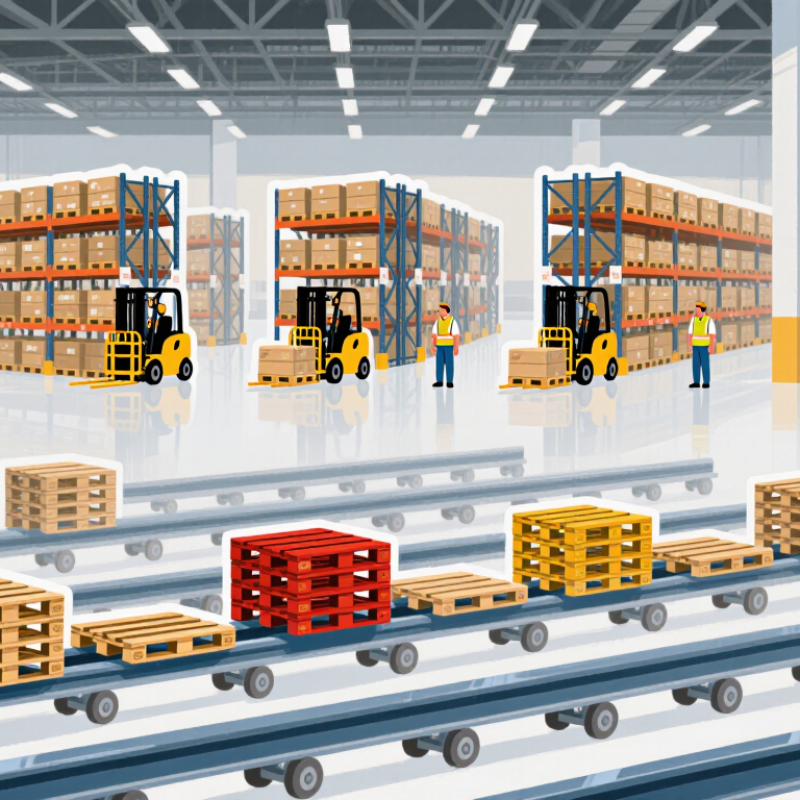
China Top 10 Push Back Pallet Racking Manufacturers

What Push Back Pallet Racking Is and How It Works

Push-back pallet racking stores pallets several positions deep on inclined rails fitted with carts. A forklift places a pallet at the aisle-facing position, then pushes it backward, moving earlier pallets deeper into the lane. When the front pallet is removed, the next cart rolls forward under gravity. Simple in principle. The system usually follows LIFO: the last pallet loaded is the first retrieved. That suits products with flexible rotation needs, but not every inventory plan.

MHI’s 2024 Annual Industry Report found that 55% of surveyed supply-chain professionals expected disruptions to become more frequent over the following five years. That broader pressure makes space-efficient storage attractive, though the survey does not measure push-back rack performance. In practice, usable density depends on pallet dimensions, load weight, aisle layout, and how many positions fit each lane. Operators also need consistent pallets; damaged boards or uneven loads can snag carts. The design saves aisle space, but it can make individual pallets less accessible. That trade-off deserves a close look.

Tips: Confirm pallet sizes and loads before specifying lane depth. Keep heavier pallets in approved positions, and test cart movement with real loads. A little friction matters. Track rotation rules, too; LIFO lanes can quietly leave older stock behind.

Key Components and Warehouse Applications

Push-back pallet racking combines upright frames, inclined rails, nested carts, and aisle-side guides. A forklift places each pallet on the front cart and pushes earlier pallets farther into the lane. Retrieval follows last-in, first-out order. That makes the system useful for grouped goods with several pallets per SKU, such as packaged food or seasonal stock. Space matters. Compared with single-deep selective racks, deeper lanes can reduce aisle demand, but they also reduce direct access to individual pallets.

Lane depth, pallet dimensions, and load weight must match the rack design. Operators should check cart movement, rail condition, frame alignment, and load labels during routine inspections. MHI’s 2024 Annual Industry Report found that 55% of surveyed supply-chain leaders planned to increase technology investment. That is useful context, not proof that automation suits every warehouse. Push-back racks are often a simpler density tool, though disciplined inventory rotation still matters.

Applications work best when products move in predictable batches and stock rotation can follow LIFO. Mixed-SKU lanes can create search delays or misplaced inventory. The awkward part is that higher storage density may complicate replenishment. A careful site assessment should consider forklift turning space, floor condition, and peak traffic—not just pallet capacity. In practice, a small trial lane can reveal handling problems before a full installation.

Criteria for Evaluating Chinese Push Back Racking Manufacturers

Selecting a Chinese push back racking manufacturer starts with the warehouse, not the sales brochure. Measure pallet dimensions, loaded weights, aisle width, ceiling clearance, and floor condition. Ask how the supplier calculates beam loads and cart capacity for each lane. Request drawings showing the rack, carts, stops, and clearances. Small mismatches matter: pallet overhang can rub an upright or block a neighboring lane.

Inspect manufacturing controls, not just the finished paint. Review weld consistency, steel thickness records, coating preparation, and component traceability. Ask for inspection documents and references from installations with similar pallet sizes and operating conditions. If possible, visit the facility or arrange an independent factory audit. A neat sample helps. It proves little alone. Buyers can also overlook whether test conditions match their own daily use.

Compare engineering support and after-sales response in practical terms. Who checks site drawings? How quickly can replacement carts, rollers, or guides be supplied? Ask about maintenance intervals and how operators should identify damaged components. Clarify warranty scope, packing, delivery schedules, and installation support before ordering. One difficult question deserves attention: does the proposed design still work when pallet loads vary? A reliable manufacturer should explain its assumptions and limits plainly. A lower unit price may not cover a costly design mismatch.

Profiles of 10 Leading Push Back Pallet Racking Manufacturers in China

Profiles of China’s leading push back pallet racking manufacturers are most useful when compared by engineering strengths, not unsupported rankings. This overview distinguishes ten supplier profiles: high-volume steel fabricators, custom-design specialists, cold-storage experts, seismic-design providers, and manufacturers experienced with automated warehouses. The remaining profiles focus on dense-storage systems, export specifications, short production runs, installation support, and long-term maintenance. These differences affect more than price. They influence aisle space, forklift access, and how smoothly loads move through a busy warehouse.

MHI’s 2024 Annual Industry Report found that 55% of surveyed organizations planned to increase supply-chain technology investment. That figure signals growing interest in automation, but it does not prove every facility needs automated racking. Buyers should compare load ratings, upright dimensions, beam details, coating quality, and documented testing. Ask suppliers to explain how push-back carts are inspected and replaced. Small details matter.

A useful manufacturer profile includes factory quality controls, engineering capacity, lead times, and installation experience. Request drawings for the actual pallet size and operating conditions, then check clearances on site. Catalog figures can look exact; real warehouses are less tidy. A poorly matched design may restrict access or complicate daily picking. Compare warranties and spare-parts availability, too, and verify that stated performance data applies to the proposed configuration.

How to Compare Suppliers and Choose the Right Manufacturer

When comparing push back racking suppliers, start with pallet dimensions, unit weights, and daily pick volume. A capable manufacturer should ask for these details before recommending lane depth or storage levels. Good questions matter. Request a layout that accounts for actual forklift turning space, not just a sales sketch. Check capacity per pallet position and per level; these figures are not interchangeable.

Ask how carts, rails, uprights, and beams are sized for your loads. Request engineering drawings, material specifications, weld inspection records, and a clear explanation of the stated load ratings. Paper alone is not enough. Compare coating thickness, corrosion protection, and replacement-part availability, especially for cold or humid warehouses. Confirm that quoted capacities reflect your pallet overhang and load distribution. Small mismatches can matter.

Visit an operating installation when possible, and watch carts return smoothly with different pallet weights. Ask for references from facilities with similar throughput, plus installation schedules and after-sales response times. Clarify who checks the floor, anchors, and commissioning. Low prices may come with thinner documentation or limited support. I would weigh operating risk alongside steel cost; that judgment is imperfect, but useful. Leave room for future changes.

China Top 10 Push Back Pallet Racking Manufacturers — How to Compare Suppliers and Choose the Right Manufacturer

Standard pallet footprints to check when comparing rack layouts and supplier proposals

The chart compares two principal pallet dimensions specified by ISO 6780: 1200 × 800 mm and 1200 × 1000 mm. Use the pallet format your operation handles to check bay dimensions, clearances, and load compatibility in each supplier’s proposal. Pallet footprint alone does not determine rack capacity; verify the complete design and rated loads with the supplier.

FAQS

How does push-back pallet racking work?

A forklift places a pallet on a cart near the aisle and pushes it deeper. When the front pallet is removed, the next cart rolls forward under gravity.

What does LIFO mean in this system?

LIFO means the last pallet loaded is usually the first retrieved. Older stock can remain behind, so rotation rules need attention.

What products suit push-back racking?

It can suit grouped goods with several pallets per SKU, including packaged food or seasonal stock. Predictable batches help.

What is the main space-saving benefit?

Multiple pallets sit deep in each lane, which can reduce aisle demand compared with single-deep storage. Aisle space matters.

What can make pallets difficult to move?

Damaged pallet boards, uneven loads, or unsuitable dimensions can snag carts. Test with real loads.

What should operators inspect regularly?

Check cart movement, rail condition, frame alignment, and load labels. Small signs of friction deserve a closer look.

What should a warehouse assess before installation?

Review pallet sizes, load weights, lane depth, forklift turning space, floor condition, and peak traffic. Capacity alone is not enough.

How can buyers compare rack designs and suppliers?

Request drawings for the actual pallets and operating conditions. Check load ratings, testing records, installation experience, warranties, and spare-parts access. Catalog figures may not reflect a busy warehouse.

Conclusion

This article introduces Push Back Pallet Racking, explaining how its inclined rails and nested carts allow pallets to be stored several positions deep while remaining accessible from the aisle. It outlines the system’s main components and describes warehouse applications where efficient use of floor space, organized inventory, and access to multiple product lines are important. The overview also highlights practical considerations such as load requirements, pallet dimensions, available space, and the movement of goods.

The article presents profiles of ten leading Chinese manufacturers and explains how to evaluate them using factors such as engineering capability, product quality, customization options, production capacity, and after-sales support. It concludes with a practical framework for comparing suppliers, checking whether their solutions fit a facility’s operational needs, and selecting a manufacturer that can provide a suitable, reliable racking system.

Ethan

Ethan

Ethan is a dedicated marketing professional with a deep understanding of the company’s products, customers, and industry landscape. With a strong combination of strategic insight, market awareness, and practical communication skills, he helps present complex product information in a clear, useful,......