Choosing the right Adjustable Pallet Rack begins with understanding the warehouse, not the product brochure. A cold-storage facility, an automotive parts center, and an e-commerce warehouse face very different pressures. Load weight, pallet dimensions, aisle width, ceiling height, forklift reach, and inventory turnover all affect the final decision. During site evaluations, small details often matter. A damaged floor joint can influence upright placement. A narrow turning radius can reduce the usable capacity of an apparently efficient layout.
This guide examines the Top 10 Types of Adjustable Pallet Rack for Global Buyers. It covers selective, double-deep, drive-in, drive-through, push-back, pallet flow, mobile, narrow-aisle, structural, and combination systems. Each design has practical strengths and limitations. Selective racks offer direct pallet access. Push-back racks improve density but require disciplined loading. Pallet flow systems support rotation, though maintenance demands may increase. These differences deserve careful attention.
Real projects rarely follow a perfect template. Measurements may be incomplete. Product specifications can change. Even experienced buyers sometimes underestimate installation space or future expansion. That is why reliable purchasing involves verified load data, clear drawings, qualified suppliers, and local engineering review. Safety requirements also vary by region, so buyers should confirm applicable standards before approval. This overview is intended to support informed comparisons, not replace professional assessment. Some recommendations may need revision after an on-site inspection. That is normal. A rack system should fit the operation, the workers, and the next stage of growth.
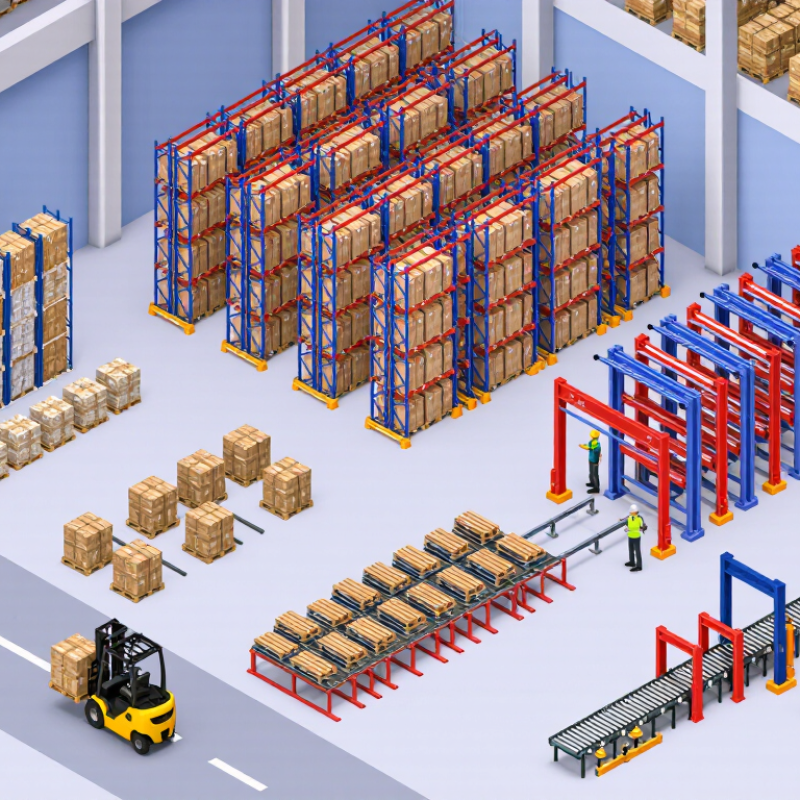
Understanding Adjustable Pallet Rack Systems and Their Main Features
Adjustable pallet rack systems use movable beams to store palletized goods at different heights. Their flexibility suits warehouses with changing inventory sizes. Common configurations include selective, drive-in, push-back, pallet flow, and double-deep racks. Each option balances access, storage density, and handling speed differently. Selective racks provide direct access to every pallet. Drive-in designs save floor space but reduce product rotation. Beam levels should match pallet height, load weight, and lifting equipment clearance. Small measurement errors can create serious operational problems.
Main features include upright frames, horizontal beams, safety pins, footplates, bracing, and load plaques. Strong connections reduce beam movement during loading. Protective guards help limit damage near aisles and corners. Adjustable levels support future changes, but frequent adjustment needs trained workers and proper inspection. In practice, many warehouses overestimate usable height. Fire protection, lighting, and sprinkler clearance can reduce the real capacity. No layout is perfect.
Tips: Measure loaded pallets, not empty ones. Keep heavier pallets on lower levels. Mark aisle widths clearly. Inspect damaged frames immediately. Review beam positions after seasonal stock changes. A trial bay can reveal problems before full installation. Do not choose the densest system automatically; slower access may cost more than saved floor space.
Top 10 Types of Adjustable Pallet Rack for Global Buyers - Understanding Adjustable Pallet Rack Systems and Their Main Features
| No. | Adjustable Pallet Rack Type | Operating Principle | Pallet Access | Stock Rotation | Typical Aisle Width* | Main Features | Suitable Applications |
|---|---|---|---|---|---|---|---|
| 1 | Selective Pallet Rack | Each pallet position is independently accessible from a forklift aisle. Beam levels can be repositioned to match pallet height. | Direct access to every pallet | FIFO or LIFO | Approximately 3.0–3.7 m for standard counterbalance trucks | Lowest initial complexity, flexible beam adjustment, broad load-size compatibility, and easy stock identification. | General warehouses, mixed SKUs, manufacturing, wholesale, and distribution centers |
| 2 | Double-Deep Pallet Rack | Two rows of pallets are stored one behind the other, normally using a reach truck with extended forks or a double-deep attachment. | Front pallet access; rear pallet access after front pallet removal | Mainly LIFO; limited FIFO | Approximately 3.0–3.5 m | Higher storage density than single-deep selective rack, fewer aisles, and good use of uniform pallet loads. | Cold storage, seasonal inventory, and warehouses with several pallets per SKU |
| 3 | Drive-In Pallet Rack | Forklifts enter storage lanes and place pallets on adjustable support rails running along the lane depth. | Access from one side | LIFO | Approximately 3.5–4.5 m, depending on truck and lane layout | High storage density, reduced aisle space, limited internal components, and strong utilization of cubic volume. | Large quantities of uniform products, low SKU variety, and non-perishable goods |
| 4 | Drive-Through Pallet Rack | Forklifts can enter the same storage lane from both ends, with pallets supported on adjustable rails. | Access from both sides | FIFO when loading and unloading are separated | Approximately 3.5–4.5 m, depending on equipment | Greater lane accessibility than drive-in rack, high density, and suitability for controlled loading and unloading flows. | Food, beverage, and other operations requiring batch rotation of uniform loads |
| 5 | Push-Back Pallet Rack | Pallets are placed on nested carts or inclined rails; loading a new pallet pushes stored pallets toward the rear. | Front access only | LIFO | Approximately 3.0–3.7 m | Multiple pallets per lane, faster handling than drive-in systems, and reduced aisle requirements. | Medium- to high-volume storage with multiple pallets per SKU and moderate rotation needs |
| 6 | Pallet Flow Rack | Pallets move by gravity on roller lanes from the replenishment side to the picking side, with adjustable beams and lane components. | Loading and picking from opposite sides | FIFO | Approximately 3.0–3.7 m | Automatic pallet movement, separated replenishment and picking activities, and improved product rotation. | Perishables, food distribution, pharmaceuticals, and date-sensitive inventory |
| 7 | Narrow Aisle Pallet Rack | Adjustable rack is arranged with narrower aisles and served by specialized reach or articulated forklifts. | Direct access to most or all pallet positions | FIFO or LIFO | Approximately 2.4–3.0 m | More storage locations per floor area while preserving good selectivity and adjustable beam levels. | Distribution centers with high SKU variety and limited floor space |
| 8 | Very Narrow Aisle Rack | High-bay adjustable rack uses very narrow aisles and guided or turret-style trucks that operate within the aisle. | Direct access to each pallet location | FIFO or LIFO | Approximately 1.5–2.0 m | Very high space utilization, increased storage height, precise vehicle guidance, and high installation accuracy requirements. | High-throughput warehouses with high ceilings and expensive floor space |
| 9 | Mobile Pallet Rack | Rack rows are mounted on powered or mechanically assisted mobile bases that open only the aisle required for operation. | Direct access to the selected open aisle | FIFO or LIFO | One operating aisle, commonly about 3.0–3.7 m | Very high floor-space utilization, lockable access, seismic and safety controls, and slower aisle repositioning. | Cold rooms, archives, secure storage, and facilities with high space costs |
| 10 | Multi-Deep Pallet Rack | Pallets are stored several positions deep using rails, carts, or shuttle equipment while rack beams remain configurable for load dimensions. | Access depends on shuttle or deep-lane equipment | FIFO or LIFO, depending on lane design | Approximately 3.0–4.0 m at operating aisles | High density, reduced forklift travel inside lanes, better throughput for repetitive loads, and higher equipment investment. | High-volume warehouses, cold storage, and operations handling large batches of similar pallets |
*Aisle widths are indicative planning ranges only. The final dimension depends on pallet size, rack height, forklift turning radius, load center, building columns, fire protection requirements, and applicable local safety standards.
FAQS
It uses movable horizontal beams to store pallets at different heights. A flexible choice.
Selective rack systems usually provide direct access to each pallet. They support faster picking but use more floor space.
Measure loaded pallet height, weight, and lifting equipment clearance. Do not measure empty pallets.
Place heavier pallets on lower levels. This can improve stability and reduce handling risks.
Important components include safety pins, footplates, bracing, guards, pallet supports, and load plaques. Strong connections matter.
Lighting, sprinklers, fire protection, and equipment clearance reduce usable height. The highest beam may not be practical.
Workers should perform regular visual inspections, commonly every week. Qualified experts should conduct periodic detailed inspections.
Isolate damaged areas and arrange prompt assessment. Photograph the damage, record the date, and document corrective action.
Adjustable beams support future changes, but trained workers should make adjustments. Unplanned changes can reduce capacity.
No. Dense storage may slow access and product rotation. Saved floor space can create hidden operating costs. The answer is not perfect.
Conclusion
Adjustable Pallet Rack is a versatile warehouse storage solution designed to support changing inventory levels, pallet sizes, and operational needs. This article introduces ten major rack types, including selective, drive-in, push-back, pallet flow, double-deep, narrow-aisle, very-narrow-aisle, cantilever-supported, mobile, and mezzanine-integrated configurations. Each system offers different advantages in accessibility, storage density, handling speed, and compatibility with warehouse equipment. Understanding these differences helps global buyers match a rack design to their products, facility layout, and workflow.
The guide also explains how load capacity, beam levels, upright spacing, aisle width, ceiling height, and floor conditions affect rack selection. It highlights the importance of professional installation, visible load ratings, impact protection, inspections, and compliance with applicable local and international safety requirements. By comparing capacity, configuration flexibility, space efficiency, expansion potential, maintenance needs, and total operating cost, buyers can select an Adjustable Pallet Rack system that improves storage performance while supporting safe, reliable, and adaptable warehouse operations.