Deep Lane Pallet Racking can turn a narrow aisle into dense, accessible storage for palletized goods. But the right system depends on more than floor space. SKU variety, pallet dimensions, stock rotation, forklift turning clearance, and daily throughput all shape the design. A layout that looks efficient on a plan may feel very different when a loaded truck enters a tight aisle.
Quality-management expert W. Edwards Deming is often quoted as saying, “Without data, you’re just another person with an opinion.” That principle fits supplier selection: compare proposed capacity, operating assumptions, and safety features against actual site conditions. Deep-lane systems can suit facilities storing many pallets of fewer product types, though they may reduce direct access to individual loads. There are trade-offs. No supplier can remove them.
This guide introduces ten worldwide suppliers for buyers evaluating Deep Lane Pallet Racking. It considers system range, engineering support, customization, installation capability, and the clarity of technical information. These are comparison points, not a universal ranking; supplier suitability varies by region and project. Ask for drawings, load calculations, and references for installations with similar pallet profiles. Check how the proposed arrangement handles damaged pallets, changing inventory, and everyday replenishment. Those details can expose gaps early. A supplier’s brochure rarely shows the whole story. The shortlist is a starting point, and its assumptions deserve a second look before any site decision.
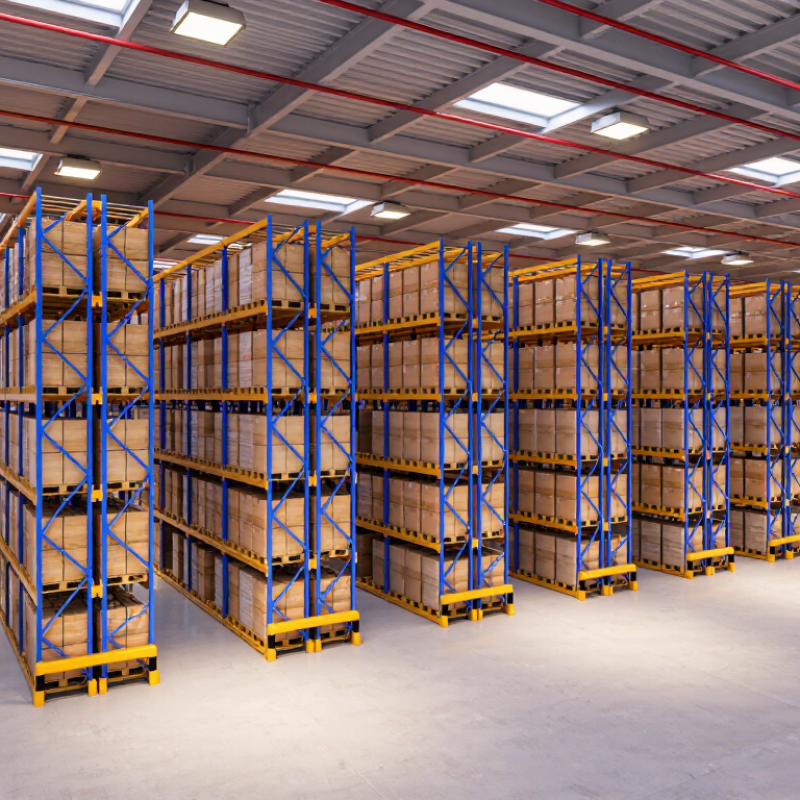
Deep lane pallet racking stores multiple pallets deep in each storage lane. Forklifts enter the lanes to place or retrieve loads. Fewer access aisles can free floor space for storage. The trade-off is reduced direct access to individual pallets. Depending on the layout and loading sequence, the system may operate on a last-in, first-out basis or allow access from both ends.
It is commonly used in warehouses holding large quantities of the same product, such as packaged food, beverages, and building materials. Cold-storage facilities may also use it because compact layouts can reduce the area that needs cooling. It suits operations with predictable stock and fewer product changes. Not every warehouse needs it.
Pallet size, load weight, forklift type, and stock rotation all affect the design. A narrow lane can save space, but leave too little clearance and daily handling becomes awkward. Clear labels and disciplined loading help workers find the right pallet, though they cannot fix a poor inventory plan. Before installation, managers should review how often each product moves and whether older stock must remain accessible. The best layout is not always the densest one.
Deep lane pallet racking stores pallets several positions deep within a shared channel. Instead of giving every pallet its own aisle-facing location, the system uses rails to support loads along each lane. A forklift enters the lane and places pallets from the back forward. For retrieval, the front pallet usually comes out first, so drive-in layouts follow last-in, first-out (LIFO) inventory rotation.
That matters. A drive-through layout has access at both ends and can support first-in, first-out (FIFO) rotation when loading and unloading are managed in sequence. Some systems use rollers or moving carts to bring pallets toward the picking face; others rely on the forklift to travel inside the rack. The right setup depends on product turnover, pallet dimensions, load weight, and forklift clearance. Not every pallet fits. In a real warehouse, damaged pallets or slight size differences can interrupt a lane, so consistent load quality matters more than a tidy drawing suggests. Fewer aisles can increase storage density, but operators need clear procedures and careful training. I would check turning space and visibility on the floor, not just on a plan.
| No. | System or Supplier Capability | How It Works | What to Verify When Comparing Suppliers |
|---|---|---|---|
| 1 | Drive-in racking | A forklift enters a storage lane to place or retrieve pallets supported on rails. This arrangement commonly operates on a last-in, first-out (LIFO) basis. | Confirm the proposed layout, forklift clearances, pallet dimensions, and whether LIFO access suits the inventory. |
| 2 | Drive-through racking | Forklifts can access a lane from both ends. When loading and retrieval are managed from opposite ends, the system can support first-in, first-out (FIFO) handling. | Check that the building layout and operating process provide access to both ends of each lane. |
| 3 | Deep-lane storage density | Storing multiple pallets deep reduces the number of aisles needed compared with many selective-rack layouts, while reducing direct access to individual pallets. | Compare usable storage capacity with aisle requirements, SKU count, and the need for direct pallet access. |
| 4 | Load and structural design | Uprights, beams, rails, bracing, and base connections must be designed for the intended loads and site conditions. There is no single safe capacity that applies to every installation. | Request project-specific load calculations, approved load signage, and documentation for the proposed configuration. |
| 5 | Pallet and load compatibility | Pallet size, condition, overhang, load stability, and bottom-board design affect how reliably a pallet is supported and handled on the system. | Provide representative pallet and load details, and confirm compatibility before finalizing lane dimensions. |
| 6 | Forklift and operating clearances | Because forklifts travel into storage lanes, truck dimensions, turning behavior, mast height, and operator visibility influence the required clearances and safe operating method. | Have the supplier check the actual truck models, aisle geometry, lane depth, and site constraints. |
| 7 | Lane depth and pallet sequence | Deeper lanes can increase storage density, but pallets farther inside a lane are less accessible. Lane depth should match the number of pallets stored per SKU and the required rotation method. | Ask for a layout based on inventory profiles, expected pallet quantities per SKU, and replenishment patterns. |
| 8 | Guidance and impact protection | Guide rails and suitable column or end-of-aisle protection can help reduce contact between handling equipment and rack components; they do not replace trained operation. | Review proposed guidance, protection, floor conditions, and the site’s traffic-management plan. |
| 9 | Inspection and maintenance support | Rack components can be damaged by impacts or altered loads. Regular checks and prompt reporting of damage help identify issues before continued use creates greater risk. | Confirm inspection guidance, replacement-part availability, and the applicable local regulations or standards. |
| 10 | Project delivery and documentation | A complete project typically involves site measurements, layout design, installation planning, commissioning checks, and operating information specific to the installed system. | Compare the scope of drawings, installation supervision, handover documents, training, and after-sales support. |
Choosing a deep lane pallet racking supplier requires more than comparing quoted prices. Check whether the supplier can provide load calculations, layout drawings, and clear specifications for beams, uprights, and rails. Ask how the design accounts for pallet dimensions, forklift type, floor condition, and expected throughput. Request references for installations with similar storage needs. Useful evidence beats polished sales language.
Look closely at manufacturing quality and project support. Ask what inspections are performed, how components are identified, and whether replacement parts remain available. Confirm delivery schedules, installation responsibilities, and staff training before signing. A low-cost system can become expensive if equipment arrives late or site measurements prove inaccurate. Capacity figures deserve special scrutiny; actual loads may vary with pallet condition and stored goods. I would not rely on a single headline rating.
Tips: Send suppliers the same site measurements and operating details. Compare their assumptions, not just their totals. Ask for a sample inspection record and a written service response time. Small omissions matter. Even a careful evaluation cannot remove every risk, so leave room for a second site check.
Deep Lane Pallet Racking Suppliers Worldwide
A useful comparison of the top 10 deep lane pallet racking suppliers should look beyond price. Deep lane systems store several pallets in each channel, helping warehouses use floor space efficiently. They suit operations with many identical products and predictable stock rotation. They may be less practical when workers need frequent access to individual pallets. Details matter.
When assessing suppliers, request load calculations based on your pallet weight, dimensions, and planned rack height. Ask for layout drawings that show channel depth, aisle clearance, and forklift access. Check whether the proposal includes installation guidance, inspection support, replacement components, and realistic delivery dates. These details help compare suppliers across regions without relying on broad claims. A polished quote can still leave gaps, and even careful planning may miss a day-to-day handling issue.
Tips: Share actual pallet measurements and forklift specifications before requesting quotes. Ask each supplier how damaged uprights or rails should be assessed and replaced. Compare the same operating assumptions, not just the headline price. If possible, review a similar installation in person; photos rarely reveal every access or maintenance constraint.
Supplier rankings are not standardized. Pallet dimensions are a practical, comparable factor when evaluating deep lane racking. Areas below are calculated from pallet sizes listed in ISO 6780.
Larger pallet footprints require more floor space per pallet position. Confirm pallet dimensions and load requirements before selecting a racking system.
Deep-lane pallet racking is not just a storage purchase; it changes how teams replenish, retrieve, and inspect pallets. Compare suppliers using your pallet dimensions, load weights, SKU count, rotation patterns, and daily movements. Ask whether the proposed layout supports drive-in, drive-through, or both. These configurations affect stock rotation and forklift access. Measure twice.
MHI’s 2024 Annual Industry Report, based on responses from more than 1,000 supply-chain professionals, found that 55% expected to increase supply-chain technology investment. That figure does not prove automation suits every warehouse. It does make future equipment compatibility worth discussing. Ask suppliers to show clearances for your actual forklift, rack protection details, and a load assessment for every beam level. Confirm the design basis against applicable rack standards, including ANSI MH16.1 where relevant.
Compare more than quoted price. Request installation timelines, inspection guidance, spare-part availability, and written warranty terms. Have an independent qualified engineer review structural calculations, especially for seismic conditions or uneven floors. That matters. A dense layout can look efficient on paper yet create awkward replenishment work. I would also ask suppliers to model a busy shift, not just ideal pallet flow. The estimate may still miss real-world interruptions. That is worth challenging.
Rails support several pallets inside each shared channel. Forklifts place loads deeper into the lane. Compact storage.
It usually follows last-in, first-out rotation. The front pallet comes out first, so older stock may remain behind.
Yes. Drive-through layouts allow access at both ends. Loading and unloading must follow a clear sequence.
Not every pallet fits. Damaged pallets or small size differences can block a lane. Check real pallet measurements.
Some systems use rollers or moving carts. Others require forklifts to travel inside the rack. Visibility matters.
Provide pallet dimensions, load weights, rack height, and forklift specifications. Real measurements help avoid guesswork.
Ask for channel depth, aisle clearance, and forklift access. A tidy drawing can still miss a floor-level problem.
Compare installation guidance, inspection support, replacement parts, and delivery dates. Photos rarely show every maintenance constraint.
Use clear procedures and careful training. Check turning space and visibility on the warehouse floor. Plans are not enough.
This article explains what Deep Lane Pallet Racking is, where it is commonly used, and how its high-density storage layout can help warehouses make better use of available space. It describes how pallets are stored in deep lanes and how compatible handling equipment accesses them, while noting that system design should reflect inventory characteristics, throughput needs, and operating conditions.
The article also outlines practical criteria for evaluating global suppliers, including engineering capability, product quality, customization, installation support, and after-sales service. Its overview of leading supplier options focuses on comparing these capabilities rather than naming brands. Finally, it offers guidance for assessing supplier proposals, matching a racking configuration to warehouse requirements, and balancing storage density with accessibility, safety, and long-term operational needs.