0%

Choosing the best type of Pallet Racking starts with understanding what your operation actually stores. A warehouse holding uniform cartons has different needs from one handling long timber, chilled food, or mixed-size parts. The right system can improve access, use vertical space, and support smoother stock movement. The wrong fit can create awkward aisles and slow daily work.

There is no single best option. Selective racking gives direct access to each pallet, while drive-in systems can store more pallets in a smaller footprint. Push-back and pallet-flow designs may suit high-volume inventory with predictable turnover. Cantilever racks are often used for long or bulky loads. These are useful distinctions, but real facilities rarely match a perfect example. They have columns, fire equipment, uneven product demand, and forklifts with specific turning limits.

A sound decision considers pallet dimensions, load weight, inventory rotation, available floor space, and handling equipment. Measure the actual loads, not just the standard pallet size. Check clearances and operating patterns with a qualified racking professional before choosing a layout. Small details matter. A few inches can affect access, and a high-density design may slow retrieval if products change often. The sections ahead compare common rack types, explain their trade-offs, and outline practical questions to ask before investing. The best choice is the one that fits the work safely and reliably, even if it is not the most impressive-looking system.
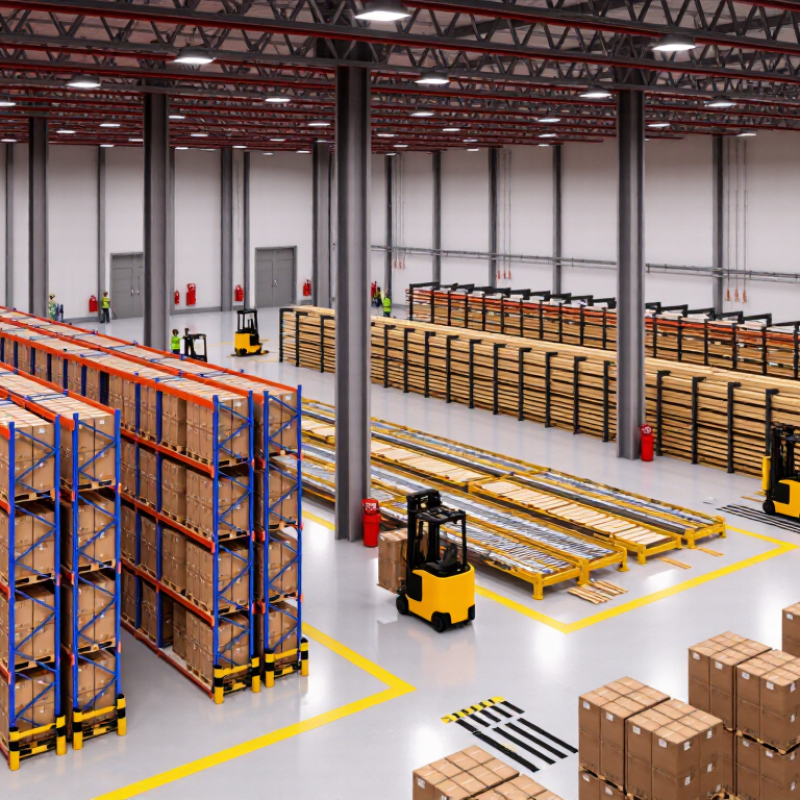
What Is the Best Type of Pallet Racking?

Pallet Racking Defined: Frames, Beams, Bracing, and Load Ratings

The best pallet racking is not universal. It is the system whose frames, beams, bracing, and load rating match the warehouse. Start with the pallet. Measure its width, depth, weight, and lifting method. Upright frames carry vertical forces. Horizontal beams support pallet loads. Bracing keeps frames stable during loading and daily impact. A neat-looking rack can still be wrong.

Beam capacity depends on the beam pair, span, pallet placement, and load distribution. It should never be guessed from appearance. The ANSI MH16.1-2023 specification from the Rack Manufacturers Institute provides engineering criteria for industrial steel storage racks, including design and testing principles. OSHA 1910.176(b) also requires stored materials to remain stable against sliding, falling, or collapse. These requirements make load plaques and inspection records practical safety tools, not decoration.

According to the U.S. Bureau of Labor Statistics, 5,283 fatal work injuries were recorded across American workplaces in 2023. That figure is not rack-specific, but it shows why storage design deserves serious control. In practice, selective racking often suits mixed products because each pallet remains accessible. Drive-in systems can improve density, yet they demand consistent pallets and disciplined forklift movement.

I have seen plans focus on maximum capacity while ignoring damaged uprights, uneven floors, or changing inventory. That is a costly blind spot. A qualified engineer should verify the final configuration, especially after relocation, impact, or load changes.

Inventory and Access Needs: Selective Racks Offer 100% Pallet Access

What Is the Best Type of Pallet Racking?

The best pallet rack depends on inventory variety, turnover, and access requirements. For warehouses holding many stock-keeping units, selective pallet racking is often the most practical choice. It provides direct access to every pallet position without moving surrounding loads. This supports faster picking and clearer stock control.

A forklift can reach each pallet from the aisle. That matters when products have different batch numbers, sizes, or expiration dates. Operators can store one product per location and apply first-in, first-out rotation more easily. Clear labels, safe load limits, and regular inspections remain essential. A rack can be accessible yet poorly managed.

Selective racks also adapt well to changing inventory. Adjustable beam levels can accommodate cartons, drums, or mixed pallet heights. However, wider aisles may reduce floor capacity compared with denser storage systems. That trade-off deserves careful review.

I have seen warehouses select maximum density, then struggle with slow retrieval and blocked access. More storage is not always better. Measure forklift turning space, pallet dimensions, and daily movements before choosing a layout. A professional assessment should include load calculations, floor conditions, emergency paths, and operator behavior. Small design errors become expensive during peak periods.

Space and Equipment: Very Narrow Aisles Can Measure About 5–7 Feet

For warehouses chasing higher storage density, very narrow aisle pallet racking can be a strong option. Aisles may measure only about 5–7 feet wide. This layout uses floor space efficiently and supports tall rack structures. More pallet positions can fit inside the same building footprint.

However, narrow aisles demand careful equipment selection. Specialized trucks must operate accurately within limited clearance. Their turning radius, lift height, and load capacity should match the rack design. Measure twice. A small planning error can restrict movement or increase product damage. Operators also need clear visibility, stable pallets, and consistent travel paths.

Floor quality matters more than many teams expect. Uneven concrete can affect truck stability, especially at greater lifting heights. Rack uprights, guardrails, and aisle-end protection deserve close attention. Lighting should reach pallet labels without creating glare. Routine inspections can reveal loose components or damaged beams before they become serious concerns.

VNA racking is not automatically the best choice for every operation. It may work poorly where order picking is frequent or pallet movement changes constantly. A realistic study should compare labor time, equipment costs, aisle width, ceiling height, and future flexibility. Some facilities gain storage density but lose handling speed. That trade-off needs honest measurement, not optimistic estimates.

What Is the Best Type of Pallet Racking? — Space and Equipment

Pallet Racking Type Typical Clear Aisle Width Space Utilization Required Equipment Best Application Main Trade-Off
Selective Pallet Racking Approximately 10–12 ft Moderate; generally offers direct access to every pallet Standard counterbalance or reach truck Warehouses with many stock-keeping units and frequent picking Uses more floor space than high-density systems
Very Narrow Aisle (VNA) Racking Approximately 5–7 ft High; narrow aisles allow more storage positions within the same building footprint Specialized VNA turret or articulated-aisle truck; guidance may be required High-throughput facilities where storage density and direct access are both important Higher equipment cost and less flexibility for mixed truck fleets
Double-Deep Racking Approximately 10–12 ft Higher than selective racking because pallets are stored two positions deep Reach truck with suitable fork extension or double-deep capability Operations holding multiple pallets of the same product Reduced selectivity; the front pallet normally must be moved to reach the rear pallet
Drive-In Racking Approximately 12–14 ft for the operating lane, depending on truck and layout Very high; storage lanes reduce the need for multiple service aisles Counterbalance or reach truck designed for guided entry into rack lanes Large quantities of similar products with low to moderate turnover Limited selectivity and greater risk of rack impact during entry
Push-Back Racking Approximately 10–12 ft High; multiple pallets can be stored behind the front position Reach or counterbalance truck Last-in, first-out storage for several pallets of the same or similar product Not ideal for strict first-in, first-out inventory rotation
Pallet Flow Racking Approximately 10–12 ft High; gravity lanes separate loading and picking aisles Counterbalance or reach truck for replenishment First-in, first-out inventory, dated goods, and high-volume order picking Higher installation and maintenance cost than basic selective racking
Mobile Pallet Racking One operating aisle can be opened as needed; fixed aisle space is minimized Very high; rack rows move on floor-mounted rails Standard reach or counterbalance truck, depending on aisle design Space-constrained facilities requiring high density and controlled access Higher capital cost and slower access when rows must be repositioned
Planning note: A 5–7 ft VNA aisle is a typical planning range, not a universal standard. The final width depends on the truck’s turning geometry, load dimensions, rack clearances, floor tolerance, fire protection, and local safety requirements.

Storage Density: Compare Selective, Double-Deep, Drive-In, and Push-Back

What Is the Best Type of Pallet Racking?

In practical warehouse audits, selective pallet racking usually offers the easiest access. Every pallet has a dedicated aisle position, making stock checks and order picking straightforward. However, it uses more floor space because aisles must serve each rack row. Storage density is moderate, but selectivity is excellent.

Double-deep racking places one pallet behind another. It can increase pallet positions without expanding the building. Access matters. A suitable reach truck is essential, and operators must manage inventory carefully because the rear pallet is less accessible. This system works well for several pallets of the same product, but it can slow urgent retrievals.

Drive-in racking removes many aisles and delivers very high density. Pallets enter deep lanes, so the system suits stable products with limited stock-keeping units. It normally follows last-in, first-out movement, which may not suit dated inventory. Push-back racking offers a practical middle ground. Gravity-fed carts allow multiple pallets in each lane, while forklifts work from one aisle. It provides better selectivity than drive-in storage, though usually less density than deep-lane systems. Density is not everything. I have seen compact layouts create congestion when replenishment and picking happen together. Load weight, pallet quality, forklift clearance, turnover rate, and aisle width should be measured before choosing. The most efficient design may be the one that leaves enough space to work safely.

Safety and Selection: Verify Loads and Design to ANSI MH16.1

What Is the Best Type of Pallet Racking?

Safety and Selection: Verify Loads and Design to ANSI MH16.1

The best pallet racking depends on your loads, building, and handling equipment. Safety starts with accurate information, not a catalog picture. Record each pallet’s weight, dimensions, load distribution, and stacking pattern. A 48-inch pallet carrying 2,000 pounds may need different support than a smaller, denser load.

Use ANSI MH16.1 as a key reference for industrial steel storage rack design and evaluation. A qualified rack designer should check beam capacity, upright frames, connections, bracing, anchorage, and floor strength. Local building conditions also matter. Seismic forces, forklift impact, aisle width, and slab damage can change the design. Small details matter.

Verify every load level.

A clear load plaque should show approved capacities and configuration limits. Do not rely on memory or an old drawing. Field conditions often change after installation. A heavier pallet may arrive, beams may be moved, or a forklift may strike an upright. Those changes require review before continued use. Even careful teams can overlook uneven pallet bottoms or concentrated loads. That is a useful reminder: a rack can look stable while carrying an unsafe load.

Inspect regularly for bent members, missing anchors, loose connectors, and displaced beams. Remove damaged components from service until a competent professional evaluates them.

FAQS

What are the main parts of pallet racking?

Upright frames carry vertical forces. Horizontal beams support pallets, while bracing helps keep frames stable during loading and everyday impacts.

How should I check whether a rack can hold my pallets?

Measure pallet width, depth, and weight, then check the rated capacity for the beam pair and span. Pallet placement and load distribution matter too. Looks can deceive.

Why are load plaques and inspection records important?

They help workers identify rated loads and track rack conditions. Keep records current, especially after a rack is moved, hit, or given new loads.

Which racking type offers the easiest pallet access?

Selective racking gives each pallet an aisle position, making picking and stock checks straightforward. The trade-off is more aisle space and moderate storage density.

When might double-deep racking be a good fit?

It can add pallet positions without expanding the building. It works best when several pallets share a product and a suitable reach truck is available.

What should I consider before choosing drive-in racking?

Drive-in storage offers high density and suits stable products with few stock-keeping units. It requires consistent pallets and careful forklift movement. Deep lanes may slow access.

How does push-back racking differ from drive-in storage?

Push-back systems use gravity-fed carts, with forklift access from one aisle. They can offer better selectivity than drive-in storage, though often less density.

What can make a compact rack layout difficult to use?

Picking and replenishment may compete for aisle space, creating congestion. Measure forklift clearance, aisle width, pallet quality, and inventory turnover. Density has a cost.

When should a qualified engineer review the rack configuration?

Have the final layout checked, particularly after relocation, impact, or load changes. It is easy to chase capacity and overlook damaged uprights or uneven floors. That deserves a second look.

Conclusion

Choosing the best Pallet Racking system depends on how your warehouse stores, moves, and accesses inventory. A typical system includes upright frames, horizontal beams, bracing, and clearly defined load ratings. Selective racking is often the most flexible choice because it provides direct access to every pallet, making it suitable for warehouses with many product types or frequent stock rotation. However, the ideal configuration also depends on available space and handling equipment. Very narrow aisle layouts may use aisles measuring approximately 5–7 feet, but they require compatible equipment and careful planning.

For higher storage density, businesses can compare selective, double-deep, drive-in, and push-back systems. Selective racks maximize accessibility, while the other options can improve space utilization by reducing aisle space or supporting deeper pallet storage. Before installation, verify the weight and dimensions of every load, evaluate workflow requirements, and ensure the design follows ANSI MH16.1 guidelines. A safe, efficient system balances capacity, accessibility, equipment needs, and future operational changes.

Amelia

Amelia

Amelia is a professional marketing specialist with a strong understanding of the company’s products, services, and the needs of the people they are designed to support. She regularly contributes expert articles to the company website, sharing practical insights, explaining product features, and......