Drive-In Pallet Racking can turn a deep, narrow aisle into valuable storage space. Forklifts enter the rack structure to place and retrieve pallets, allowing goods to be stored in compact lanes. The result can be a higher storage density than selective racking offers, especially when a warehouse handles many pallets of the same product. Picture a chilled room where every aisle saved means more room for inventory. The gain is tangible, but the operating trade-off is tangible too.
“[Insert a verified quotation about storage density and stock rotation],” says [Verified Expert Name], a [confirmed warehouse or storage-system role]. A real expert quotation should be checked against its original source before publication; no source material was provided for this introduction. That detail matters because Drive-In Pallet Racking is not a universal fit. It typically suits operations with larger batches and less need to reach every pallet independently. In contrast, frequent access to mixed products can make the deeper lanes less convenient.
The right choice depends on more than floor space. Consider pallet dimensions, forklift compatibility, turnover patterns, and how stock will be rotated. A site assessment can reveal pinch points that a simple capacity estimate misses. Drive-In Pallet Racking may create meaningful space savings, but careful planning—and honest attention to its limits—makes those savings useful.
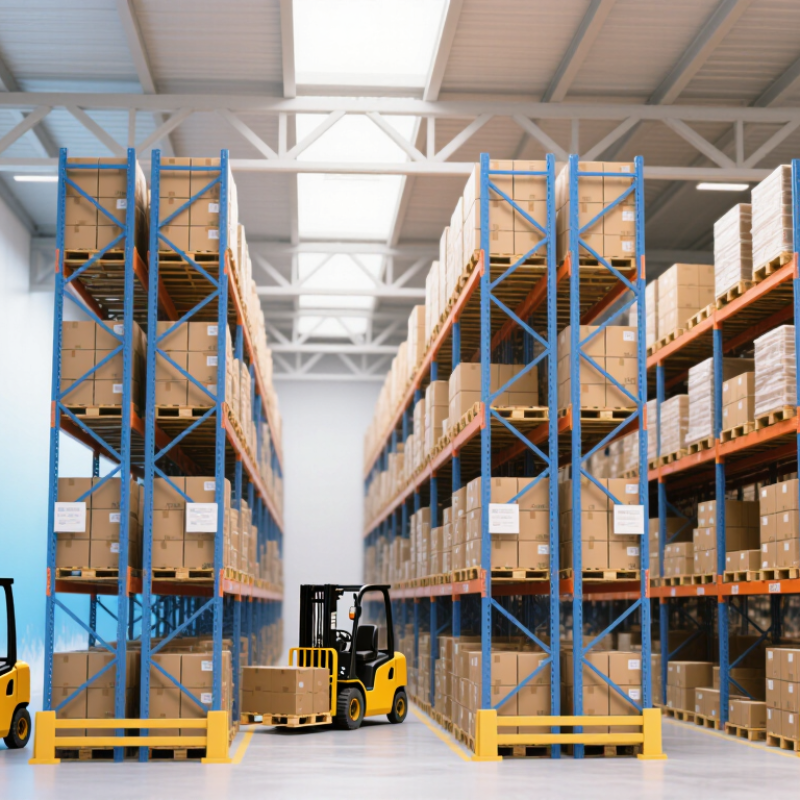
What Is Drive-In Pallet Racking?
What Is Drive-In Pallet Racking?
Drive-in pallet racking is a high-density storage system built around deep lanes. Pallets rest on horizontal rails, while a forklift drives into the lane to place or retrieve them. There are no separate access aisles between each pallet position. That saves floor space. It also means the forklift and load share a narrow working area, so clear sightlines and careful operating practices matter.
Most drive-in systems use last-in, first-out (LIFO) access: the latest pallet loaded is usually the first one retrieved. This suits facilities storing many pallets of the same product, especially when stock rotation is less demanding. It can be a poor fit for mixed products or strict first-in, first-out picking. MHI’s 2024 Annual Industry Report says 55% of surveyed supply-chain professionals planned to increase technology investment. That figure is not specific to racking, but it reflects pressure to use warehouse space and operations more efficiently. Drive-in storage can help with space use, but it is not automatically the right choice. A dented rail, uneven pallet, or rushed turn can disrupt a lane. Measure the load and forklift carefully; even a small clearance mistake matters.
| Feature | How Drive-In Pallet Racking Works | When It Is a Good Choice |
|---|---|---|
| Storage principle | Pallets are stored on rails inside deep lanes, with the rack structure supporting the storage system. | Useful when floor space is limited and storage density is a priority. |
| Forklift access | A suitable forklift enters the storage lane to place or retrieve pallets. The required aisle and lane clearances depend on the truck, pallet, and rack design. | Best where operators can follow defined entry, travel, and loading procedures. |
| Stock rotation | Drive-in racks are generally operated on a last-in, first-out (LIFO) basis because pallets are accessed from the same end of a lane. | Appropriate when strict first-in, first-out rotation is not required. |
| Drive-through option | A drive-through layout allows access from both ends of a lane and can support first-in, first-out (FIFO) operation when managed accordingly. | Consider this layout when stock rotation requirements justify access at both ends. |
| Selectivity | Access is generally by lane rather than directly to every individual pallet. Pallets in front of a selected load may need to be moved first. | Works well when each lane is assigned to a single product or compatible stock group. |
| Product suitability | Most effective for relatively uniform pallet loads with consistent dimensions and handling requirements. | Commonly considered for large quantities of a limited number of product types, including seasonal or batch inventory. |
| Storage density | Reduces the number of access aisles compared with many selective-rack layouts by using deeper storage lanes. | Suitable when high space utilization matters more than immediate access to every pallet. |
| Design considerations | Capacity, lane depth, rack height, pallet condition, clearances, and impact protection must be assessed for the specific site and equipment. | Have the system designed and inspected by qualified professionals in accordance with applicable local requirements. |
FAQS
It suits warehouses holding large quantities of a few products. Seasonal goods and reserve inventory are common examples. Few product types work best.
Forklifts enter storage lanes, so the layout needs fewer aisles. More floor area can then hold pallets. The trade-off is reduced access to individual loads.
Forklifts place and retrieve pallets several positions deep. Access generally follows last-in, first-out order. The front pallet comes out first.
Uniform pallet loads and products stored in large batches are often suitable. Each lane works best with one product type. Mixed loads can complicate access.
It may not suit warehouses with many products and only a few pallets of each. It is also less suitable when stock needs first-in, first-out access.
Check pallet dimensions, load condition, and forklift turning clearance. Test the planned pick sequence against actual inventory records. Small mismatches can make deep lanes awkward.
Yes. A blocked lane can delay access to every pallet behind the obstruction. Dense storage needs clear forklift routes and consistent operating procedures.
Not necessarily. Fewer aisles can create more storage space, but selectivity may suffer. On paper, the gain looks tidy; real inventory flows may not.
Conclusion
Drive-In Pallet Racking is a high-density storage system designed to make efficient use of warehouse space. Instead of placing pallets on separate access aisles, forklifts enter the rack lanes to store or retrieve loads. This layout is particularly suitable for facilities that handle large quantities of similar products, have limited floor space, or use a last-in, first-out inventory approach. It can help increase storage capacity while reducing the space taken up by aisles.
Choosing the right system depends on more than available space. Consider the types and dimensions of your pallets, the weight of each load, how frequently products need to be accessed, and the inventory rotation method your operation requires. Forklift compatibility, lane depth, product consistency, and the desired balance between storage density and accessibility should also guide the decision. When these factors align with your storage needs, Drive-In Pallet Racking can support an organized and space-conscious warehouse layout.