0%

Wide Aisle Pallet Racking remains one of the clearest warehouse storage systems to understand. It uses full-width aisles for forklift access, direct pallet loading, and straightforward stock visibility. Each upright frame, beam, and wire deck has a practical role. The result is familiar, but not always efficient.

The 2024 MHI Annual Industry Report found that 55% of supply chain leaders planned to increase technology investment. It also reported that 83% viewed digital transformation as important by 2027. These findings matter because racking decisions now connect with warehouse software, scanning systems, and forklift routing. Grand View Research also identifies warehouse expansion and organized storage as major drivers of the pallet racking market. The figures are useful. They are not a substitute for a site survey.

John Paxton, President and CEO of MHI, described the moment clearly: “The supply chain industry is at a critical inflection point.” His observation applies to Wide Aisle Pallet Racking. A wide aisle can improve access, but it consumes valuable floor space. A narrow aisle can increase density, yet it may require specialized trucks and tighter operating controls. That trade-off deserves honest attention. More space is not automatically better.

This guide explains how Wide Aisle Pallet Racking works, where it performs well, and which limitations warehouse teams should examine. Expect practical details, including beam levels, pallet positioning, turning clearance, and daily forklift movement. The best system is rarely the most impressive one. It is the one workers can use safely, consistently, and without unnecessary complexity.
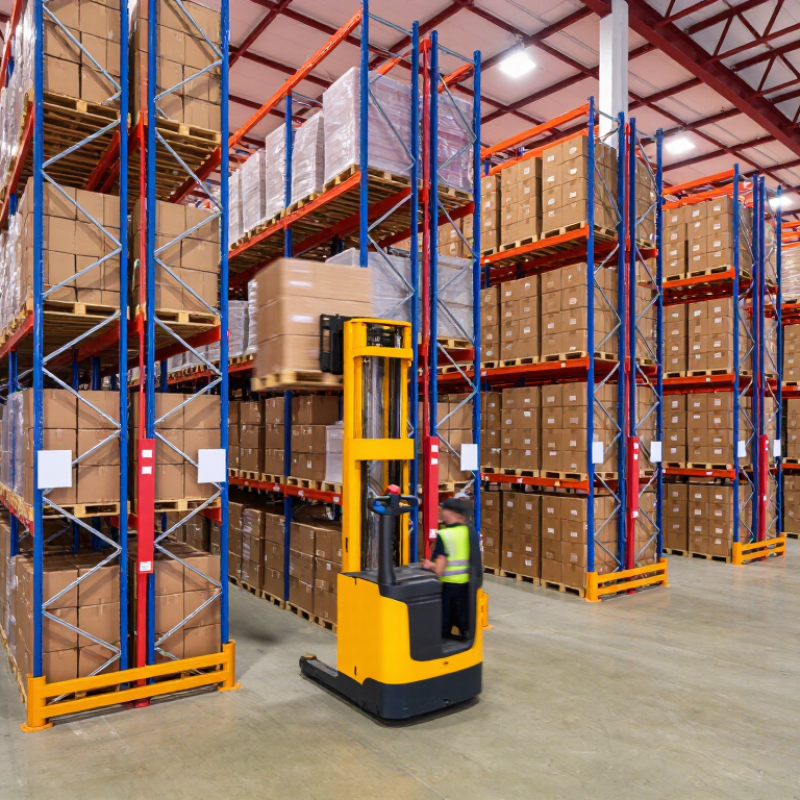
What Is Wide Aisle Pallet Racking and How Does It Work?

Definition and Core Features of Wide Aisle Pallet Racking

Wide aisle pallet racking is a storage system designed for standard forklift access. Its aisles are typically wider than those in narrow-aisle layouts. This space allows forklifts to turn, align, and place pallets with fewer complex movements.

The structure uses upright frames, horizontal beams, and adjustable storage levels. Pallets rest directly on the beams or on added decking. Each level must match the pallet size, product weight, and handling pattern. Clear aisle width is a core feature, but it is not the only one. Operators also need safe working clearances, stable floor anchoring, and visible load-rating information. A well-designed system separates pedestrian paths from forklift routes where possible.

In daily use, a forklift enters the aisle, positions its forks, and places the pallet on an open beam level. The operator then checks that the load is centered and not damaged. Small errors matter. A leaning pallet or overloaded beam can create serious instability. Experienced warehouse teams inspect frames, connectors, and beams regularly, especially after impacts. The definition sounds simple, yet real facilities often expose overlooked details. Aisles may be wide enough on paper but difficult to use near doors, columns, or turning points. Storage plans should therefore reflect actual forklift dimensions and working habits, not only a standard drawing. Local engineering requirements and the manufacturer’s rated capacities must also guide installation.

Main Components and Structural Design

Wide aisle pallet racking uses generous forklift lanes, commonly about 3.0 to 3.7 metres wide. The structure consists of vertical uprights, horizontal load beams, base plates, anchors, and rear bracing. Uprights carry compression loads, while beams support each pallet level. Row spacers maintain alignment between back-to-back frames. Wire decking or steel panels can improve pallet stability, but they do not replace correct beam design.

Structural planning begins with the pallet. Designers check its weight, dimensions, entry direction, and clearance above the beam. A practical layout also considers forklift turning radius, slab capacity, seismic forces, and sprinkler access. Rack guards protect exposed uprights near travel paths. Load plaques should show the approved bay capacity clearly. The Rack Manufacturers Institute’s ANSI MH16.1 standard provides recognised design guidance for industrial steel storage racks. MHI’s 2024 Annual Industry Report also found that 55% of respondents planned to increase supply-chain technology investment, making accurate rack data more important for warehouse planning. A neat drawing can still hide a weak assumption.

Tips: Measure real pallets, not catalogue samples. Keep at least 75 millimetres of working clearance where operating conditions allow. Confirm the concrete slab and anchor details with a qualified engineer. Inspect beam locks, damaged frames, and missing labels regularly. Small defects become expensive quickly. One overlooked aisle clearance may reduce both safety and storage efficiency.

How Wide Aisle Pallet Racking Operates

What Is Wide Aisle Pallet Racking and How Does It Work?

How Wide Aisle Pallet Racking Operates

Wide aisle pallet racking stores palletized goods in tall, accessible bays. Each bay uses upright frames, horizontal beams, and adjustable levels. A forklift travels directly into the aisle and approaches the pallet face without entering the rack. This arrangement usually supports standard counterbalance forklifts and gives operators clear access to individual loads.

A trained operator checks the pallet label, rack position, and load condition before lifting. The forklift enters squarely, raises the pallet above the beam, and places it on the selected level. Beam locks, upright protectors, floor anchors, and visible load notices help control everyday risks. Aisle width must match the forklift’s turning radius, load size, and operating habits. A measurement that looks sufficient on paper may feel tight during a busy shift.

Practical inspections should include bent frames, loose components, damaged pallets, and uneven floors. Supervisors can record these checks and remove unsafe equipment from service. The system offers direct stock access, but it uses more floor space than narrow-aisle designs. That trade-off is easy to underestimate. Poor slotting can also create unnecessary travel, especially when fast-moving goods sit at the far end. Regular reviews of travel paths, pallet weights, and operator feedback can reveal problems that a drawing misses. Some layouts still need adjustment after installation.

Warehouse Layout and Installation Requirements

What Is Wide Aisle Pallet Racking and How Does It Work?

Wide aisle pallet racking uses generous spaces between storage rows for conventional forklifts. These aisles often measure about 3.0 to 3.6 meters wide. The exact width depends on the forklift model, pallet size, and turning radius. A layout should leave enough room for safe approach, lifting, and reversing. Tight corners create avoidable risks.

Before installation, survey the warehouse floor carefully. Check slab strength, levelness, drainage, lighting, and column positions. Rack frames must be anchored to a suitable concrete floor. Upright protectors can reduce damage near traffic lanes. Keep sprinklers, emergency exits, doors, and electrical panels accessible. Local building and fire requirements should guide the final plan. Never rely only on a standard drawing.

Tips: Mark aisle lines on the floor before drilling. Test forklift movements with empty pallets. Watch the rear swing. It is easy to overlook. Confirm beam levels, load labels, and anchor torque during installation. A qualified installer should inspect the completed system before loading it. Regular checks matter, because impacts, uneven floors, and changed operating habits can reduce stability. In practice, the first layout is rarely perfect. Leave room to review it.

What Is Wide Aisle Pallet Racking and How Does It Work? - Warehouse Layout and Installation Requirements

Planning Dimension Typical Value or Range Layout and Installation Considerations
System Definition Selective pallet rack with standard forklift access Wide aisle racking normally provides direct access to individual pallets. It is suitable where accessibility and stock rotation are more important than maximum storage density.
Forklift Aisle Width Approximately 10–12 ft (3.0–3.7 m) The final width depends on the forklift type, turning radius, load size, rack depth, and the equipment manufacturer’s specified operating aisle.
Common Pallet Footprint 48 × 40 in (1,219 × 1,016 mm) Rack beam spacing and upright depth should be designed for the actual pallet dimensions, load overhang, pallet condition, and handling method.
Rack Frame Depth Typically 36–48 in (914–1,219 mm) The frame depth must support the pallet while maintaining the required front and rear clearances. Double-deep arrangements require a different layout and handling strategy.
Bay Width Commonly 8–12 ft (2.4–3.7 m) Bay width is selected according to the number of pallets per level, pallet width, required flue spaces, beam capacity, and any permitted pallet overhang.
Rack Height Often 12–30 ft (3.7–9.1 m) The usable height is limited by clear building height, sprinkler requirements, lighting, roof structure, local regulations, and the maximum safe lift height of the forklift.
Vertical Load Clearance Typically 3–6 in (76–152 mm) above the load Clearance must account for pallet deflection, load variation, beam movement, installation tolerances, and the required clearance from sprinklers or building services.
Load Capacity Project-specific; commonly several thousand pounds per pallet position Capacity depends on beam span, frame height, upright profile, frame spacing, pallet loads, seismic conditions, and the manufacturer’s engineering calculations. Never estimate capacity from appearance alone.
Floor Requirements Level, sound industrial concrete slab The slab must support rack column point loads and forklift traffic. Flatness, levelness, joint locations, concrete strength, anchors, and floor condition should be checked before installation.
Rack Anchoring Base plates anchored to the concrete floor Anchor type, diameter, embedment, spacing, and torque must follow the engineered rack design and the requirements of the existing concrete slab.
Protective Equipment Column guards, end-of-aisle protection, and row spacers where required Protection reduces damage from forklift impacts. Guard locations should reflect traffic direction, pedestrian routes, aisle ends, and areas with limited visibility.
Fire Protection and Clearances Defined by building code, storage height, commodity, and sprinkler design Rack layout must not obstruct sprinkler discharge, fire exits, emergency equipment, smoke vents, lighting, or required building access routes.
Installation Sequence Survey → mark-out → frame assembly → beam installation → anchoring → inspection The floor is surveyed first, rack lines are marked, frames and beams are assembled, anchors are installed, and the completed system is checked for plumb, level, damage, and correct configuration.
Operating Method Forklift places and retrieves pallets from each rack position Wide aisles provide straightforward access and good selectivity, but they consume more floor area than narrow-aisle or very-narrow-aisle systems.
Inspection and Maintenance Routine visual checks plus formal periodic inspections Inspect uprights, beams, bracing, anchors, guards, row spacers, labels, and load conditions. Damaged components should be unloaded, isolated, and repaired or replaced by qualified personnel.
Planning Note: The dimensions shown are typical planning ranges, not universal design values. Final aisle widths, capacities, clearances, anchoring details, fire protection provisions, and seismic requirements must be verified against the actual building, pallet loads, handling equipment, applicable codes, and an engineered rack layout.

Advantages, Limitations, and Suitable Applications

Wide aisle pallet racking uses standard forklift aisles, usually about 3 to 3.5 meters wide. Upright frames, horizontal beams, and pallet supports create accessible storage levels. Operators can approach each pallet directly, making stock rotation, counting, and damage checks easier. In warehouse planning, this layout often reduces handling friction during busy receiving hours.

Its main advantage is flexibility. Different pallet heights can fit, and beam levels can be adjusted as inventory changes. Direct access also supports selective picking and clearer location control.

However, wide aisles consume valuable floor space. Storage density is lower than narrow-aisle or drive-in systems. Forklift traffic may also increase when many orders move simultaneously. A careless impact can damage a frame, even when the rack appears stable. Regular inspections and trained operators remain essential.

Tips: Measure the forklift turning radius, pallet dimensions, and ceiling height before installation. Leave room for safe maneuvering, not only the minimum aisle width. Wide aisle racking suits warehouses with varied stock, frequent pallet access, and moderate turnover. It is less suitable when maximum capacity matters more than instant access. A simple location map helps. I would also test one section during peak hours, because a quiet plan may fail under pressure.

FAQS

What is wide aisle pallet racking?

It is a pallet storage system with aisles wide enough for standard forklifts to enter, turn, and align safely.

How does this storage system operate?

A forklift travels along the aisle, lifts a pallet above the beams, and places it on the selected storage level.

Which components support the rack structure?

Upright frames, horizontal beams, beam locks, floor anchors, and optional decking support the stored pallets.

Why must aisle width match forklift requirements?

The forklift needs space to turn, align, and maneuver with its load. Paper measurements can feel tight during busy shifts.

What safety checks should operators perform?

They should inspect pallets, frames, beams, connectors, anchors, and floor conditions. Look for bends, looseness, damage, or leaning loads.

What are the main advantages of wide aisle racking?

It provides direct pallet access, flexible beam levels, easier stock counting, and clearer damage checks.

What is the main limitation of this layout?

Wide aisles consume more floor space and usually provide lower storage density than compact layouts.

Which warehouses may benefit from this system?

It suits facilities with varied pallet sizes, frequent access needs, and moderate inventory turnover.

What measurements should be taken before installation?

Measure forklift turning radius, pallet dimensions, ceiling height, door locations, columns, and safe maneuvering space.

Can a layout appear correct but still perform poorly?

Yes. A quiet drawing may fail during peak hours. Testing one rack section can reveal travel or turning problems.

Conclusion

Wide Aisle Pallet Racking is a warehouse storage system designed to hold palletized goods in easily accessible rack bays with generous aisle space for standard forklifts. Its core structure typically includes upright frames, horizontal beams, pallet supports, base plates, and safety components. The adjustable beam levels allow storage positions to be adapted to different pallet sizes and load requirements, while the open design supports clear product visibility and direct access to individual pallets.

This system operates by placing pallets into elevated rack locations and retrieving them from the front using suitable handling equipment. Effective planning requires sufficient aisle width, stable flooring, appropriate ceiling height, safe clearances, and secure anchoring during installation. Wide Aisle Pallet Racking offers excellent accessibility, flexible organization, and straightforward inventory management, making it suitable for warehouses with varied products and frequent picking activity. However, it uses more floor space than narrower systems and may provide lower storage density, so it is best suited to facilities where quick access and operational convenience are more important than maximum capacity.

Amelia

Amelia

Amelia is a professional marketing specialist with a strong understanding of the company’s products, services, and the needs of the people they are designed to support. She regularly contributes expert articles to the company website, sharing practical insights, explaining product features, and......