Heavy-Duty Pallet Accumulation & Industrial Systems
CE-Certified, FEM 10.2.02 and EN 15512 compliant pallet accumulators, drive-in racking, gravity flow solutions, and heavy steel platform engineering direct from our Dongguan facility.
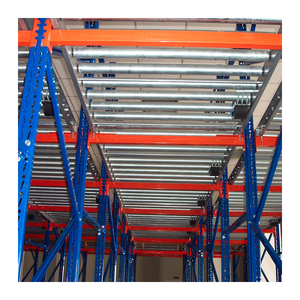
Pallet Flow Rack High Quality FIFO Gravity Flow Racking
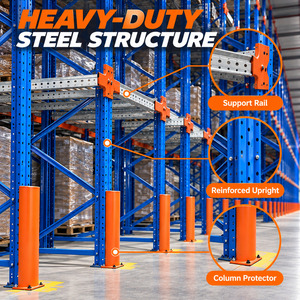
Custom Size Heavy-Duty Drive-In / Through Pallet Racking
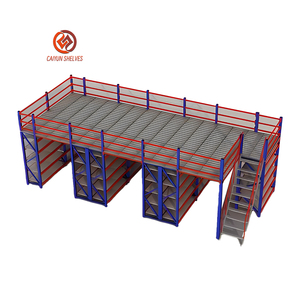
Heavy-Duty Mezzanine Floor Racking Storage Platform
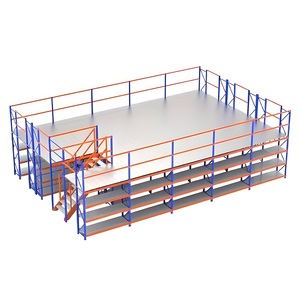
Industrial Structural Metal Platform & Multi-Tier Steel Rack
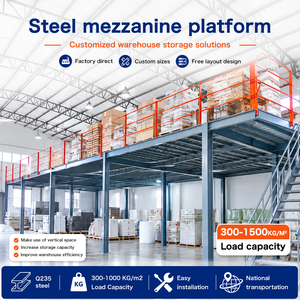
Custom Steel Mezzanine Warehouse Multi-Tier Shelving
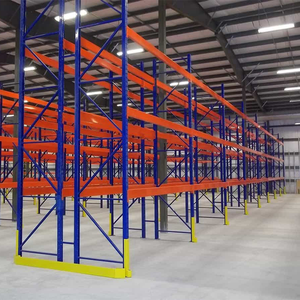
Ventilated Wire Mesh Decking Heavy-Duty Stacking Rack
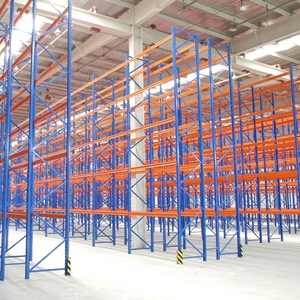
Industrial Heavy-Duty Selective Pallet Racking System
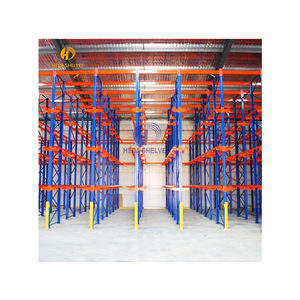
High-Capacity Drive-In & Drive-Thru Pallet Accumulator
1. Technical Fundamentals of Industrial Pallet Accumulation Racking
Modern warehouse logistical design requires balancing two competing metrics: cubic volumetric density and throughput speed. Conventional selective pallet racking provides 100% direct selectivity but sacrifices up to 60% of actionable warehouse volume to forklift access aisles. Industrial dynamic pallet accumulation racking systems—encompassing Gravity Pallet Flow, Push-Back Cart Systems, Drive-In Racks, and Semi-Automated Radio Shuttle Accumulators—solve this volumetric inefficiency by dynamic buffering of palletized loads along extended structural channels.
In high-density dynamic storage, "accumulation" refers to the system's mechanical or automated capacity to store multiple pallet loads end-to-end within a single structural lane without manual forklift entry into the rack matrix. These systems utilize specialized physics mechanisms—such as gravitational incline tracks, inclined nested rolling carts, or motor-driven shuttle buggies—to queue pallets efficiently.
Key Physical Principles of Pallet Accumulation Mechanics
Gravity Flow (FIFO)
Utilizes a 2.5% to 3.5% controlled incline along heavy-duty steel roller beds. Pallets loaded from the rear automatically glide toward the picking face via gravity, controlled by internal magnetic or centrifugal speed retarders.
Push-Back Carts (LIFO)
Leverages nested structural steel carts riding on inclined beam tracks. Forklifts push front-loaded pallets deeper into the rack channel, creating a multi-deep buffer (2 to 6 pallets deep) from a single aisle.
Radio Shuttle (Semi-Automated)
Replaces gravity or forklift push force with an autonomous lithium-ion powered micro-carrier platform controlled via RF/Wi-Fi signals, achieving deep-lane accumulation up to 40+ pallets in depth.
Choosing an industrial dynamic pallet accumulation system requires rigid engineering evaluation of pallet structural integrity, footprint tolerances, beam deflection formulas, and international safety compliance standards including European EN 15512 (Steel Static Storage Systems) and FEM 10.2.02 guidelines.
2. Structural Engineering & CE Certification Standards (EN 15512 & FEM)
For global procurement managers, logistics developers, and engineering EPC contractors, sourcing pallet accumulation racking from overseas manufacturers introduces critical compliance liabilities. Racking failure under heavy dynamic loading risks catastrophic structural collapse, inventory loss, and personnel injury. CE certification is not merely a export stamp; it is a structural validation of steel tensile strength, weld seam integrity, finite element analysis (FEA), and localized seismic stress modeling.
CE & EN 15512 Structural Requirements
Under European safety directives, industrial storage racks function as structural steel installations. Zenithrack systems undergo strict compliance testing according to EN 15512, governing structural static calculation methods:
- Global Stability & Sway Analysis: Accounting for second-order structural effects ($\mathrm{P}-\Delta$ and $\mathrm{P}-\delta$ moments) under maximum design payload.
- Beam Deflection Limits: Strict enforcement of $L/200$ deflection limits for standard beams and $L/300$ for automated dynamic dynamic shuttle channels to prevent carrier jamming.
- Cold-Formed High-Tensile Steel: Utilization of certified Q355B structural steel profiles featuring superior yield strength ($\ge 355 \text{ MPa}$) over standard lower-grade commercial steel.
Quality Assurance Protocol at Zenithrack
Our Dongguan manufacturing base implements strict ISO 9001:2015 dynamic quality control protocols across our 8,000 m² workshop:
- Spectrometric Material Verification: Every batch of coil steel undergoes chemical composition analysis to verify carbon, manganese, and silicon content.
- Ultrasonic Weld Seam Testing: Robotic MIG welding joints connecting upright beam connectors are non-destructively tested for penetration depth and fatigue resilience.
- Thickness & Salt-Spray Passivation: Electrostatic thermosetting epoxy powder coating yields a minimum 60–80 μm dry film thickness, resisting over 500 hours of continuous salt spray (ASTM B117 standard).
3. Pallet Accumulation Architectural Comparison Matrix
Different accumulation racking architectures serve vastly different SKU profiles and inventory handling strategies. Below is a comprehensive engineering comparison prepared by Zenithrack senior logistics designers to assist project directors in specifying the proper high-density storage technology:
| Accumulation Technology | Storage Rotation | Volumetric Density % | Lane Depth Capacity | Forklift Entry Required? | Relative Cost per Pallet |
|---|---|---|---|---|---|
| Gravity Pallet Flow | Strict FIFO | 85% – 90% | 2 to 20 Pallets Deep | No (Aisle Picking Only) | High (Roller Tracks & Brakes) |
| Push-Back Cart System | LIFO | 75% – 85% | 2 to 6 Pallets Deep | No (Front Load Aisle) | Medium-High (Precision Carts) |
| Radio Shuttle System | Flexible FIFO / LIFO | 88% – 95% | 2 to 40+ Pallets Deep | No (Automated Shuttle) | High (Shuttle Hardware Included) |
| Drive-In / Drive-Through | Strict LIFO / FIFO | 65% – 75% | 3 to 10 Pallets Deep | Yes (Inside Frame) | Low-Medium (Basic Structural Steel) |
| Selective Pallet Rack | 100% Direct Access | 40% – 50% | 1 Pallet Deep (Single) | No (Standard Aisles) | Low (Baseline System) |
Engineers' Note: When designing long gravity flow channels (> 6 pallets deep), it is essential to install auto-separator brake mechanisms at the picking face. Without mechanical separation, the cumulative line-pressure of resting rear pallets creates excessive friction against the lead pallet, preventing safe forklift extraction and exposing operators to tip-over hazards.
4. Future Sourcing & Technological Trends in Dynamic Storage (2025–2030)
The global warehousing and logistics industry is undergoing a structural paradigm shift driven by e-commerce fulfillment speed, rising land acquisition costs, and labor shortages. When procuring dynamic pallet accumulation systems over the next decade, enterprise buyers must align their infrastructure with four emerging technical trends:
1. AGV/AMR Interface Compatibility
Traditional accumulation racking was designed around human forklift operators. Next-generation systems feature robotic guidance target plates, refined entry funnels, and ground-level optical sensors that interface seamlessly with Automated Guided Vehicles (AGVs) and Autonomous Mobile Robots (AMRs).
2. Smart IoT Roller Health Monitoring
Gravity flow accumulation lanes are integrating smart sensors within speed controllers. These IoT nodes monitor roller rotational friction, ambient temperatures in cold storage environments, and impact vibration, sending predictive maintenance alerts to facility WMS systems before a roller seizes.
3. Cryogenic & Cold Chain Materials Optimization
With refrigerated logistics experiencing rapid CAGR, dynamic racking must maintain structural ductility at temperatures down to -30°C. Modern specifications require specialized steel alloy chemistries (high nickel and manganese content) and cold-form formulations that eliminate low-temperature brittle fracture risks.
4. Modular Structural Reconfigurability
Warehouse tenants increasingly reject single-purpose rigid structures. Sourcing trends favor modular beam connectors, clip-in cart rails, and adjustable slope brackets that allow facilities to convert a Push-Back lane into Selective or Shuttle racking with minimal hardware replacement.
5. Why Sourcing Direct from Zenithrack Delivers Unmatched ROI
Zenithrack Industrial Equipment Co., Ltd. is not a trading intermediary. We are a direct manufacturing enterprise headquartered in Dongguan, Guangdong, China. For over 15 years, our engineering team has designed, roll-formed, welded, and shipped heavy-duty warehouse racking systems to logistics hubs, Fortune 500 manufacturing facilities, and industrial distributors across the globe.
The Manufacturer Direct Operational Edge
In-House CAD & BIM Layout Engineering
Send us your warehouse DWG building plans and load parameters. Our senior structural engineers generate comprehensive 2D CAD layout options and 3D structural models complete with structural dynamic calculation reports—completely free of charge.
Direct Factory Pricing & Zero Markup
Eliminate middleman trading margins. By acquiring structural steel coils directly from state-owned steel mills and running high-speed automated roll-forming lines, Zenithrack delivers 15% to 30% cost savings compared to regional resellers.
Export Packaging & Free Sample Kits
We supply steel beam/upright profile samples free of charge (freight collect). All export shipments utilize heavy steel strapping, moisture barrier film wrapping, and timber-free steel skids designed for rapid forklift unloading.
With an annual sales turnover exceeding CNY 100 million in China's domestic market and expanding international project footprints in North America, Europe, Australia, and the Middle East, our factory possesses the capacity, machinery, and quality control infrastructure to handle large-scale multi-container storage projects smoothly.
6. Frequently Asked Sourcing & Engineering Questions (FAQ)
Our engineering department answers the most common technical questions asked by overseas buyers when sourcing pallet accumulation racking systems from China:
How do I determine whether Gravity Pallet Flow or Radio Shuttle is right for my warehouse?
The choice depends primarily on your required inventory rotation (FIFO vs. LIFO), SKU variety, and lane depth goals:
- Gravity Pallet Flow: Ideal when strict First-In, First-Out (FIFO) batch control is required (e.g., food & beverage, pharmaceuticals, perishable consumer goods). Best for medium lane depths (4 to 12 pallets). Requires zero electricity or battery charging.
- Radio Shuttle Racking: Ideal when you need extreme density (deep lanes up to 40+ pallets) and wish to alternate between FIFO and LIFO modes. Provides faster forklift handling cycle times than Drive-In racks because the shuttle performs intra-channel transport automatically.
Why is CE Certification and EN 15512 compliance essential for dynamic racking?
CE certification under EN 15512 verifies that the racking structure has undergone rigorous structural calculation, accounting for steel yield strength, beam deflection tolerances, dynamic loading impact, and sway stability. In European, Middle Eastern, and North American jurisdictions, municipal building inspectors and industrial insurance underwriters frequently require documented EN 15512 calculations and CE compliance before granting facility occupancy or operational permits.
What technical details does Zenithrack need to produce a free CAD layout design?
To deliver an accurate, structurally compliant design layout, please provide:
- Architectural floor plan or CAD drawing showing warehouse dimensions, clear height under roof trusses, and column locations.
- Pallet specifications: Outer length, width, height (including goods), and total gross weight per pallet.
- Pallet bottom deck style (e.g., 2-way, 4-way entry, GMA, Euro-pallet bottom runners).
- Forklift specifications: Model, maximum lift height, collapsed mast height, and minimum turning radius.
- Operating temperature range (ambient, chilled, or -25°C freezing) and local seismic design requirements.
How does Zenithrack prevent damage to goods during dynamic gravity acceleration in flow racks?
We integrate heavy-duty centrifugal magnetic speed controllers (brake rollers) every 1.2 to 1.5 meters along the incline track. These self-regulating internal braking mechanisms limit pallet speed to a safe maximum of 0.3 m/s regardless of pallet weight. Additionally, mechanical safety separators at the discharge face keep trailing pallets held back 150mm away from the lead pallet, allowing forklifts to lift the pick pallet smoothly without friction drag.
What are your standard manufacturing lead times and export packing standards?
Standard manufacturing lead time is 15 to 25 calendar days upon structural drawing sign-off and deposit receipt. All steel components are bundled using automated steel banding, wrapped in protective stretch film to prevent moisture exposure during sea freight, and fitted with custom steel feet so unloader teams can extract bundles cleanly via forklift without damage to powder coating.
Accelerate Your Warehouse Capacity with Zenithrack Engineers
Get a complete structural proposal, 2D/3D CAD layout, and factory-direct price quotation within 24 hours. Speak directly to our senior logistics design team today.
Contact Us