CE Certified Stack Crane & Heavy Duty Racking Systems
Explore our precision-rolled, high-tolerance AS/RS stacker crane rack structures and heavy-duty modular stacking racks manufactured for global automated warehouses.
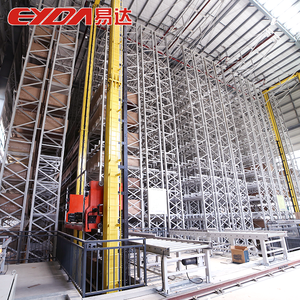
EYDA ASRS Warehouse System Stack Crane Automated Storage Retrieval System Free Design Intelligent Cold Storage Shuttle Rack High
Ultra-high density automated storage structure compatible with intelligent cold storage shuttles and precision stacker cranes. Features custom layout engineering for zero cold-bridge structural integrity.
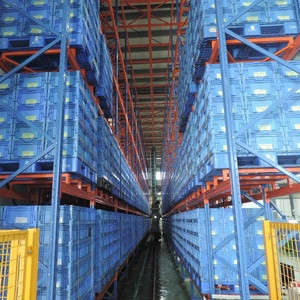
Automatic Storage and Retrieval System Pallet Racking Automated Warehouse ASRS System Stacker Crane
Heavy-duty structural pallet racking custom-engineered for rail-guided stacker crane masts. Rigorous mill-scale steel tolerances ensure seamless automated load positioning.
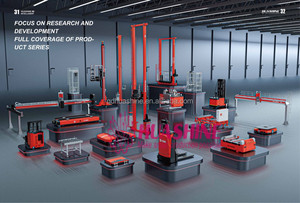
HEAVY DUTY HUASHINE ASRS Automatic Storage Racking System with Stacker Crane/AGV/4 WAY CAR for Raw Material/Finished Goods
Versatile automated racking framework integrating stacker cranes, AGVs, and 4-way shuttles for high-throughput raw material and finished goods distribution hubs.
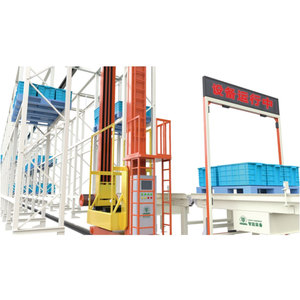
Automated Storage and Retrieval System with Stacker Crane and Steel Racking System
High-bay structural rack tower designed according to FEM 10.2.02 guidelines. Capable of supporting dynamic crane mast vibration and heavy pallet dynamic loading.
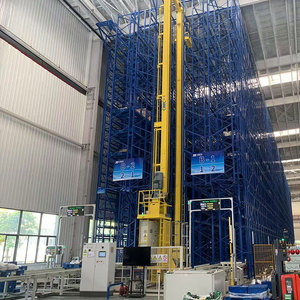
PTERIS Intelligent Stacker Crane Automated Storage Retrieval System Steel ASRS Racking for Exercise Stacking Racks Shelves
Precision cold-formed high-strength steel racking matrix engineered specifically for PTERIS stacker crane automation systems, minimizing deflection under max payload.
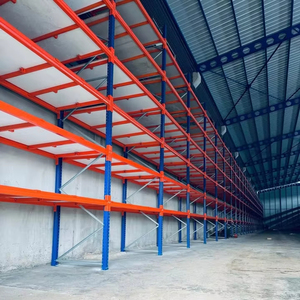
Peterack CE Certified Heavy Duty Stacking Shelf Racks Pallet Rack Multi Layer Shelf Garage Stacking Shelf Warehouse Storage Rack
CE-certified modular stacking frame shelf system. Combines the flexibility of portable post pallets with the raw load capacity of structural warehouse heavy pallet racking.
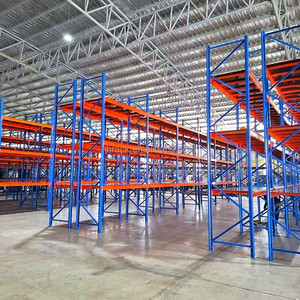
ODM Adjustable Beam Rack Industrial Heavy Duty Storage Shelves System Stacking Units Metal Rack Warehouse Steel Pallet Racking
Customizable interlocking beam storage unit engineered with multi-pitch vertical adjustment. Electrostatic powder-coated steel for maximum abrasion resistance.
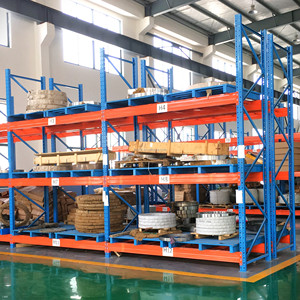
High Capacity Steel Stacking Racks 3 Layer Heavy Duty Adjustable Steel Garage Storage Shelving Rack For Warehouse Stacking Racks
Rigid multi-layer stacking rack modules featuring reinforced corner posts and footplates. Designed for rapid deployment without floor anchoring requirements.
Structural Engineering Guidelines for CE Certified Stacker Crane Racking Systems
In modern high-bay automated storage and retrieval systems (AS/RS), the storage rack structure serves a dual purpose: it is both the primary load-bearing matrix for heavy palletized goods and the guiding superstructure for high-speed stacker cranes. Unlike conventional selective pallet racking operating with manual forklifts, CE certified stack crane storage racking requires millimetric precision, strict deflection control, and comprehensive dynamic fatigue calculations under European standards EN 15635, EN 1090-1, and FEM 10.2.02.
When stacker cranes travel along ground-guided rails at horizontal speeds exceeding 240 meters per minute and vertical hoist speeds up to 90 meters per minute, the vertical columns and beam ties undergo rapid dynamic acceleration, deceleration forces, and micro-vibrations. Standard steel profiles fail rapidly under these fatigue cycles if structural rigidity and hole-pitch punching tolerances are not held within ultra-tight margins.
Engineering Insight: Deflection Ratios in AS/RS Design
While conventional pallet racking permits a maximum beam deflection ratio of L/200 (where L is beam span), stacker crane racking demands strict deflection thresholds of L/300 to L/400 under full nominal load. Excessive sway or deflection disrupts optical sensor position positioning, leading to automated crane fault trips or mechanical collision hazards.
Critical Manufacturing Standards for CE Certification Compliance
To obtain full CE Certification under EU Regulation (EU) No 305/2011 (Construction Products Regulation), stack crane racking suppliers must enforce rigorous material control and execution quality. Zenithrack's engineering and manufacturing workflow incorporates the following essential technical pillars:
High-Yield Q355B / Q420 Steel
We source certified structural structural cold-rolled coil steel featuring high tensile strength and yield stress, ensuring high resistance to torsional twisting and lateral shear during crane accelerations.
Automatic CNC Roll-Forming
Uprights are produced on continuous multi-pass automated CNC roll-forming machinery. Hole-pattern pitches are punched prior to forming to prevent material stress concentrations and guarantee ±0.5mm vertical accuracy.
Robotic Pre-Weld Alignment
Beam connectors and top-guide rail tie plates undergo automated robotic MIG welding with pulse-arc control. Every load connector is 100% inspected for weld penetration and porosity according to EN ISO 5817.
Below is a comparative engineering reference matrix highlighting structural performance parameters across standard storage racking vs. specialized CE Certified Stacker Crane Storage Racks:
| Engineering Attribute | Standard Selective Racking | CE Certified Stack Crane AS/RS Racking |
|---|---|---|
| Governing Standard | EN 15512 / ANSI MH16.1 | FEM 10.2.02 / EN 1090-2 (EXC2 or EXC3) |
| Maximum System Height | Up to 12 - 15 Meters | Up to 45+ Meters (High-Bay Clad Building Compatible) |
| Allowable Upright Out-of-Plumbness | H / 500 | H / 1000 (Tighter vertical plumb tolerances) |
| Column Profile Construction | Open Cold-Formed Channel | Heavy-Duty Closed/Box-Formed or Reinforced Web Profile |
| Top Crane Guide Rail Integration | Not Applicable | Direct Tied-in Crane Guide Beams with Dynamic Dampening |
| Handling Equipment Interface | Manual Reach Truck / Counterbalance Forklift | Fully Automated Rail-Guided Stacker Crane / WCS Driven |
Future Procurement Trends in Automated Storage & Stacker Crane Racking (2025–2030)
Global supply chain networks are undergoing a massive transformation driven by land scarcity, labor cost escalation, and the demand for 24/7 omni-channel fulfillment centers. Procurement executives and logistics engineers are no longer viewing warehouse racking as passive storage furniture. Instead, racking is evaluated as a structural backbone integrated with robotics, Internet of Things (IoT) sensors, and predictive maintenance telemetry.
As enterprise manufacturers transition from manual storage to automated warehousing, several critical trends are defining the procurement criteria for stack crane storage racks:
1. Integration of Dual-Mast vs. Single-Mast Stacker Crane Interfaces
Higher payload capacities—reaching 3,000 kg per pallet unit—have increased the adoption of Dual-Mast Stacker Cranes in heavy industrial sectors such as automotive manufacturing, cold storage logistics, and chemical processing. Dual-mast cranes exert symmetric dynamic wheel loads on top guide rails and bottom floor tracks. Consequently, rack suppliers must model full 3D Finite Element Analysis (FEA) to evaluate sway under combined wind load (in rack-supported building designs) and dynamic breaking inertia.
2. Cold Storage Automation & Thermal Shrinkage Mitigation
Deep-freeze automated warehouses operating at temperatures down to -30°C present unique metallurgical challenges. Steel ductility drops significantly under sub-zero conditions, increasing brittle fracture risks. Procurement teams are demanding certified steel grades (such as S357J2+N) tested via Charpy V-notch impact tests. Furthermore, storage racks must accommodate linear thermal contraction without unseating beam locks or misaligning optical laser positioning targets utilized by automated stacker cranes.
3. Hybrid AS/RS: Stacker Cranes Combined with 4-Way Radio Shuttles
The convergence of stacker cranes for vertical transport and multi-directional 4-way shuttles for horizontal aisle movement is rapidly replacing single-deep selective layouts. This hybrid model delivers extreme volumetric density alongside ultra-high SKU throughput. Storage racks built for hybrid shuttle systems feature special high-precision running rails stamped with indexing slots, requiring advanced cold-roll tooling only possessed by premier manufacturing facilities.
Technical Buyer’s Guide: Key Considerations for Sourcing AS/RS & Stacker Crane Racks
Selecting the right CE Certified stack crane storage racking manufacturer requires thorough technical evaluation beyond baseline price-per-kilogram quotes. A low-cost system built with inferior structural tolerances will inevitably lead to high operational downtime, excessive wheel wear on expensive stacker cranes, and potential safety non-compliance during factory audits.
Verifiable CE & EN Factory Approvals
Ensure the manufacturer holds EN 1090-1 Factory Production Control (FPC) certificates and ISO 3834 welding quality verification. CE marking requires full traceability from raw steel coils to hot-dip galvanizing or powder coating batches.
Full-Scale FEA Simulation & CAD Support
A qualified AS/RS racking supplier must provide custom 3D structural analysis modeling localized buckling, seismic accelerations (according to FEM 10.2.08), and load deflection maps under fully loaded operational states.
Surface Treatment & Powder Coating Integrity
Automated storage structures require durable, high-adhesion finishes. High-bay racking components should undergo automated 9-stage zinc-phosphate pre-treatment followed by thermosetting epoxy-polyester powder baking (minimum 70-90 microns dry film thickness).
By partnering with a real direct factory possessing automated roll-forming and robotic welding equipment, system integrators and global enterprise buyers eliminate middleman markups while ensuring direct control over engineering modifications and delivery timelines.
Our Manufacturing & Engineering Advantage
Zenithrack Industrial Equipment Co., Ltd. is a direct China manufacturer with over 15 years of specialization in heavy-duty warehouse storage racks, high-bay AS/RS structures, and custom material handling solutions.
Real Direct Factory (Not a Middleman)
Operates an expansive 8,000 m² state-of-the-art manufacturing plant in Dongguan, China. Our facilities feature 35 sets of specialized cold roll-forming lines, automated laser cutters, and robotic welding stations dedicated to rack manufacturing.
15+ Years Industry Expertise
Ranked among China's premier storage racking suppliers with annual sales exceeding CNY 100 million. Over a decade of proven experience delivering thousands of high-capacity warehouse installations globally.
75+ Technical Professionals
Supported by a dedicated team of 75+ structural engineers, CAD layout specialists, and quality control inspectors who ensure every component complies with international CE and FEM safety standards.
Free Layout Design & CAD Drawings
We provide complimentary warehouse layout optimization and detailed installation engineering drawings tailored to your facility dimensions, floor load limits, and stacker crane specifications.
Rigorous Multi-Stage QC Inspection
Our dedicated QC team performs strict quality checks at every production stage: raw steel chemical/tensile testing, profile dimension verification, hole-punching pitch accuracy, and powder-coat thickness testing.
Comprehensive OEM / ODM Customization
Full customization options for rack dimensions, pitch profiles, dynamic load ratings, RAL powder colors, and private label branding for global distributors and warehouse integrators.
Trusted by Fortune 500 & Logistics Leaders




Frequently Asked Questions on Stack Crane Racking
Get professional answers from our senior engineering team regarding technical design, CE certification, installation tolerances, and automated storage integration.
What makes CE Certified stack crane storage racking different from standard pallet racking?
What technical parameters are needed to design an automated stacker crane layout?
Do you provide international CE certification documents and mill test reports?
How do you guarantee installation precision for high-bay racking up to 30+ meters high?
Can your stack crane storage racking be customized for cold storage (-25°C to -30°C)?
What is the lead time for custom stack crane racking manufacturing and sample testing?
Optimize Your High-Bay Automated Warehouse Today
Consult with Zenithrack’s senior structural engineers to receive a customized FEA analysis, CAD floor plan design, and factory-direct quotation for your CE Certified Stack Crane Storage Racking Project.