Industry Whitepaper & Procurement Analysis: As global supply chains encounter escalating warehousing real estate costs, high-density lane storage racking systems—encompassing Drive-In, Radio Shuttle, Push-Back, and VNA layouts—have emerged as critical capital assets. Engineered with Q235B and Q355B structural steel, high-precision cold roll-formed uprights, and optimized beam connections, modern lane storage architectures maximize volumetric space utilization by up to 85% compared to standard selective pallet systems.
Primary Lane Storage Racking Systems & Technical Specifications
Selecting the correct lane storage configuration requires evaluating SKU variety, pallet dimensions, load capacities, throughput speed, and inventory management methodology (FIFO vs. LIFO). Below are 8 engineered storage systems manufactured directly at our Dongguan facility under rigorous quality control standards (ISO9001, CE, and FEM 10.2.02 compliant).
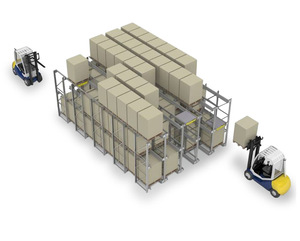
Drive-Through Racking Storage System
High-density storage engineered for high-turnover products. Operates on First-In, First-Out (FIFO) principles allowing forklifts to enter from both ends of the lane to access pallets directly.
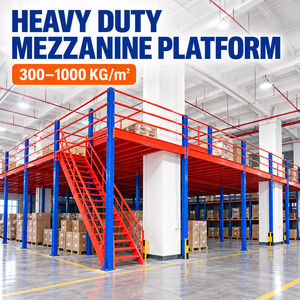
Heavy Duty Warehouse Mezzanine Floor Platform
Rack-supported multi-tier steel structure designed for vertical space expansion. Integrates pallet racking channels below with open floor storage or manual picking areas above.
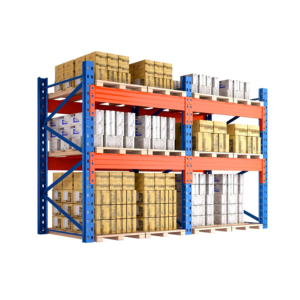
Anti-Rust Narrow Aisle Heavy Duty Steel Storage Rack
Precision-formed VNA steel racking with anti-rust epoxy powder coating. Maximize vertical clearance and minimize floor aisle widths down to 1.6 meters for VNA turret trucks.
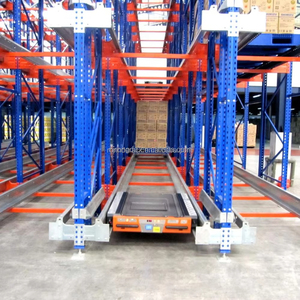
2-Way Automated Radio Shuttle Racking System
Semi-automated lane storage utilizing wireless radio shuttles to transport pallets along channel guide rails. Dramatically speeds up cycle times while preserving 100% safety inside lanes.
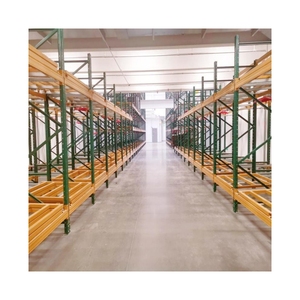
Push Back Pallet Racking with Guide Rails
Nested cart dynamic lane system. Pallets are loaded onto inclined rails; incoming loads push existing pallets backward. Excellent LIFO space utilization 2 to 6 pallets deep.
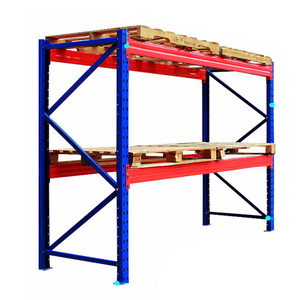
Heavy Duty Outdoor Weatherproof Pallet Racking
Hot-dip galvanized heavy-duty racking built to withstand outdoor environmental conditions. Handles load capacities from 1000KG to 3000KG per layer for industrial storage yards.
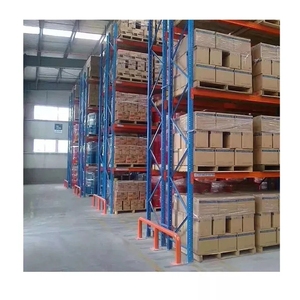
Adjustable Heavy Duty Metal Stacking Warehouse Racking
Modular boltless & beam-adjustable storage units. Engineered for rapid reconfiguration as inventory profiles change, providing high flexibility for regional logistics hubs.
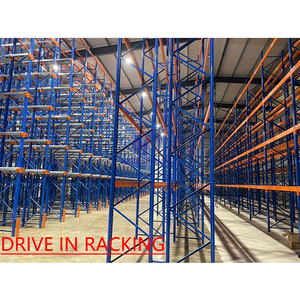
High Bay Drive-In Heavy Duty Storage Rack
Custom-built high-bay drive-in racking engineered for ultra-dense cold storage and bulk goods. Maximizes vertical building clear height while eliminating conventional aisles.
Engineering & Procurement Selection Matrix
To assist procurement directors and supply chain engineers in evaluating trade-offs between storage density, operational speed, and initial capital expenditure, our engineering team has synthesized this operational decision matrix:
| Racking Type | Storage Density | Pallet Accessibility | Inventory Rotation | Forklift Requirement | Relative CAPEX |
|---|---|---|---|---|---|
| Radio Shuttle Racking | Very High (85%) | Batch / Semi-Direct | FIFO or LIFO | Standard Counterbalance | Medium - High |
| Drive-In / Drive-Through | High (75%) | Lane-Wise Access | LIFO (Drive-In) / FIFO (Drive-Through) | Reach Truck / Specialized Narrow | Moderate |
| Push-Back Racking | High (70%) | Lane-Front Access | LIFO Only | Standard Forklift | Moderate |
| Very Narrow Aisle (VNA) | Moderate - High (65%) | 100% Direct Access | FIFO / Flexible | VNA Turret Truck / Wire Guided | Moderate |
| Heavy-Duty Mezzanine | Floor Space Multiplier (+100%) | Manual & Pallet Gate | Flexible | Forklift + Hand Trucks | Structural Capital Investment |
Future Procurement Trends in Lane Storage Systems (2025–2030)
The warehouse equipment industry is undergoing a structural transition driven by warehouse automation, rising energy costs, and stringent structural safety codes. Procurement leaders must align their equipment specifications with these emerging trends:
1. Semi-Automated & AMR Integration
Traditional manual drive-in systems are increasingly being retrofitted or specified as 2-way and 4-way Radio Shuttle lanes compatible with Autonomous Mobile Robots (AMRs) and AGVs, minimizing human operator error and frame collisions.
2. High-Yield Q355B Steel Alloys
Procurement specifies thinner profile structural steel with elevated tensile strength (Q355B vs older Q235B), reducing total shipping mass while maintaining structural rigidity and resisting dynamic impact force.
3. Cold-Chain Thermal Optimization
With cold storage operational costs running 3x to 5x higher than ambient facilities, high-density shuttle racking systems are becoming mandatory to reduce cubic air mass requiring refrigeration.
4. Eco-Friendly Powder Coating
Global environmental regulations demand non-toxic, zero-VOC electrostatic powder coatings and heavy-duty hot-dip galvanizing for long-term corrosion resistance without off-gassing in pharmaceutical cleanrooms.
Industrial Storage Architecture & Structural Engineering Advancements
Modern warehouse storage racking is no longer merely static steel shelving; it is an engineered structural system subject to complex static and dynamic load distributions, seismic forces, and operational impact dynamics.
Structural Column Profiles & Beam Connections: The core strength of high-bay drive-in and lane racking lies in the cold roll-formed upright profile. Using multi-stage continuous roll-forming mills, upright columns feature 8 to 13 bend structures that drastically increase moment of inertia and buckling resistance under heavy axial loads. Teardrop or modified hook-in beam connectors with safety locks ensure rigid framing that absorbs lateral impacts from materials handling equipment.
Seismic & FEM Compliance: In accordance with FEM 10.2.02 and ANSI/RMI MH16.1 codes, structural design must account for seismic acceleration coefficients based on facility geographic zones. Anchor bolt selection, baseplate thickness, and cross-bracing ratios (diagonal and horizontal trussing) are calculated to prevent progressive collapse under catastrophic ground movement or severe equipment impact.
Why Partner with Zenithrack Industrial Equipment Co., Ltd.
Headquartered in Dongguan, Guangdong, China, Zenithrack Industrial Equipment Co., Ltd. stands as an established enterprise racking manufacturer backed by 15+ years of dedicated engineering and manufacturing excellence. Rather than acting as a broker or trading intermediary, Zenithrack controls 100% of the production lifecycle in-house.
8,000 m² Modern Factory
Equipped with 35 sets of specialized machinery including automated continuous roll-forming lines, robotic CNC welding stations, automatic steel coil slitting, and a 100-meter automated powder-coating line.
75+ Senior Technical Staff
Our structural engineering team develops customized 2D CAD floorplans and 3D BIM structural layout drawings within 24–48 hours, optimizing warehouse layouts for maximum ROI prior to production.
Rigorous In-House Quality Control
Dedicated QC inspectors sample certified raw steel coil batches, measure wall thickness tolerances, inspect robotic weld seam penetration, and verify powder coat adhesion and thickness (60-80 microns).
Global OEM & Export Support Services
We offer international logistics packing, heavy-duty steel strapping, bubble film protection, and custom timber crating to ensure container shipments arrive intact worldwide. OEM color matching (RAL palette), branding, and custom packaging are fully supported for global equipment distributors and logistics contractors.
Frequently Asked Questions (FAQ) & Procurement Insights
How do I choose between selective pallet racking, drive-in racking, and radio shuttle racking?
What technical details are required to obtain a free custom CAD layout design?
Are free product samples available prior to issuing bulk export orders?
How does Zenithrack guarantee quality and raw material consistency?
Can racks be fully customized for OEM branding and corporate colors?
What are the average manufacturing lead times and installation support options?
Ready to Optimize Your Warehouse Volumetric Space?
Contact our senior structural engineering team today for a complimentary CAD floorplan layout design, load capacity analysis, and direct factory quotation.