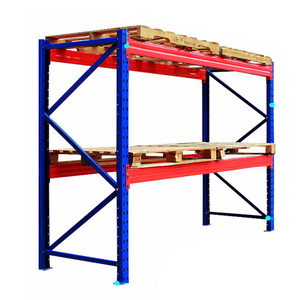
Direct Factory Catalog
Recommended Low Level Pallet Racking Systems
Engineered for maximum structural integrity, optimized forklift throughput, and rapid floor-level inventory dispatch.
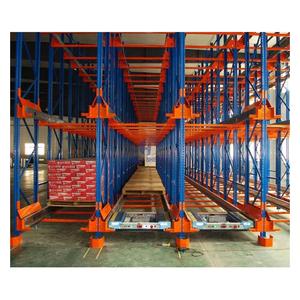
Customized Heavy Duty Automatic Storage Radio Shuttle Pallet Rack System
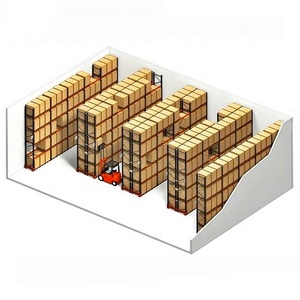
ISO CE Load 1000-3000 KG Per Level Warehouse Double Deep Steel Pallet Racking
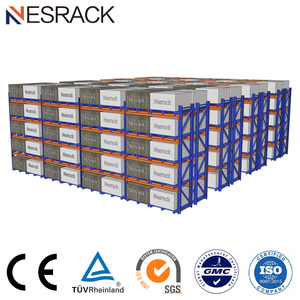
Wholesale Multi-Level Adjustable Heavy Duty Low Bay Pallet Racking System
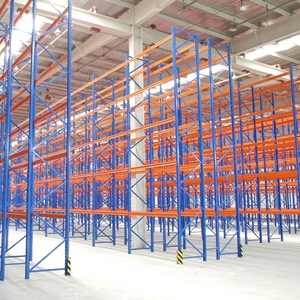
Low Price Custom 2-6 Level Industrial Stack Heavy Duty Selective Pallet Racks
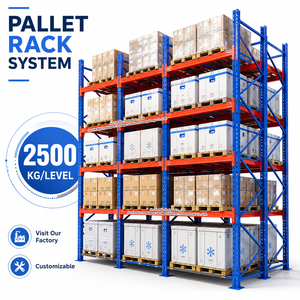
Heavy Duty Warehouse Storage Racking System 2500kg Per Level OEM Factory
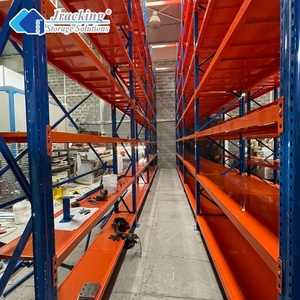
EURO Standard Warehouse Heavy Duty Steel Low Level Pallet Racking System
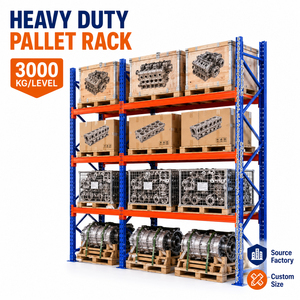
3000KG Heavy Duty Warehouse Shelf Rack for Pallet and Carton Storage (4 Levels)
15+
Years Manufacturing Experience
8,000m²
Modernized Factory Base
35+
Automated Machine Lines
100M+
Annual Turnover (RMB)
Engineering Whitepaper
Comprehensive Engineering Analysis of Low Level Pallet Racking Systems
A technical deep-dive into structural physics, cold-rolled steel profiling, weight distribution dynamics, and floor utilization efficiency.
In modern industrial logistics, facility height limits, ceiling clearance constraints (such as under-mezzanine spaces or facilities under 6 meters clear height), and fast-moving SKU dispatch requirements present unique structural engineering challenges. Low level pallet racking systems—typically defined as pallet storage configurations featuring 1 to 4 beam levels reaching overall vertical heights between 2.0 meters and 5.5 meters—have evolved from basic storage frames into highly specialized material handling structures.
Key Takeaway for Warehouse Operations & Procurement Officers:
Low level pallet racking provides 100% immediate pallet accessibility without requiring costly high-reach reach trucks or VNA (Very Narrow Aisle) equipment. By utilizing standard counterbalanced forklifts or electric stackers, operators achieve lower capital expenditure (CAPEX) while maintaining high operational picking speeds.
1. Structural Mechanics & Steel Specification Standards
The structural integrity of low level pallet racking depends directly on the mechanical yield strength of the cold-rolled coil steel selected during roll-forming. At Zenithrack Industrial Equipment Co., Ltd., we utilize high-grade Q235B and Q355B structural steel, conforming strictly to international standards such as FEM 10.2.02 (European Racking Federation) and ANSI MH16.1 (Storage Equipment Manufacturers Association).
1.1 Upright Frame & Column Metallurgy
Unlike standard static shelving, low-level pallet frames must absorb dynamic horizontal impact forces caused by frequent forklift loading cycles at floor level. Upright columns feature multi-stage omega profiles (typically 80mm to 120mm face widths) engineered with 11-fold to 13-fold bending points. This geometry delivers high sectional inertia and resistance against torsional buckling.
- Material Yield Strength: Q355B cold-rolled structural steel offering a minimum yield strength of 355 MPa.
- Pitch Adjustability: Standard 50mm or 75mm pattern hole punching allows precise beam placement to maximize vertical clear space per tier.
- Footplate Anchor Mechanics: Dual-hole heavy-duty baseplates secured into reinforced concrete floors using M12 x 100mm mechanical expansion anchors to resist overturning moments.
1.2 Box Beam Geometry & Connection Safety Locks
Beams for low-level pallet racks are engineered primarily as twin C-profile interlocked box sections. The step-beam or box-beam configuration ensures high resistance to lateral deflection when bearing concentrated loads up to 4,000 kg per level.
Beam connectors feature welded multi-claw connectors (3-hook or 4-hook configurations) designed to engage tightly into the upright teardrop or diamond hole patterns. Each connection point is fitted with a bright zinc-plated spring safety pin, preventing accidental dislodgement from upward forklift forks bump.
2. Engineering Technical Matrix: Low-Level Racking Configurations
Selecting the optimal low-level pallet racking profile requires matching structural load capacities against handling equipment parameters. The matrix below outlines standardized technical specifications engineered by China's leading OEM suppliers:
| Racking Architecture | Typical Height Range | Load Capacity per Level | Access Flexibility | Ideal Industry Application |
|---|---|---|---|---|
| Selective Low-Level Rack | 2.0m – 4.5m | 1,000 kg – 3,500 kg | 100% Direct Access | 3PL Logistics, Retail Distribution, FMCG Warehouses |
| Double-Deep Low-Level Rack | 2.5m – 5.0m | 1,500 kg – 3,000 kg | 50% Immediate Access | Cold Storage, Batch Manufacturing, High-Density Stock |
| Low-Level Drive-In System | 3.0m – 5.5m | 1,000 kg – 2,000 kg | LIFO (Last-In, First-Out) | Homogeneous SKU storage, Beverage Bottling Plants |
| Radio Shuttle Low-Bay Rack | 2.5m – 5.0m | 1,000 kg – 2,500 kg | FIFO or FILO Automated | Pharmaceutical Storage, Automated Buffer Zones |
| Heavy-Duty Decked Shelf Rack | 1.8m – 3.5m | 500 kg – 2,000 kg | Manual / Forklift Hybrid | Tooling Stores, Heavy Auto Parts, Hardware Wholesalers |
3. Enterprise Manufacturing Strengths & Quality Control Protocol
As a premiere China low level pallet racking manufacturer located in Dongguan, Guangdong, Zenithrack Industrial Equipment Co., Ltd. has established an industry-leading position through structural precision, continuous technological investment, and stringent quality control protocols.
15+ Years Factory Heritage
Proven track record supplying over 100 million RMB annually in domestic and export markets, supported by a specialized team of 75+ structural engineers and skilled technicians.
In-House Testing & QC
Comprehensive inspection at every stage: raw coil spectral analysis, hole-punch pitch tolerance verification, robotic weld seam ultrasonic testing, and powder coat adhesion analysis.
Free CAD & Engineering Layout
Our dedicated engineering department creates optimized 2D/3D CAD layouts and load calculations tailored to your exact warehouse footprint and forklift aisle tolerances within 24 hours.
Why Global Procurement Directors Partner with Zenithrack
Over the past 15 years, Zenithrack has operated an 8,000 square meter manufacturing base equipped with 35 sets of advanced automated roll-forming machines, robotic welding stations, and an environmentally compliant continuous thermosetting electrostatic powder coating line.
By keeping all manufacturing processes completely in-house—from cold-roll profile forming to final surface finishing—we eliminate middleman markups, guarantee strict dimensional consistency, and provide flexible OEM customization (including custom colors, non-standard beam lengths, and distributor branding).
Industry Insight
Future Procurement Trends in Low Level Pallet Racking
Strategic supply chain advancements shaping structural storage design over the next decade.
As global supply chains shift toward micro-fulfillment centers, urban distribution hubs, and automated modular warehouses, low level pallet racking is undergoing rapid technological innovation. Procurement managers must evaluate four core emerging trends when sourcing racking systems from Chinese suppliers:
Trend 1: Hybrid Manual-AGV Interoperability
Modern low-level storage bays are increasingly designed to interact simultaneously with manual forklift drivers and Autonomous Mobile Robots (AMRs) or Automated Guided Vehicles (AGVs). This requires strict manufacturing tolerances on lower beam entry heights, ultra-flat footplate leveling shims, and integrated laser-reflective positioning targets attached to upright profiles.
Trend 2: Eco-Friendly Powder Coatings & Corrosion Resistance
Global environmental ESG standards demand solvent-free, heavy-metal-free electrostatic epoxy-polyester powder finishes. Future-proof racking suppliers are adopting multi-stage zinc-phosphate pretreatment washers combined with automated curing ovens. This ensures salt-spray resistance exceeding 500 hours, making low-level racks suitable for high-humidity and semi-outdoor dock environments.
Trend 3: Smart RFID & Weight Sensor Beam Integration
Instead of passive steel beams, modern low-level rack levels are being retrofitted with embedded IoT load-cell sensors and beam-mounted RFID arrays. These sensors monitor real-time beam deflection, detect structural overloading before permanent deformation occurs, and instantly sync physical pallet locations with Warehouse Management Systems (WMS).
Trend 4: Boltless Modular Adaptability for E-Commerce Agility
With SKU volatility rising, warehouse operators are moving away from fully static welded frames. Low-level racking systems engineered with quick-release teardrop connectors, clip-in wire mesh decking, and drop-in pallet support bars enable operational teams to reconfigure beam levels without heavy machinery or structural cutting.
Frequently Asked Questions
Buyer's Procurement FAQ
Answers to common engineering, quality assurance, and international trade inquiries regarding China low level pallet racking.
How do low-level pallet racking systems maximize warehouse throughput?
Low-level pallet racking systems (typically 2 to 4 tiers high) keep all inventory within immediate reach of standard counterbalanced and reach forklifts. Because forklifts do not need to elevate loads above 5 meters, lift cycle times are significantly reduced, risk of high-level pallet drop accidents is eliminated, and floor-level picking speeds increase by up to 40%.
What steel grades and surface treatments are recommended for outdoor low-level racking?
For outdoor or high-humidity applications, we recommend Q355B structural steel finished with Hot-Dip Galvanization (HDG) conforming to ISO 1461 standards, or high-durability outdoor polyester powder coating. Hot-dip galvanizing provides a zinc coating thickness of 60–80 microns, delivering decades of rust protection against harsh weather exposure.
What information is required to receive a free layout design and quotation?
To provide an engineered layout and price quote, our team requires: (1) Warehouse floor plan dimensions and clear ceiling height, (2) Pallet size (Width x Depth x Height including cargo), (3) Maximum load weight per pallet, (4) Forklift model or minimum aisle turning radius, and (5) Operating temperature (ambient vs cold storage).
How does Zenithrack ensure structural safety during seismic events?
Our structural engineers calculate racking frame stability using finite element analysis (FEA) compliant with FEM 10.2.02 and RMI standards. We incorporate heavy-duty seismic baseplates, reinforced bracings (horizontal and diagonal C-profiles), and heavy expansion bolts tailored to your local geographic seismic hazard index.
Can Zenithrack provide customized OEM branding and specific color coding?
Yes. We offer complete OEM services for international distributors, system integrators, and rack dealers. We can customize beam colors (RAL color matching system), print brand logos on frame upright protectors, and provide custom export packaging featuring your company branding.
What is the standard lead time and container packing method for export?
Standard production lead time is 14 to 21 days for 40ft high-cube container orders. Beams and uprights are bundled with steel strapping, wrapped in protective plastic stretch film, and fitted with timber corner guards to prevent freight damage during ocean transit.