Featured Industrial Multi-Tier & Heavy Duty Pallet Racking Systems
Explore our factory-engineered structural storage solutions designed for maximum vertical floor utilization, extreme load bearing safety, and rapid ROI.
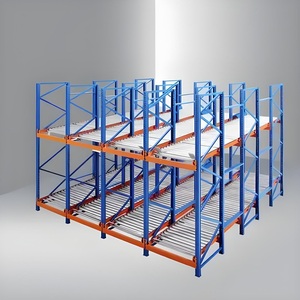
Custom Industrial Warehouse Pallet Flow Steel Roller Racks Gravity Racking
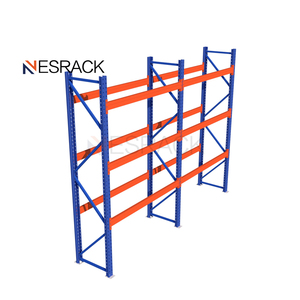
Customized Heavy Duty Selective & Multi-Layer Adjustable Pallet Racking
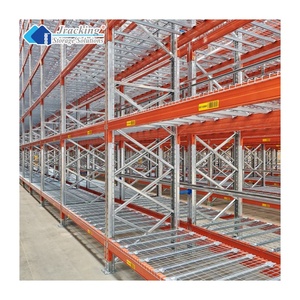
Industrial Vertical AU Standard Pallet Racking System for Logistics Optimization
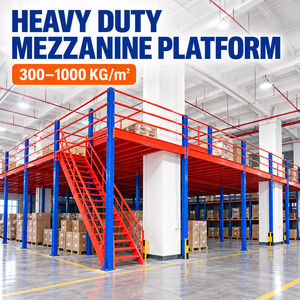
Heavy Duty Warehouse Mezzanine Floor Platform with Integrated Racking
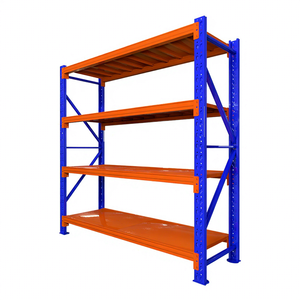
Adjustable Industrial Heavy Duty Steel Stacking & Modular Shelving Unit
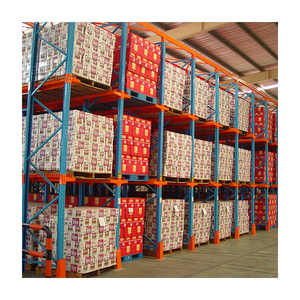
Factory Direct Multi-Tier Drive-In & Drive-Through Racking System
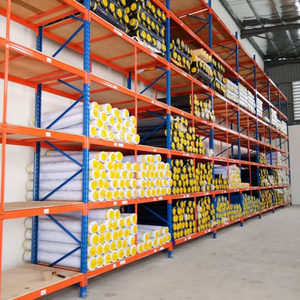
Industrial Heavy Duty Galvanized Pallet Racking (2000KG - 3000KG Capacity)
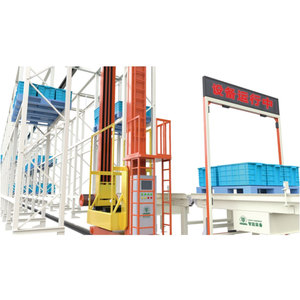
Automated Storage & Retrieval System (AS/RS) with Stacker Crane Integration
Engineering Principles of Multi-Tier Pallet Racking Systems
In modern enterprise supply chains, land acquisition costs and warehouse rental rates continue to surge globally. Logistics managers, industrial architects, and procurement directors face unprecedented pressure to maximize cubic volume rather than square footage. Multi-tier pallet racking systems—engineered via high-strength cold-rolled structural steel—represent the ultimate architectural response to this challenge, multiplying usable floor footprint by 200% to 300% without expanding the building envelope.
As a premier China wholesale multi-tier pallet racking manufacturer, our engineering framework relies on structural steel grades premium certified under national and international standards (Q235B and high-yield Q355B). Unlike conventional single-level selective racking, multi-tier racking incorporates integrated walkways, structural steel joists, staircases, and heavy-duty steel decking. The vertical columns (uprights) serve a dual purpose: supporting heavy pallet loads on upper beam levels while simultaneously carrying the dead-and-live load of elevated catwalk mezzanine platforms.
Cold-Roll Profile Optimization & Mechanical Integrity
The structural performance of multi-tier racking depends on the geometry of the upright profile. Through advanced finite element analysis (FEA), our structural engineers optimize column cross-sections—utilizing 11 to 13 bending folds to dramatically increase column buckling resistance and moment of inertia. Key mechanical specs implemented in our Dongguan manufacturing center include:
| Structural Parameter | Standard Heavy Duty Racking | Zenithrack Multi-Tier Racking Spec | Engineering Benefit |
|---|---|---|---|
| Steel Grade Selection | Q235 Structural Carbon Steel | Q355B High-Yield Cold-Rolled Steel | +35% tensile strength; higher yield stress under dynamic loading. |
| Profile Punching Pitch | 75mm / 76.2mm (3 inches) | 50mm / 75mm Precision CNC Pitch | Optimizes beam vertical adjustment without compromising structural rigidity. |
| Beam Deflection Limit | L / 200 max span deflection | L / 300 Strict Engineering Limit | Prevents beam fatigue, ensures automated shuttle and crane operational safety. |
| Surface Protection | Standard Liquid Paint | Thermo-Hardened Epoxy Powder Coating (60-80μm) | Superior impact resistance, scratch resistance, and anti-corrosion life span. |
Every beam-to-upright connection is secured via 3-hook or 4-hook heavy-duty forged connectors featuring mechanical safety locks. This structural rigidity eliminates beam dislodgement risks caused by accidental forklift impacts, protecting both warehouse personnel and valuable inventory stored at elevated levels.
International Regulatory Compliance & Seismic Design Standards
Sourcing wholesale warehouse racking from China requires rigorous adherence to destination-market engineering codes. At Zenithrack Industrial Equipment Co., Ltd., our structural designs strictly comply with standard global regulatory frameworks including FEM 10.2.02 (European Federation of Materials Handling), EN 15512 (European Standard for Adjustable Pallet Racking), and ANSI/RMI MH16.1 (Rack Manufacturers Institute for the Americas).
Seismic Loading & Dynamic Force Engineering
In earthquake-prone regions (such as the Pacific Rim, parts of Western North America, and Southern Europe), racking platforms must withstand horizontal acceleration forces without structural collapse. Our engineering department conducts localized seismic load calculations incorporating parameters such as Peak Ground Acceleration (PGA), building ductility, and baseplate anchor bolt shear capacity.
We deploy enlarged, heavy-gauge footplates welded to upright bases, anchored into reinforced industrial concrete slabs via chemical expansion bolts. Horizontal and vertical diagonal X-bracing and K-bracing frameworks are strategically integrated into the multi-tier structure to disperse sway forces evenly to the ground floor, maintaining system equilibrium during seismic events.
Why Direct Sourcing from Zenithrack Gives You a Competitive Edge
As an original equipment manufacturer (OEM) operating an 8,000 m² modern manufacturing plant in Dongguan, China, we eliminate intermediary markups while maintaining total oversight of raw material selection, manufacturing tolerances, and export packing.
35+ sets of automated continuous roll-forming mills, robotic laser cutters, and automatic welding stations guarantee exact dimensional tolerances on all uprights and beams.
Dedicated QC inspectors conduct spectrometry steel checks, weld seam ultrasonic tests, and paint adhesion tests across every production batch prior to shipping.
Our application engineers deliver complimentary 2D CAD floor plans and 3D structural BIM models within 24 hours, optimizing clear aisle space and picking speed.
Engineered with structural safety factor thresholds up to 1.65 to 1.8, protecting your facility against accidental dynamic overloading or unexpected fork-truck impact.
Custom RAL color powder-coating matching, specific aisle-width engineering, personalized buyer logo labeling, and custom container bundling for easy unloading.
Extensive experience in loading export shipping containers (20GP / 40HQ) with custom steel bundling to prevent transit scratches and maximize volume efficiency.
Future Procurement Trends in Multi-Tier & Pallet Racking (2025–2030)
Global supply chain restructuring, the rapid growth of e-commerce micro-fulfillment centers, and the escalation of automated warehousing are driving significant architectural modifications in racking procurement. Buyers looking to future-proof their storage infrastructure must consider four core structural trends:
1. Hybrid High-Density Systems (Integrating Racking with AMR & AS/RS)
The boundary between traditional static pallet racking and automated warehousing is disappearing. Modern procurement contracts increasingly demand rack structures pre-engineered to accept Autonomous Mobile Robots (AMRs), Four-Way Radio Shuttles, and Automatic Guided Vehicles (AGVs). Multi-tier racking platforms are now designed with reinforced guidance rails, laser-guided positional reflectors, and ultra-flat floor decking tolerances to facilitate seamless robotic navigation.
2. Structural IoT Sensors & Real-Time Impact Monitoring
Dynamic rack failure caused by undetected forklift collisions is a major operational risk. Future multi-tier racking installations will increasingly incorporate smart IoT strain-gauge sensors and impact detectors embedded within high-risk corner upright protectors. These wireless sensors transmit real-time deflection and impact data to facility managers' mobile dashboards, enabling predictive maintenance before structural integrity is compromised.
3. Green Galvanizing & Eco-Friendly Powder Coatings
Environmental, Social, and Governance (ESG) compliance has moved into industrial purchasing decisions. B2B buyers now evaluate suppliers based on carbon footprint and non-toxic surface treatments. Lead-free electrostatic powder coatings, energy-efficient curing ovens, and eco-friendly hot-dip galvanizing processes (reducing heavy metal sludges) are rapidly becoming mandatory procurement requirements across European and North American logistics hubs.
4. Modular & Demountable Structural Configurations
Third-party logistics (3PL) providers operating on 3-to-5-year facility leases demand highly adaptable storage solutions. Multi-tier racking systems engineered with boltless beam-connector geometries and modular floor joists allow complete system disassembly, re-configuration, or expansion without requiring destructive cutting or welding on site.
Frequently Asked Questions (FAQ) for Enterprise Procurement
Clear engineering answers to the technical, operational, and commercial questions asked by international buyers during racking procurement.
How do I choose between Selective Pallet Racking, Drive-In Racking, and Radio Shuttle Racking?
The choice depends directly on your SKU diversity, storage density requirements, and stock rotation model. Select Selective Pallet Racking when you handle high SKU counts and require 100% direct pallet accessibility. Choose Drive-In Racking for low SKU counts stored in high volumes where Last-In, First-Out (LIFO) inventory control is acceptable. Choose Radio Shuttle Racking when you require maximum volumetric density combined with fast forklift handling speeds and the flexibility to switch between FIFO (First-In, First-Out) and FILO (First-In, Last-Out) operation modes.
What architectural building data is required for Zenithrack to design a customized CAD layout?
To deliver an accurate, engineering-certified racking layout, we require: (1) An architectural floor plan or CAD drawing detailing warehouse dimensions, column grid placement, and dock doors; (2) Clear height beneath the lowest roof obstruction, light fixtures, or sprinkler mains; (3) Pallet specs including exact width, depth, height, and gross weight; (4) Forklift specifications (minimum aisle turning radius, maximum lift height, and mast height); and (5) Local seismic or fire-code requirements.
How are fire suppression (ESFR Sprinklers) integrated into multi-tier racking catwalks?
Multi-tier catwalk floors block ceiling-mounted fire sprinkler water coverage. To pass municipal fire codes, multi-tier platforms must utilize either 50%+ open-area perforated steel decking/wire mesh grating or feature dedicated in-rack sprinkler pipe grids installed directly underneath each intermediate walkway deck tier.
What are your factory quality control procedures for export orders?
Zenithrack enforces a 4-stage Quality Management System: (1) Spectral chemical analysis of incoming coil steel batch stock; (2) Automated laser and micrometer monitoring during cold roll-forming of uprights and beams; (3) Ultrasonic weld seam inspection on beam connectors; and (4) Cross-hatch adhesion and coating thickness testing on powder-coated surfaces prior to protective export packaging.
Do you provide free physical samples and custom installation drawings?
Yes. We provide free sample kits containing beam cross-sections, upright profiles, connectors, and color chips (freight collect). Every confirmed wholesale order includes complete step-by-step structural 3D assembly manuals, 2D CAD installation keymaps, and basic installation tooling components shipped inside the export container.
Transform Your Warehouse Storage Capacity Today
Connect with Zenithrack's senior structural application engineers for a complimentary floor plan audit, load calculation report, and factory-direct quotation within 24 hours.