Precision-Engineered Pallet Racking & Automated Systems
Explore our core industrial racking and automated handling product lines. Designed for structural resilience, high-density cube storage, and full operational safety.
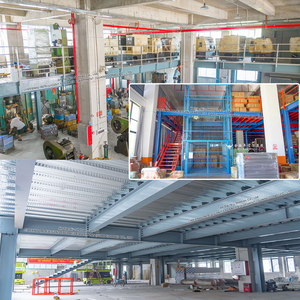
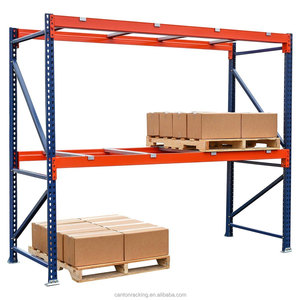
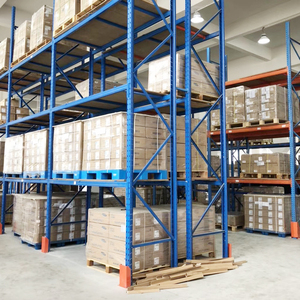
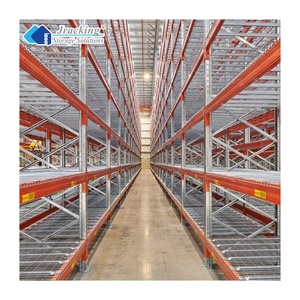
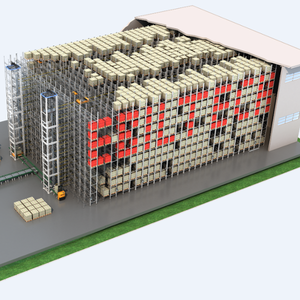
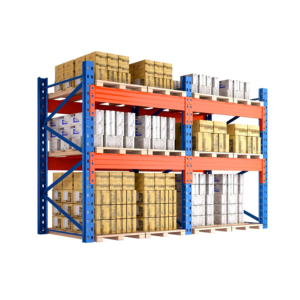
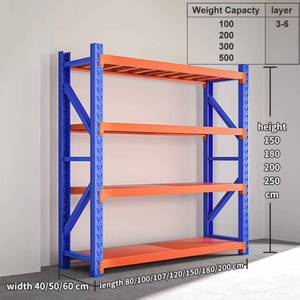
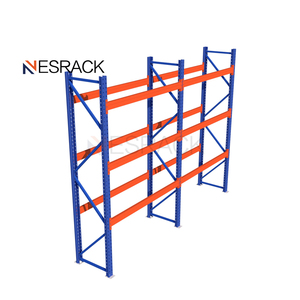
Architectural Breakdown: Modern Automated Pallet Handling Systems (AS/RS & Shuttle Logistics)
In contemporary intralogistics, Automated Pallet Handling Systems (APHS) represent the pinnacle of volumetric storage efficiency and operational throughput. As global supply chains encounter escalating land costs and labor market tightness, industrial enterprises must transition from manual forklift-dependent selective racking to dynamic, software-driven automated storage architecture.
An integrated automated pallet handling system typically combines high-bay structural steel racking, automated storage and retrieval system (AS/RS) stacker cranes, radio-controlled pallet shuttles, vertical lift transfer units, and continuous pallet roller/chain conveyors. Below is an engineering overview of the primary subsystems engineered by OEM/ODM manufacturing leaders:
Radio Shuttle Satellite Systems
Utilizing self-propelled 24V/38V lithium-powered shuttle cars operating on specialized guide rails inside storage channels. Reaching traverse speeds up to 160 m/min, satellite shuttle systems execute First-In First-Out (FIFO) and First-In Last-Out (FILO) retrieval logic with minimal operator intervention.
AS/RS Stacker Crane Racking
High-bay rack-supported structures engineered up to 40 meters in height. Rigid column profiles and custom beam connections withstand severe horizontal dynamic forces imparted by single or double-deep stacker cranes carrying unit loads exceeding 1,500 kg per position.
Pallet Conveying & AGV Interfaces
Seamless mechanical integration between main storage blocks and automated guided vehicles (AGV/AMR) or heavy-duty motor-driven roller conveyors. Features optical sensor alignments, pneumatic stoppers, and automated pallet profile gauge checking.
Industrial racking safety requires strict adherence to maximum allowable beam deflection limits. Under standard FEM 10.2.02 guidelines, maximum vertical deflection ($\delta$) under full nominal load must not exceed $\delta = L / 200$, where $L$ is the clear beam span. For automated stacker crane interfacing, tolerances tighten to $L / 300$ or $L / 400$ to prevent optical sensor misalignments during automated pallet insertion.
OEM & ODM Customization Framework for Global Exporters
As a direct manufacturer with an 8,000 m² factory footprint and 35+ specialized roll-forming and robotic welding suites, we provide comprehensive OEM (Original Equipment Manufacture) and ODM (Original Design Manufacture) services tailored to warehouse automation integrators, general contractors, and material handling distributors.
1. Material Selection & Metallurgical Integrity
All structural uprights, box beams, and shuttle guide rails are cold-formed from premium certified high-tensile structural steel (Q235B and Q355B grades). For high-load cold-chain applications operating down to -30°C, high-impact notched toughness steel is utilized to eliminate brittle fracture risks.
2. Precision Roll-Forming & Hole-Punching
Our automated continuous roll-forming lines maintain height tolerances within ±0.5mm across 12-meter single-piece upright columns. Teardrop, 50mm, and 75mm pitch hole patterns accommodate global standard beam connectors (RMI American Standard, FEM European Standard, and AS4084 Australian Standard).
3. Automated Robotic Welding & Surface Treatment
Cross-beams and connector brackets undergo 100% automated MIG/TIG robotic welding, eliminating human defect variance in critical weld seams. Surface finishing incorporates an 8-stage pre-treatment wash followed by thermosetting epoxy-polyester powder coating (60–80 μm thickness) or hot-dip galvanizing (EN ISO 1461) for aggressive corrosive or outdoor environments.
4. Seismic & Wind-Load Structural Modeling
Using structural Finite Element Analysis (FEA) software, our in-house engineering team calculates buckling modes, frame stability, structural stiffness, and seismic dynamic response (conforming to IBC and Eurocode 8 standards).
Require Custom CAD Layouts or OEM Rack Specifications?
Our engineering department delivers structural calculations, 3D CAD drawings, and BOM quotes within 24 hours.
Inquire NowFuture Procurement & Technological Trends in Automated Pallet Storage (2025–2030)
Strategic buyers must evaluate automated pallet handling investments through a 10-to-15-year operational lifecycle. Key technology shifts currently redefining automated warehouse procurement include:
1. WMS/WCS Integration
Direct API/Modbus communication between Warehouse Management Systems (WMS) and low-level PLC logic, facilitating real-time inventory tracking, dynamic lane allocation, and automated replenishment.
2. Green & Energy-Efficient
Adoption of supercapacitor and lithium iron phosphate (LiFePO4) power cells in pallet shuttles, featuring regenerative braking systems that recover up to 20% of kinetic energy during deceleration.
3. High-Density Cold Chain
Elimination of redundant aisle space in refrigerated facilities. Automated shuttle systems reduce air volume requirements, lowering facility refrigeration energy consumption by up to 35%.
4. Predictive Maintenance
IoT sensor networks embedded in shuttle guide rails and stacker cranes measure vibration, thermal rise, and beam deflection, notifying maintenance teams before mechanical failure occurs.
Technical Buyer's Decision Matrix: Storage Systems Comparison
Selecting the optimal pallet storage configuration requires balancing Capital Expenditure (CAPEX), operational throughput, floor space footprint, and SKU diversity. The data table below illustrates performance metrics across key storage methodologies:
| System Architecture | Volumetric Density | Pallet Access Type | Throughput Capacity | Operator Labor Requirement | Relative CAPEX Index |
|---|---|---|---|---|---|
| Selective Pallet Racking | Low (40–50%) | 100% Direct Access | Moderate (Forklift Limited) | High (1 Forklift per aisle) | Baseline ($) |
| Drive-In Racking | High (65–75%) | FILO Lane-Based | Low-Moderate | High (Forklift enters rack) | Low-Moderate ($$) |
| Automated Radio Shuttle Rack | Very High (80–85%) | FIFO or FILO | High (160m/min shuttle speed) | Low (1 operator per block) | Moderate-High ($$$) |
| Automated AS/RS Stacker Crane | Maximum (85–92%) | Full Computer Control | Maximum (Continuous 24/7) | Minimal (Fully Automated) | High CAPEX ($$$$) |
| Heavy Duty Structural Mezzanine | Multiplies Floor Area | Manual / Lift Access | Flexible Bulk Goods | Moderate-High | Moderate ($$) |
Why Global Distributors & Automation Integrators Partner With Us
With over 15 years of dedicated manufacturing experience in Dongguan, China, our factory has served over 1,000 enterprise projects worldwide, establishing a reputation for uncompromising quality and structural reliability.
In-House Quality Control (QC)
Every production batch undergoes strict tensile strength testing, weld ultrasonic inspection, powder coating adhesion cross-hatch tests, and dimensional tolerance checks prior to container loading.
Free CAD Layout & Installation Drawings
We eliminate spatial planning errors by providing complimentary CAD layout designs, 3D structural renderings, and step-by-step installation manuals with marked assembly components.
Export-Ready Packaging & Fast Shipping
Heavy-duty structural components are bundled with steel strapping, protective edge corner wraps, and moisture-proof plastic film to ensure zero transit damage across international sea freight routes.
Frequently Asked Questions (FAQ)
Key engineering and commercial answers for international logistics procurement managers.
Ready to Optimize Your Warehouse Storage Footprint?
Connect directly with our senior intralogistics design engineers for a free layout consultation, engineering structural analysis, and factory-direct project quote.