Intelligent Multi-Way Shuttle Systems
Explore our specialized range of high-performance 2-way and 4-way radio shuttle racking solutions engineered for scalable, automated, and ultra-dense storage logistics.
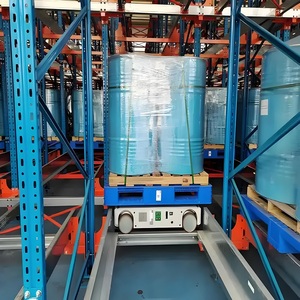
Wholesale Custom High Intelligent Automated Pallet Runner Radio Four Way Shuttle Rack Warehouse Storage Rack System
Send an Inquiry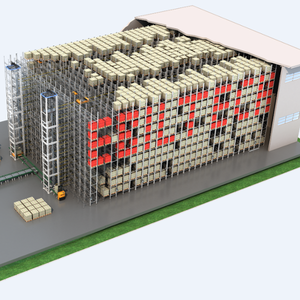
EBILTECH EBIL-ZMC Pallet Shuttle Rack System by Shuttle Satellite Cars High-Capacity 160m/min 380V Automatic Racking Warehouses
Send an Inquiry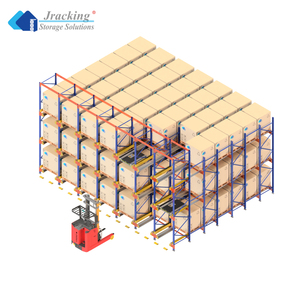
Jracking Automatic Warehouse System Factory Direct Sale High Intelligent Automated Pallet Runner Four Way Radio Shuttle Rack
Send an Inquiry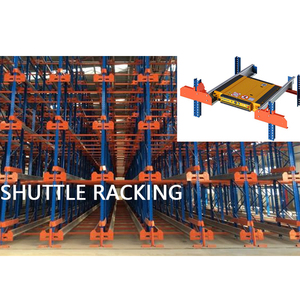
Warehouse High-Density Shuttle Rack System Asrs 4-Way Shuttle Racking Four Way for Storage Shuttle Rack FIFO & LIFO
Send an Inquiry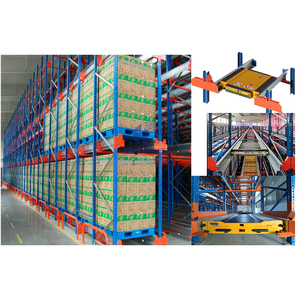
Heda Shelves 4-Way Shuttle Racking System Asrs Radio Shuttle Rack Four Way for LIFO FIFO Automated Storage System
Send an Inquiry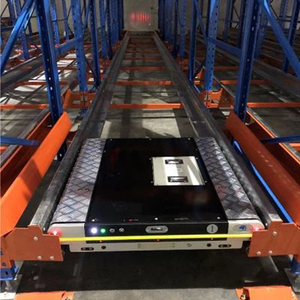
Automated Shuttle Pallet Racking System Two Way Shuttle Racking System
Send an Inquiry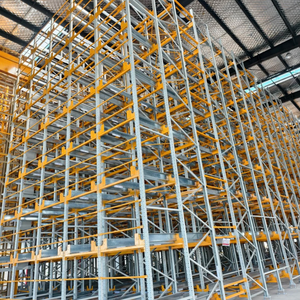
Customizable Four-Way Shuttle Racking Automated Warehouse Shelving System CE/ISO Certification Corrosion Protection Steel
Send an Inquiry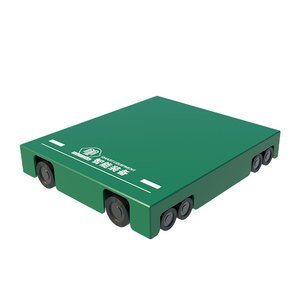
Warehouse Heavy Duty Automatic Radio Shuttle Pallet Rack Fully Intelligent Four Way Shuttle ASRS with WCS WMS
Send an InquiryOEM/ODM Manufacturing Capabilities & Authority
As a premier China-based warehouse racking factory operating out of Dongguan, Zenithrack Industrial Equipment Co., Ltd. eliminates middleman markups while providing end-to-end custom engineering.
Full OEM/ODM Customization
From dynamic rail profile forming to specialized lithium-battery shuttle integration, we tailor system geometry, load ratings (up to 1,500kg/pallet), and surface powder coating to match exact distributor specifications.
Stringent In-House Quality Control
Every batch of Q355B structural steel undergoes rigorous raw material testing, hole-punching accuracy verification, seam-welding inspection, and electrostatic powder-coating durability checks before export packaging.
Free Layout & CAD Design
Our experienced structural engineering team provides complimentary 3D warehouse layout plans, structural calculation reports, and installation blueprints optimized for your specific building layout and lift trucks.
Rapid Global Delivery
Equipped with 35 sets of high-speed roll forming machines, automatic robotic welding arms, and continuous powder-coating channels, we guarantee predictable production timelines even for 50+ container contracts.
Free Samples & Trial Assembly
To eliminate procurement risk, we supply structural sample beams, upright columns, and shuttle rail section samples (freight collect) alongside pre-shipment trial building verification.
24/7 Engineering Support
Our dedicated project engineers remain on call to assist with WCS integration inquiries, electrical commissioning troubleshooting, dynamic safety sensor setups, and lifecycle maintenance guidance.
Industry Whitepaper: The Evolution of Multi-Way Shuttle Racking Systems
In modern industrial logistics, static pallet racking and traditional drive-in systems are increasingly failing to meet the combined demands of high spatial density and rapid throughput velocity. As global supply chains face escalating real estate costs and labor shortages, Multi-Way Shuttle Racking Systems—comprising both advanced 2-Way Radio Shuttles and fully automated 4-Way Autonomous Mobile Shuttle Robots—have emerged as the gold standard for high-density warehouse storage.
1. Architectural Overview: 2-Way vs. 4-Way Multi-Shuttle Mechanics
A multi-way shuttle racking environment transforms deep-lane storage by decoupling material handling machinery from human-operated forklifts. Forklifts are restricted to depositing pallets at the entry face of the rack channel, while an intelligent, battery-powered shuttle vehicle autonomously navigates interior rack rails to store and retrieve loads.
- 2-Way Radio Shuttle Systems: The shuttle moves bidirectionally along a single deep storage lane (longitudinal movement). It relies on counterbalanced or reach trucks to transfer the shuttle between different racking levels or channels. Ideal for high-volume SKUs operating under First-In, Last-Out (FILO) or First-In, First-Out (FIFO) bulk configurations.
- 4-Way Multi-Shuttle Systems (ASRS Integration): The shuttle vehicle is equipped with dual wheel-sets, enabling transverse and longitudinal movement across an entire racking tier. Integrated with automatic vertical lifters (elevators), a 4-way multi-shuttle system can dynamically change levels and channels without human intervention, functioning as a fully automated ASRS solution managed by Warehouse Control Software (WCS).
2. Comparative Engineering Matrix: Racking Modalities
To assist logistics directors and warehouse planners in system selection, the following data matrix compares structural efficiency, access dynamics, and operating performance across core storage topologies:
| Racking Topology | Storage Volume Density | Pallet Direct Access | Handling Speed & Cycle Time | Operational Rotation | Automation Level |
|---|---|---|---|---|---|
| Selective Pallet Racking | Standard (35%–45%) | 100% Immediate Access | Moderate (Forklift Dependent) | Flexible (Random Pick) | Manual |
| Drive-In Racking | High (60%–70%) | Low (Lane Restricted) | Slow (Forklift Drives In Lane) | Strictly LIFO | Manual |
| 2-Way Radio Shuttle | Ultra-High (75%–85%) | Medium (Deep Lane Access) | Fast (Shuttle up to 1.2 m/s) | FIFO or LIFO Selectable | Semi-Automated |
| 4-Way Multi-Shuttle ASRS | Maximum (85%–92%) | Dynamic Dynamic Matrix Access | Ultra-Fast (Automated Matrix) | Fully Intelligent FIFO | 100% Fully Automated |
3. Future Procurement Trends for Multi-Way Shuttle Technologies (2025–2030)
As global OEM/ODM contracts evolve, enterprise procurement managers must align their technical specifications with several key technological transformations altering the automated storage industry:
A. Cold Chain Energy Optimization: Cold storage operations represent one of the highest cost-per-square-foot facility types. Modern 4-way shuttles engineered with specialized lithium iron phosphate (LiFePO4) supercapacitor batteries and sub-zero anti-condensation electronics operate seamlessly down to -30°C. By shrinking clear-aisle requirements, cold storage operators reduce thermal envelope volume, resulting in energy savings of up to 35%.
B. AI-Driven WMS/WCS Integration & Dynamic Slotting: Future-ready multi-way shuttle systems no longer rely on static channel assignments. Advanced WCS algorithms interface via CAN-bus and Wi-Fi 6 / 5G private networks to dynamically relocate high-velocity SKUs closer to vertical elevators during peak shipping windows, auto-optimizing internal travel paths in real time.
C. Modular Scalability over Rigid Crane ASRS: Traditional stacker crane ASRS installations demand massive structural steel foundations and fixed aisle geometries. In contrast, multi-way shuttle racking offers modular elasticity: enterprise facilities can start with a modest fleet of shuttles and scale up by simply adding more shuttle units to the rack grid as throughput requirements rise.
D. Carbon Neutrality & Sustainable Steel Procurement: Top-tier global buyers now require environmental product declarations (EPDs). Leading manufacturers utilize high-tensile Q355B cold-rolled steel, optimizing profile wall thicknesses to achieve higher load capacities while reducing raw material consumption and carbon footprint during roll-forming and electrostatic powder coating.
Frequently Asked Questions
Technical answers to critical questions asked by global logistics managers, EPC contractors, and OEM distributors when sourcing shuttle racking systems from China.
How do I determine whether my warehouse requires a 2-way radio shuttle or a 4-way multi-shuttle system?
Choose a 2-way radio shuttle system if your storage profile consists of high-volume, low-SKU product lines where forklifts are readily available to transfer shuttles between lanes. Opt for a 4-way multi-shuttle system when you require maximum spatial efficiency, handle medium-to-high SKU variety, need complete automation without forklift operators inside the grid, and intend to integrate directly with automated conveyor systems or AGVs.
What specific floor levelness and building specifications are required for multi-way shuttle installations?
Multi-way shuttle systems require precise civil engineering tolerances. Floor flatness must strictly conform to DIN 18202 or VDMA guidelines (typically FM2 or higher levelness classification). Excessive floor slope can cause structural rail misalignment, leading to shuttle sensor fault triggers or elevated elevator transfer wear. Our engineering team provides detailed floor tolerance specs prior to project manufacturing.
Can Zenithrack customize racking profiles and shuttle control software for OEM partner branding?
Yes. As a true OEM/ODM factory, Zenithrack custom-manufactures racking uprights, beam profiles, and shuttle guide rails according to your branded color codes (RAL spectrum electrostatic powder coating). Furthermore, our WCS software APIs can be white-labeled or directly integrated into your proprietary WMS/ERP platform via standard REST API or Modbus protocols.
What critical information is required to generate a complete layout design and commercial quotation?
To provide a zero-cost structural design and precise quote, we require: (1) Warehouse CAD floor plan highlighting building columns, clear height under roof trusses, and door locations; (2) Pallet dimensions including overall load height and total weight per pallet; (3) Operational temperature range; (4) Desired throughput capacity (pallets moved per hour); and (5) Local seismic or environmental building code requirements.
How does your factory ensure structural safety and anti-collision reliability in high-bay setups?
Our shuttle systems incorporate multi-layered safety mechanisms. Mechanically, rails feature structural end-stops and anti-tip profile lips. Electronically, shuttle vehicles feature redundant photoelectric sensors, laser distance measurers, obstacle anti-collision bumpers, and mechanical emergency brakes. All steel profiles undergo finite element analysis (FEA) to guarantee structural integrity under full payload conditions.
Ready to Optimize Your Warehouse Density & Automation?
Consult directly with our senior structural engineers today. Receive a free 3D CAD layout, structural load calculation report, and factory-direct OEM proposal within 24 hours.
Send an Inquiry