Engineered Counterbalance Forklift Racking Systems
Precision-fabricated cold-rolled Q235B & Q355B steel racking structures optimized for heavy load capacity, high vertical stability, and smooth counterbalance forklift operation.
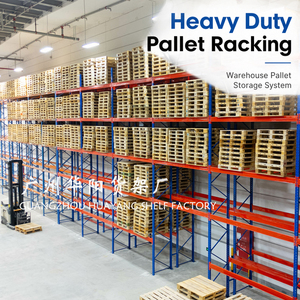
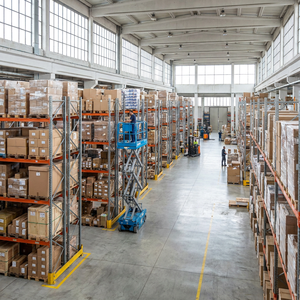
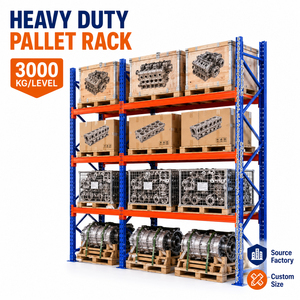
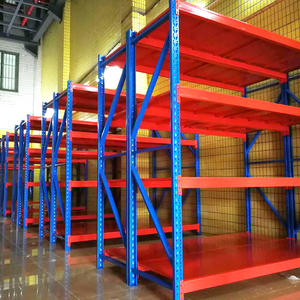
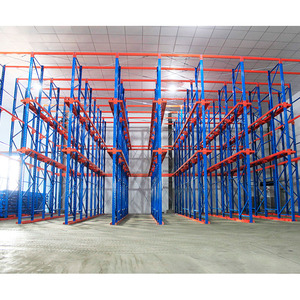
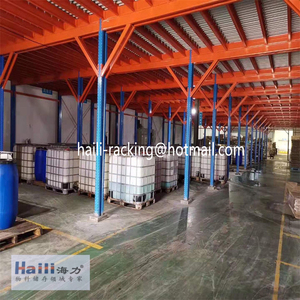
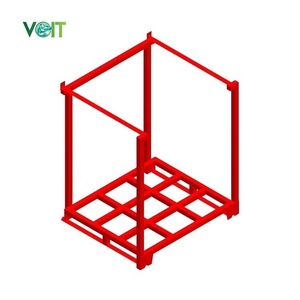
1. Counterbalance Forklift Racking Dynamics & Spatial Engineering
Selecting and configuring industrial pallet racking tailored for counterbalance forklifts requires a rigorous synthesis of structural mechanics, vehicle dynamics, turning radius clearances, and vertical impact tolerances. Counterbalance forklifts—typically available in 3-wheel and 4-wheel electric or internal combustion (LPG/Diesel) variants—possess distinct weight distribution profiles and outer turning radiuses (Wa) compared to reach trucks or VNA (Very Narrow Aisle) turret trucks.
When engineering warehouse racking systems for counterbalance operation, the Right Angle Stacking Aisle Width (AST) serves as the fundamental spatial constraint. Standard 2.5-ton capacity 4-wheel counterbalance forklifts require an AST ranging from 3.4 meters to 3.8 meters for standard 1200mm x 1000mm pallets. Failing to design aisle clearances according to exact AST profiles results in localized structural impact, frame misalignment, and compromised safety margins.
Structural Physics of Counterbalance Racking Interaction
Unlike reach trucks that extend their fork carriage into the racking structure while the chassis remains stationary outside the bay, counterbalance trucks drive directly up to the rack beam face. This operational profile introduces three specific engineering imperatives:
- Base Upright Protection: Dynamic impact loading on the front bottom 500mm of upright columns is statistically highest in counterbalance aisles. High-grade structural steel column protectors (fabricated from 5mm to 8mm heavy-gauge steel) anchored directly to the reinforced concrete slab are mandatory.
- Beam Deflection Ratios: Standard engineering protocols dictated by FEM 10.2.02 and EN 15512 mandate that beam deflection under maximum working load must not exceed δ ≤ L / 200 (where L is the clear span length). For a 2700mm beam carrying 3000kg, maximum allowed vertical deflection is strictly restricted to 13.5mm.
- Frame Depth & Overhang Geometry: Standard pallet frames are built with depths of 800mm, 1000mm, or 1100mm. For a 1200mm deep pallet, a 1000mm frame depth provides a engineered 100mm front and rear overhang, ensuring uniform load distribution across both front and rear box beams.
2. Structural Matrix: Counterbalance Racking Systems Compared
This technical comparison benchmark evaluates primary racking architectures suitable for counterbalance forklift operation across spatial efficiency, load capacity, capital expenditure (CapEx), and inventory velocity.
| Racking Architecture | Required AST (Aisle Width) | Selective Access % | Max Load / Level | CapEx Index / Pallet | Ideal Operational Profile |
|---|---|---|---|---|---|
| Selective Pallet Racking | 3.4m – 3.8m | 100% Direct Access | Up to 4,500 kg | Low (Baseline 1.0) | High SKU diversity, fast turnover, direct picking |
| Drive-In / Drive-Through | Direct Lane Entry | 15% – 20% (LIFO/FIFO) | 1,500 kg / Pallet | Medium (1.4x) | Bulk homogeneous stock, cold storage, few SKUs |
| Radio Shuttle Racking | 3.2m – 3.5m (Front Aisle) | Semi-Automated (FIFO/FILO) | 1,500 kg / Pallet | High (2.2x) | Ultra-high density, automated lane transport |
| Rack-Supported Mezzanine | Integrated Staging Zones | 100% Manual / Cart Access | 1,000 kg / m² Floor | Medium-High (1.8x) | Vertical expansion, split carton picking, assembly |
| Heavy-Duty Cantilever | 3.6m – 4.2m | 100% Open Access | Up to 6,000 kg / Arm | Medium (1.5x) | Long pipes, steel bars, timber, sheet materials |
3. Future Procurement & Technological Trends in Forklift Racking (2025–2030)
The global warehousing and logistics ecosystem is undergoing a structural transition toward automation, sustainable material engineering, and data-integrated structural monitoring. B2B procurement managers and supply chain directors sourcing counterbalance racking systems from top Chinese manufacturers must account for several emerging market shifts:
A. Transition to High-Yield Steel Grades (Q355B vs Traditional Q235B)
Leading Chinese racking factories are increasingly replacing legacy low-carbon Q235B steel with high-strength low-alloy (HSLA) Q355B steel for upright frames and heavy-duty load beams. Q355B provides a yield strength of 355 MPa (over 50% higher than Q235B's 235 MPa). This permits reduced material wall thickness without sacrificing structural load capacity, resulting in lower shipping weights, reduced freight costs per container, and enhanced seismic stress tolerance.
B. Hybrid Counterbalance & AMR/AGV Integration
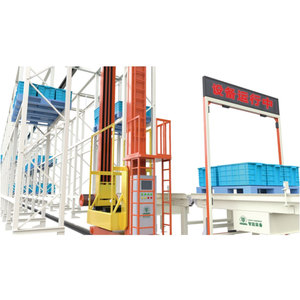
Modern distribution centers are rapidly adopting hybrid material handling workflows. Facilities deploy heavy counterbalance forklifts for loading dock receiving and transport, while Autonomous Mobile Robots (AMRs) or Automated Guided Vehicles (AGVs) navigate racking aisles. Racking designed for future-proof facilities incorporates precision bottom guide rails, laser reflector mounting slots on upright posts, and floor-level barcode target plates.
C. Smart Structural Monitoring & IoT Telemetry
Structural health monitoring is moving from periodic annual inspections to real-time IoT monitoring. Advanced racking systems now embed wireless piezoelectric strain gauges and tri-axial shock sensors into critical upright nodes. These sensors log dynamic impact events caused by counterbalance forklift tines and alert warehouse management systems (WMS) immediately if structural deformation thresholds are breached.
D. Advanced Surface Finishing: Sustainable Powder Coating & Hot-Dip Galvanizing
Environmental regulations and extreme working environments (cold chain storage down to -30°C and humid coastal logistics hubs) have shifted buyer preferences toward zero-VOC electrostatic epoxy powder coatings and high-micron hot-dip galvanizing (HDG according to ISO 1461 standards). HDG coatings deliver maintenance-free corrosion resistance for over 25 years in harsh conditions.
Why Partner with Zenithrack Industrial Equipment
Based in Dongguan, China, Zenithrack Industrial Equipment Co., Ltd. brings 15+ years of specialized engineering and manufacturing leadership in heavy-duty warehouse storage systems.
8,000 m² Modern Factory Base
Equipped with 35 sets of high-precision roll-forming lines, automated laser cutting systems, and robotic welding stations to ensure rigorous dimensional consistency.
Rigorous ISO & FEM Quality Control
In-house QC testing laboratory performing tensile strength tests, weld integrity inspections, and surface coating thickness verification on every production batch.
Free CAD Layout & Structural Design
Our senior structural engineering team prepares tailored 2D/3D CAD warehouse layout drawings, beam load calculations, and seismic safety assessments within 24 hours.
OEM Customization & Branding
Custom upright profiles, proprietary beam connector designs, special RAL color powder coating, and private branding packaging tailored for global distributors.
Rapid Production & Global Logistics
Efficient raw steel procurement pipelines and streamlined production scheduling enable 14-to-21 day order fulfillment with optimized container packing efficiency.
End-to-End Technical Support
Comprehensive installation guidebooks, video instruction packages, basic assembly tools, and dedicated virtual engineering oversight during site erection.
Frequently Asked Questions on Racking Procurement
Technical guidance and strategic advice directly from Zenithrack's engineering team to help buyers navigate specs, structural safety, and shipping logistics.
How do I accurately calculate the right-angle aisle width (AST) for counterbalance forklifts?
Calculating the correct AST requires referencing your forklift manufacturer's specification sheet and applying the formula: AST = Wa + x + b + a, where Wa is the outer turning radius, x is the load distance (distance from front axle center to front fork face), b is the length of the load/pallet, and a is a mandatory safety clearance (typically 200mm to 300mm minimum). For standard 2.5-ton 4-wheel counterbalance trucks carrying 1200mm deep pallets, an AST of 3,500mm to 3,800mm is recommended to prevent upright collisions.
What are the critical steel specifications to verify when buying pallet racking from China?
Always request mill test certificates verifying the steel grade (e.g., Q235B or high-strength Q355B according to Chinese GB/T 700 / GB/T 1591 standards, equivalent to European S235JR and S355JR). Furthermore, confirm nominal vs. actual steel thickness. Quality manufacturers guarantee strict thickness tolerances within ±0.08mm. Key profiles to verify include upright post dimensions (e.g., 80x60, 90x70, 100x70, 120x95mm) and beam box profiles (e.g., 80x50, 100x50, 120x50, 140x50mm with 1.5mm to 2.0mm thickness).
How does Zenithrack ensure rack structural stability under seismic and high-load conditions?
Our structural designs conform strictly to European FEM 10.2.02, RMI (Rack Manufacturers Institute), and EN 15512 structural standards. We engineer custom base plates with chemical anchor bolts sized according to concrete slab thickness. Double-pitch beam connectors with 3 to 5 heavy-duty locking hooks incorporate automatic safety pins that prevent accidental beam dislodgement caused by upward forklift mast strikes.
Should I choose Powder Coating or Hot-Dip Galvanizing for my racking system?
Electromotive Powder Coating is optimal for standard dry ambient warehouses (10°C to 40°C), offering excellent scratch resistance, customizable brand colors, and cost efficiency. Hot-Dip Galvanizing (HDG) or pre-galvanized steel is essential for cold storage environments (-30°C), high-humidity facilities, chemical storage, or outdoor applications to eliminate rust formation and micro-cracking caused by thermal cycling.
What information is required to receive a complete layout design and quotation?
To provide a free 2D/3D CAD design and accurate engineering quote, please provide:
1. Warehouse CAD floor plan or clear length x width x usable clear height dimensions.
2. Pallet dimensions (Length x Width x Loaded Height) and weight per pallet.
3. Counterbalance forklift model, maximum lift height, and outer turning radius.
4. Floor slab thickness and concrete grade (if known).
5. Temperature conditions (Ambient, Cold Room, or Outdoor).
How are racking products packed to prevent damage during ocean container transport?
All upright frames and beams are bundled using high-tensile steel strapping over heavy corrugated protective pads. Frame rows are separated by wooden spacers to prevent powder-coat abrasion during transit. Small components, connectors, baseplates, and hardware are packed in reinforced steel-banded plywood cases or wooden pallets, ensuring hassle-free container unloading with standard forklifts.
Ready to Optimize Your Warehouse Storage Footprint?
Connect directly with Zenithrack's senior application engineers. Receive custom CAD layout drawings, load calculation reports, and factory-direct price quotations tailored to your exact operational requirements.
Get Catalog