Industrial Pallet Storage Solutions
Factory-direct structural steel racks engineered for heavy-duty load capacities, high vertical clearance, and optimized intralogistics performance.
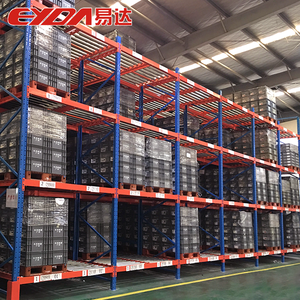
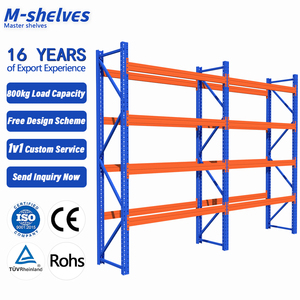
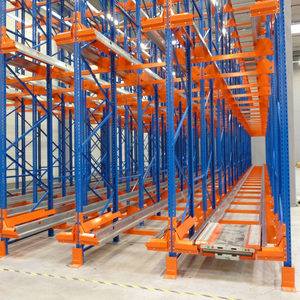
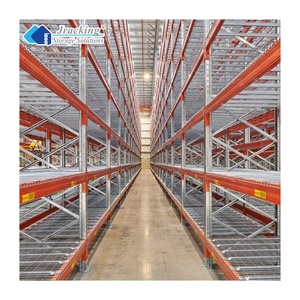
Factory-Direct Advantage & Structural Quality
We manufacture high-grade steel warehouse racking engineered to conform with ISO9001, CE, AS4084-2012, and FEM 10.2.02 international standards.
Industrial Pallet Racking Systems Comparison
Evaluate structural design parameters, handling efficiency, volume utilization, and inventory management criteria to select the optimal system.
| Racking System Type | Storage Density | Selectivity / SKU Access | Stock Rotation | Forklift Clearance Requirement | Ideal Application |
|---|---|---|---|---|---|
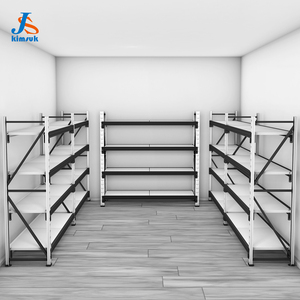
| Selective Pallet Racking | Standard (40-50%) | 100% Direct Access | FIFO / FILO | 3.0m – 3.5m Standard Aisle | High SKU variety, fast pallet picking, FMCG, 3PL logistics. |
| Drive-In / Drive-Thru Racking | High (65-75%) | Low (Lane-dependent) | LIFO (Drive-In) / FIFO (Thru) | Narrow Rack Entry Channels | Homogeneous bulk goods, seasonal stock, cold storage rooms. |
| Radio Shuttle Racking | Ultra-High (80-85%) | Medium (Batch Access) | FIFO or FILO | Minimal Front Loading Aisle | Cold chain warehouses, high-throughput food & beverage distribution. |
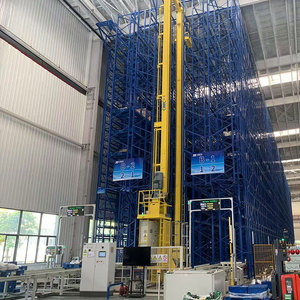
| Automated AS/RS Stacker Crane | Maximum (85-95%) | 100% Automated Access | Software Controlled (FIFO) | Unmanned Crane Aisles (<1.8m) | High-bay smart factories, 24/7 automated logistics hubs. |
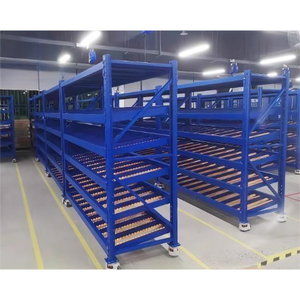
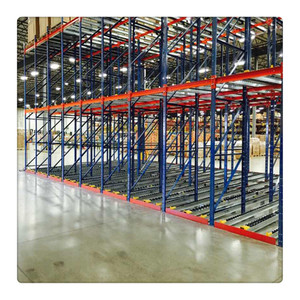
| Gravity Pallet Flow Racking | High (70-80%) | Medium (Lane Front) | Strict FIFO | Separate Loading/Unloading Aisles | Perishable items, pharmaceutical storage, buffer zones. |
| Heavy-Duty Cantilever Racks | Custom / Modular | 100% Unobstructed Front | Direct Access | Wide Side-Loading Aisles | Long steel pipes, timber profiles, aluminum extrusions, sheet metal. |
Engineering Excellence in Heavy-Duty China Warehouse Pallet Storage Systems
Modern global logistics networks demand unprecedented warehouse efficiency, structural safety, and space optimization. As a premier China warehouse pallet storage system factory and international exporter, our structural design philosophy integrates advanced metallurgy, automated roll-forming, and strict adherence to international safety codes (including EN 15512, RMI, and AS4084-2012). Efficient warehousing is no longer merely about storing goods vertically; it requires configuring engineered racking systems designed around precise material handling equipment (MHE), pallet load profiles, and inventory velocity.
1. Metallurgy & Manufacturing Precision: The Foundation of Racking Integrity
The structural load-bearing capability of industrial pallet racking begins with raw steel selection. Premium storage systems utilize certified structural cold-rolled steel coils, predominantly Q235B and high-yield Q355B. The mechanical behavior of upright frames under compressive axial load combined with flexural bending requires precise section profiles.
- Upright Profile Engineering: Cold-roll formed into multi-ribbed omega (Ω) section profiles featuring continuous structural bends. These ribs enhance the column's moment of inertia, counteracting elastic buckling under maximum design static loading.
- Beam Section Profiles: High-performance horizontal load beams utilize twin C-profile interlocking box sections or step beams, robotically welded to multi-claw beam connectors. The beam-to-column connector engages into teardrop or diamond-punched upright slots, creating a rigid moment-resisting joint with integrated mechanical safety locks to prevent accidental forklift dislodgement.
- Surface Pre-Treatment & Powder Coating: To resist environmental corrosion and abrasion, steel structural components undergo a 7-stage chemical pre-treatment process—including degreasing, zinc phosphating, and deionized water rinsing—followed by thermosetting electrostatic epoxy-polyester powder coating cured at 180°C–200°C.
Future Development Trends in Warehouse Racking & Intralogistics (2025–2030)
As industrial automation accelerates globally, the warehousing landscape is transitioning rapidly from manual forklift-operated static racking to high-density semi-automated and fully automated vertical storage systems. Procurement managers and supply chain directors must account for the following paradigm shifts when planning infrastructure investments.
Trend 1: Evolution Towards Automated Storage & Retrieval Systems (AS/RS)
Rising labor costs and urban land constraints are driving global logistics facilities toward AS/RS stacker crane architectures. High-bay AS/RS systems reaching heights of 25 to 40 meters utilize precise steel racking tolerances (conforming to FEM 9.831 standards). These structural rack frameworks serve not only as product storage arrays but often as the structural building rack-supported building (Clad-Rack) framework, eliminating the need for independent factory building columns.
Trend 2: Radio Shuttle High-Density Semi-Automation
Pallet Radio Shuttle systems represent the bridge between traditional static racking and fully automated AS/RS. Utilizing self-powered, remote-controlled shuttle carts operating within deep racking channels, this system eliminates the need for forklifts to enter storage lanes. Key operational benefits include:
- Space Optimization: Achieves up to 85% volumetric utilization by eliminating internal forklift driving aisles.
- Enhanced MHE Safety: Prevents rack collision damage, substantially reducing structural repair costs and operational downtime.
- Flexible Inventory Rotation: Seamlessly configurable for both First-In, First-Out (FIFO) and Last-In, First-Out (LIFO) inventory control.
Trend 3: Cold-Chain Specific Structural Galvanization
With the exponential growth of refrigerated pharmaceuticals and fresh food distribution, cold-room warehouse racking requires enhanced low-temperature toughness. Under sub-zero conditions (-25°C to -30°C), standard carbon steel can suffer from low-temperature embrittlement. Modern factories address this through specialized steel chemistry and Hot-Dip Galvanizing (HDG) treatments, providing long-term corrosion resistance in condensation-prone environments.
Strategic Sourcing & Procurement Trends for International Buyers
Navigating global procurement for industrial warehouse pallet storage systems requires evaluating total cost of ownership (TCO) beyond initial FOB hardware pricing. Experienced buyers assess structural compliance, export packaging protection, shipping container cube optimization, and installation ease.
1. Evaluating Factory-Direct Sourcing vs. Trading Houses
Direct engagement with an established OEM/ODM China manufacturing facility guarantees direct technical access to structural engineers during the floor layout design phase. Direct factory partnership ensures clear traceability of raw mill test certificates (MTC), certified weld testing, and uncompromised structural steel thickness—verifying that upright posts and beams strictly match specified gauge dimensions (e.g., 1.5mm, 1.8mm, 2.0mm, or 2.5mm steel thickness).
2. Essential Data Required for Engineered Layout Design
To receive an optimized, cost-efficient rack layout drawing and formal quote from our technical team, procurement managers should supply the following parameters:
- Architectural Warehouse Drawing: CAD file or dimensioned drawing detailing floor plan area, clear height under roof trusses/sprinklers, column locations, building doors, and floor slab load capacity (kN/m²).
- Pallet & Goods Specifications: Pallet length × width × height (inclusive of load overhang) and maximum gross pallet load weight (kg).
- Handling Equipment Details: Forklift type (e.g., Counterbalance, Reach Truck, Very Narrow Aisle VNA, Articulated Truck), turning radius, and maximum mast lifting height.
- Environmental & Regulatory Requirements: Operating temperature range, local seismic zone design accelerations, and building fire protection/sprinkler nozzle clearances.
System Deep Dive: Selecting the Right Pallet Rack Configuration
Selective Pallet Racking: Universal Accessibility
Selective racking remains the benchmark solution across global supply chain hubs due to its simplicity and 100% immediate SKU selectivity. Utilizing single or double-deep row configurations, it allows material handlers to pick any pallet without moving adjacent stock. It is best suited for facilities with broad SKU diversity and rapid stock turnover.
Drive-In & Drive-Thru Racking: High-Density Bulk Storage
For warehouses managing a limited number of high-volume SKUs, Drive-In systems offer high volumetric storage density by allowing forklifts to drive directly into structural storage bays supported by continuous cantilevered pallet rails. By eliminating aisle spaces, floor area utilization increases dramatically.
Cantilever Heavy-Duty Racking: Unobstructed Storage for Long Stock
Standard pallet rack upright frames restrict the lateral storage of long, continuous materials. Heavy-duty cantilever racking features central structural columns equipped with adjustable horizontal arms, creating uninterrupted storage levels for timber, steel tubing, plastic pipes, and structural plates.
Warehouse Mezzanine Floors & Rack-Supported Platforms
When vertical warehouse height is underutilized, multi-tier rack-supported mezzanine floors utilize heavy-duty upright frames or structural H-beam columns to construct integrated elevated floor levels. Decks can be fitted with steel floor plates, perforated grates, or high-density wooden panels, effectively doubling or tripling usable floor footprint for manual order-picking operations.
Frequently Asked Questions (FAQ)
Answers to common structural design, manufacturing, quality control, and shipping questions from overseas buyers.