Featured Industrial Racking Systems
Factory-direct heavy-duty storage configurations designed for maximal pallet capacity and operational efficiency.
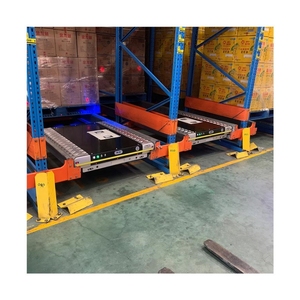
Blue Orange Heavy Duty Radio Shuttle Pallet Racking System
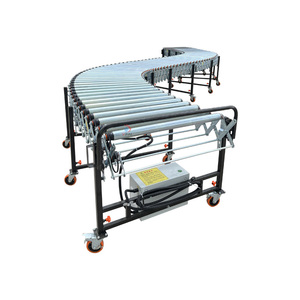
Flexible Powered Roller Conveyor System for Container Loading
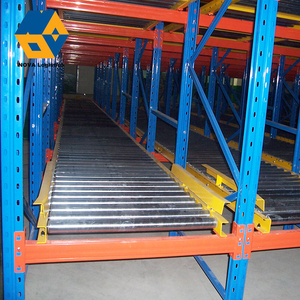
Cold Room Heavy Duty Gravity Pallet Flow Racking System
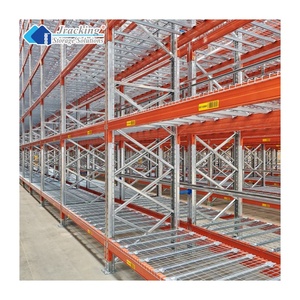
Industrial Vertical AU Standard Heavy Duty Pallet Racking
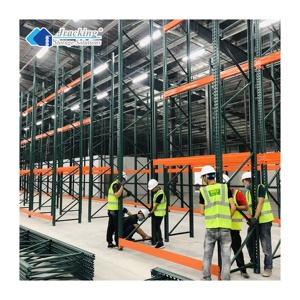
American Standard Teardrop Pallet Rack with Coil Bracket
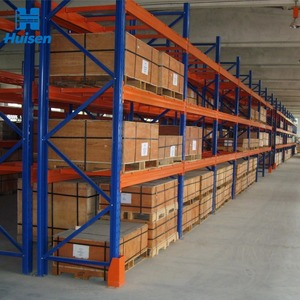
Industrial Multi-Level Adjustable Heavy Duty Storage Rack
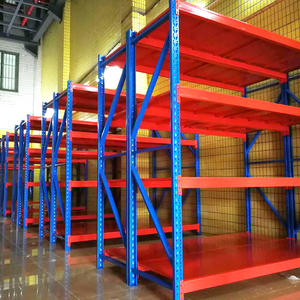
Compact 5-Layer Thickened Cold-Rolled Steel Storage Shelving
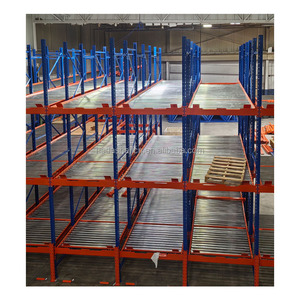
Heavy Duty Warehouse Gravity Pallet Flow Storage System
Executive Overview: Mastering Deep Lane Pallet Racking Infrastructure
Modern supply chain architecture demands unprecedented levels of volumetric efficiency, rapid material throughput, and operational structural safety. In industrial logistics centers, cold chain storage facilities, and high-volume distribution hubs, floor space represents one of the highest capital overheads. Traditional selective pallet racking, while offering 100% immediate SKU accessibility, typically consumes upwards of 55% to 65% of warehouse floor area in forklift access aisles. This fundamental spatial compromise has driven global procurement directors toward high-density deep lane pallet racking systems.
Deep lane pallet racking encompasses a specialized category of storage structures engineered to stack pallets multiple positions deep—ranging from 4-deep to over 30-deep in automated lanes. By eliminating intermediate operating aisles, deep lane storage boosts cubic warehouse utilization from a standard 40-50% up to an impressive 75-85%. However, transitioning to high-density deep lane storage requires a rigorous technical understanding of mechanical load dynamics, steel grade selection, automated handling integration, and structural compliance with EN 15512, FEM 10.2.02, and ANSI MH16.1 (RMI) standards.
Technical Information Gain: What Defines a True Deep Lane System?
Unlike standard dual-deep selective systems, true deep lane racking utilizes dedicated mechanical or automated transport mechanisms within storage channels. These include continuous lane rails for Radio Shuttle cars, inclined roller beds for Gravity Flow, nested carts on structural rails for Push-Back, or continuous support arms for Drive-In configuration. Understanding the specific physics of load distribution, structural sway, and friction dynamics across these systems is paramount to selecting the correct OEM manufacturer.
Core Engineering Paradigms of Deep Lane Architecture
Selecting the ideal deep lane racking topology requires balancing storage density against operational throughput and stock rotation rules (FIFO vs. LIFO). Below are the four core structural configurations manufactured at our Dongguan production plant:
Semi-Automated Radio Shuttle Systems
Utilizes self-powered autonomous shuttles navigating internal racking channels via wireless RF signals. Supports ultra-deep channels (up to 40+ pallets deep), minimizing forklift entry and dramatically lowering column collision risks while supporting both FIFO and LIFO workflows.
Gravity Pallet Flow Systems
Engineered with heavy-duty full-width or track roller beds set at a 2.5% to 3.5% downward incline. Equipped with magnetic centrifugal speed controllers and automatic separation brakes to ensure strict First-In, First-Out (FIFO) stock movement for perishable logistics.
Heavy Duty Drive-In / Drive-Through
Constructed with continuous cantilevered support arms allowing lift trucks to drive directly into deep storage lanes. Highly cost-effective for high-volume, low-SKU homogeneous goods under Last-In, First-Out (LIFO) inventory control.
Telescopic Push-Back Racking
Features nested, sloped carts riding on structural beam rails. As a new pallet is loaded, it pushes preceding pallets backward up a shallow incline. Ideal for 2-deep to 6-deep applications where immediate aisle picking efficiency is required without driving into lanes.
Structural Cold Room Racking
Custom-engineered using specialized micro-alloyed carbon steels (Q355B) and hot-dip galvanizing (ISO 1461). Designed to eliminate hydrogen embrittlement and coating failure in extreme sub-zero freezing environments down to -30°C.
High-Bay Automated ASRS Upright Frames
Precision cold-roll-formed omega upright profiles manufactured to ultra-tight cross-sectional tolerances. Built for seamless integration with automated stacker cranes and system integrators worldwide.
Deep Lane Racking Technical Selection & Performance Matrix
To assist warehouse operations managers and industrial engineers in evaluating procurement trade-offs, our structural design team has synthesized key operational metrics across major high-density storage configurations:
| Racking System Type | Storage Density | Stock Rotation | Forklift Interaction | Lane Depth Range | Structural Risk Index |
|---|---|---|---|---|---|
| Radio Shuttle Racking | Maximum (85%) | FIFO or LIFO | Aisle Face Only | 2 to 40+ Pallets | Very Low |
| Gravity Pallet Flow | High (75%) | Strict FIFO | Separate Loading/Unloading | 2 to 20 Pallets | Low |
| Drive-In Racking | High (70%) | LIFO Only | Drives Inside Lanes | 3 to 10 Pallets | Moderate to High |
| Push-Back Racking | Medium-High (65%) | LIFO Only | Aisle Face Only | 2 to 6 Pallets | Low |
| Selective Racking (Baseline) | Standard (40%) | 100% Direct Access | All Aisles | 1 to 2 Pallets | Minimal |
Material Engineering, Metallurgical Specifications & Structural Safety
The structural integrity of a deep lane rack relies on precise metal cold-forming techniques and strict steel chemistry control. In deep lane configurations, vertical frames absorb significant combined axial compression and bending moments due to horizontal braking forces, crane vibrations, and potential thermal contraction in refrigerated warehouses.
1. High-Yield Carbon Steel Grades (Q235B vs. Q355B)
At Zenithrack Industrial Equipment, structural upright columns and load-bearing beam profiles are cold-formed from certified prime coil stock. For heavy-duty deep lane applications with frame capacities exceeding 25,000 kg, we employ high-strength Q355B micro-alloyed steel (equivalent to European S355JR and ASTM A572 Grade 50). Compared to conventional Q235B (S235JR), Q355B offers a 45% higher yield strength (≥355 MPa vs. ≥235 MPa), allowing thinner profile walls with higher moment of inertia, significantly reducing dead weight while increasing resistance to localized buckling under heavy loads.
2. Precision Profile Geometry & Connection Mechanics
Our upright profiles feature a multi-ribbed 11-fold to 13-fold cross-sectional geometry (Omega profile). This intricate forming process increases the section radius of gyration, enhancing torsional-flexural buckling resistance. Beams are fabricated with heavy-gauge 3, 4, or 5-hook structural connectors welded via robotic MIG processes. For North American markets, fully interchangeable American Standard Teardrop connection geometry is available with integrated automatic safety pins that resist accidental vertical dislodgement from upward forklift impact.
3. Advanced Surface Finishing & Environmental Protection
Durability in industrial environments depends heavily on surface pretreatment and polymer coating quality:
- Thermo-Setting Epoxy Powder Coating: Automated 7-stage pre-wash, iron-phosphate surface conversion, and electrostatic powder coating cured at 200°C. Delivers coating thickness between 80 to 110 microns, passing ASTM D3359 cross-hatch adhesion and 500-hour salt spray corrosion resistance tests.
- Hot-Dip Galvanizing (HDG): For cold storage (-30°C) and corrosive ambient facilities, structural profiles undergo molten zinc immersion in accordance with BS EN ISO 1461, yielding a zinc coating mass exceeding 600 g/m² (85+ microns thickness) for decades of maintenance-free service.
Need Custom Deep Lane Layout & Structural Load Calculations?
Our senior engineering team provides complimentary 3D CAD layouts, structural engineering analysis, and factory-direct pricing tailored to your exact warehouse footprint.
Send an InquiryFuture Procurement Trends in Deep Lane Storage Technology
As global supply chains navigate labor constraints, rising land costs, and net-zero sustainability mandates, deep lane pallet racking procurement is evolving from passive steel structures toward intelligent, highly integrated logistics assets. Procurement specialists should consider four macro trends shaping the sector:
1. Convergence of Radio Shuttle and ASRS Crane Systems
The market is witnessing a rapid shift from stand-alone shuttle solutions toward 3D Matrix ASRS integrations. In these hybrid systems, automated shuttle cars operate horizontally within deep lanes while automated vertical lifts or stacker cranes shift shuttles between levels. Procurement strategies are prioritizing racking manufacturers capable of holding structural vertical tolerances within ±1.5mm across 24-meter high-bay frames to ensure smooth autonomous vehicle transit.
2. IoT-Enabled Structural Health Monitoring (SHM)
Unintentional forklift impacts on upright columns represent a leading cause of progressive rack collapse. Next-generation deep lane racking specifications now incorporate embedded piezoelectric strain gauges and wireless impact sensors within critical lower upright sections. These sensors transmit real-time vibration and structural tilt metrics to facility management dashboards, allowing preventative maintenance before structural failure occurs.
3. Modular OEM Design & Rapid Reconfigurability
With e-commerce order profiles fluctuating rapidly, logistics operators can no longer afford rigid storage setups. Modern deep lane racks feature standardized pitch increments (50mm, 75mm, or 76.2mm teardrop pitch) with bolt-less adjustable rail mounts. This allows a facility to convert a Drive-In racking lane into a Radio Shuttle or Gravity Flow system with minimal component modification.
4. Sustainable Green Steel & Eco-Certified Manufacturing
Leading global enterprises are requiring Scope 3 carbon footprint disclosures from racking suppliers. Environmental procurement now favors OEM factories that utilize 100% recyclable structural steel, zero-VOC powder coatings, and energy-efficient roll-forming lines powered by rooftop solar installations.
Why Partner with Zenithrack Industrial Equipment Co., Ltd.?
Selecting a racking manufacturer requires evaluating more than just raw steel quotes—it demands verifying structural testing rigor, manufacturing scale, and international project execution capability. Based in Dongguan, Guangdong, Zenithrack represents over 15 years of OEM/ODM manufacturing leadership in industrial warehouse equipment.
15+ Years Direct Manufacturing
We are a genuine physical factory, not a trading middleman. Having grown into one of China's top storage equipment producers with annual sales exceeding 100 million RMB, we bring extensive expertise to your project.
8,000 m² Advanced Production Facility
Our facility houses 35 sets of specialized manufacturing equipment, including continuous automated roll-forming lines, robotic laser cutting, and automated welding stations to maintain tight tolerances.
75+ Skilled Technical Workforce
Our team includes dedicated structural design engineers, CAD draftspeople, and full-time Quality Assurance inspectors controlling raw steel chemistry through final export packaging.
Free Layout Design & 3D Engineering
We provide comprehensive warehouse CAD designs, floor load distribution charts, and elevation views completely free of charge to ensure seamless project planning before production.
Complete OEM / ODM Customization
Custom beam profiles, special load ratings, tailored powder colors (RAL palette), and private branding labels are available for overseas distributors and project contractors.
Rigorous Multi-Stage QC & Testing
Every batch of raw steel undergoes tensile strength inspection, profile measurement, weld seam ultrasonic checks, and coating adhesion testing prior to export container loading.
Our historical customer portfolio spans global leaders across automotive manufacturing, electronics assembly, third-party logistics (3PL), e-commerce fulfillment, and FMCG cold storage. By partnering with Zenithrack, you gain direct access to factory pricing, certified structural engineering, and responsive lifetime product support.
Frequently Asked Questions (FAQ) for Global Buyers
Here are expert engineering answers to common technical queries when procuring deep lane pallet racking systems:
How do I choose between Selective, Drive-In, and Radio Shuttle racking?
Choose Selective Pallet Racking when you maintain a high number of distinct SKUs and require 100% immediate access to every pallet position. Choose Drive-In Racking for low-SKU, high-volume inventory where high storage density is prioritized and Last-In, First-Out (LIFO) movement is operational acceptable. Choose Radio Shuttle Racking when you need maximum cubic storage density with faster forklift loading cycles, deeper storage channels (up to 40+ pallets deep), reduced risk of rack collision, and flexibility for either FIFO or LIFO inventory control.
What engineering information is required to design a custom warehouse layout?
To prepare an accurate engineering drawing and structural calculation, our team requires: (1) Warehouse architectural floor plan or CAD drawing detailing column placement, wall locations, and building expansion joints; (2) Clear height under building roof trusses, lighting, or fire sprinkler lines; (3) Pallet specifications including overall length, width, height, and maximum gross weight per pallet; (4) Forklift specifications including turn radius, mast collapsed height, and maximum lift height; and (5) Local seismic zone ratings or ambient temperature conditions (e.g., cold room storage requirements).
Are free material samples and CAD installation drawings provided?
Yes. Zenithrack provides free structural component samples (such as beam connector clips, upright profile cutaways, and powder coating color chips) with freight collect. Comprehensive 2D floor plans, 3D structural elevation drawings, and step-by-step installation manuals are provided completely free of charge with every project quotation.
How does Zenithrack ensure structural quality control before shipping?
Our internal Quality Control (QC) program enforces strict verification across five manufacturing checkpoints: (1) Raw steel coil chemical analysis and yield strength testing (Mill Test Certificates); (2) Roll-forming profile dimension and hole punching pitch accuracy checks; (3) Weld seam integrity and penetration testing on robotic welding lines; (4) Powder coating film thickness (80-110um) and cross-hatch adhesion testing; and (5) Pre-assembly trial fits prior to protective bundle wrapping and steel-banded export container packing.
Can racking systems be customized for OEM brand distributors?
Absolutely. We specialize in OEM and ODM manufacturing for industrial distributors, racking dealers, and warehouse system integrators worldwide. Custom structural profiles, specialized hole-pitch patterns, custom RAL powder paint colors, private brand logo stamping, and customized installation packaging are standard services available for qualified partner orders.
What structural international design codes do your racking systems comply with?
Zenithrack storage racks are designed, engineered, and calculated in accordance with international structural standards, including European EN 15512 / FEM 10.2.02 codes for steel static storage systems, Australian Standard AS 4084-2012, and American ANSI MH16.1 specifications (RMI) for industrial pallet racks.
Ready to Optimize Your Warehouse Storage Footprint?
Contact our senior storage design engineers today for direct factory quotes, technical consultation, and free CAD warehouse engineering drawings within 24 hours.
Send an Inquiry