Engineered Industrial Racking Systems
Customized high-density and heavy-duty steel pallet rack configurations manufactured in compliance with international seismic stability standards and rigid quality assurance protocols.
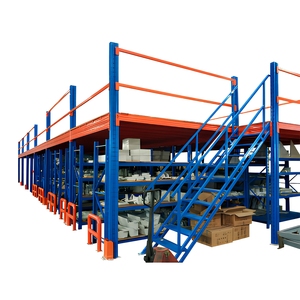
- Doubles vertical floor volumetric space
- Heavy structural steel platform girders
- Fully integrated staircases & handrails
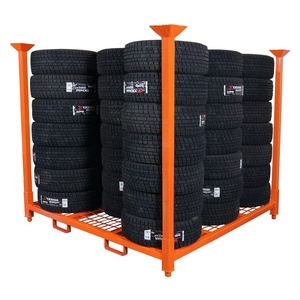
- 1000KG payload rating per unit
- Modular stackable & collapsible design
- Durable powder-coated anti-rust finish
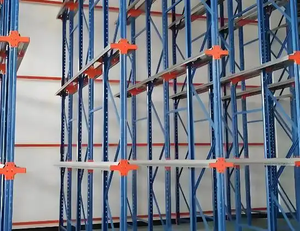
- VNA geometry maximizes floor footprint
- 100% direct selective pallet access
- Precision guide-rail tracking compatibility
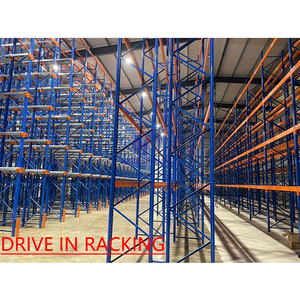
- High-density LIFO storage channel configuration
- Optimal for uniform bulk stock handling
- Heavy-duty beam-to-column locking pins
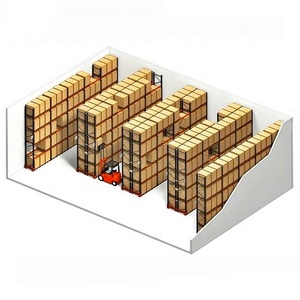
- 1000–3000 KG dynamic capacity per tier
- Double-deep reach aisle density booster
- ISO & CE certified structural engineering
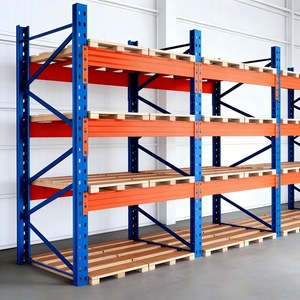
- High-yield Q355B cold-rolled steel posts
- Multi-tier height scalability
- Electrically deposited electrostatic powder finish
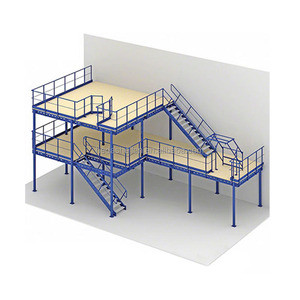
- Integrated attic platform and shelf channels
- Seamless integration with conveyor lines
- High rigidity anchor floor framing
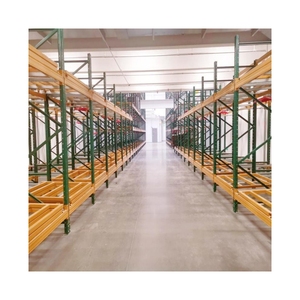
- Gravity-nested cart operation mechanism
- 2 to 6 pallet deep storage capability
- Enhanced safety braking & end-stops
Technical Whitepaper: Engineering Seismic-Resistant Pallet Racks for High-Bay Facilities
In modern logistics real estate, the concentration of inventory value per square meter has reached historic levels. When designing storage systems for seismic zones—governed by standards such as ANSI/MH16.1 (RMI), EN 16681, and the International Building Code (IBC 2024)—structural engineers must account for complex dynamic interactions. Unlike standard static storage racks, seismic pallet racking acts as a flexible structural frame subject to intense transient horizontal accelerations, vertical uplift forces, and cyclic shear stresses during an earthquake event.
1. Structural Ductility and Response Modification Factors (R-Values)
The core mechanism preventing structural collapse during seismic tremors is structural ductility—the ability of cold-formed steel racking members and upright frames to absorb and dissipate energy through controlled inelastic deformation without structural fracture. In seismic engineering analysis, racking manufacturers utilize Finite Element Analysis (FEA) to calculate the Response Modification Factor (R-Value), which scales down elastic design response spectra to account for damping and energy dissipation.
Baseplate Floor Anchorage
Seismic-rated heavy-gauge footplates featuring multiple anchor bolt holes dissipate energy into the concrete slab while resisting bolt shear and uplift forces.
Ductile Moment Bracing
Diagonal and horizontal tubular channel braces are bolted or welded to upright columns with verified weld seams to resist cyclic diagonal sway.
Beam-to-Column Safety Locks
4-hook or 5-hook connector brackets with high-tensile automatic locking pins prevent dislodging under sudden vertical impulse accelerations.
Engineers must pay meticulous attention to the interaction between the rack uprights and the underlying concrete slab. Zenithrack’s structural design team conducts rigorous anchorage calculations, evaluating edge distances, slab thickness, and concrete compressive strength to prevent slab breakout or chemical anchor shear failure during peak ground motion ($S_s$ and $S_1$ ground acceleration parameters).
2. High-Tensile Steel Metallurgical Integrity (Q355B vs. Standard Mild Steel)
Material selection directly governs the structural safety factor of high-bay selective pallet racks and drive-in racking. Leading international seismic pallet racking manufacturers have shifted from conventional commercial-grade Q235 steel to high-strength low-alloy Q355B and Q420 steel profiles. This yield-point upgrade allows for thinner, optimized column profiles that retain higher moment capacity and torsional resistance.
Cold-Roll Forming Precision
Precision 18 to 24-pass continuous cold-roll forming mills ensure cross-sectional symmetry, eliminating residual stress concentrations in column corners.
Electrostatic Powder Finishing
Full-coverage thermosetting epoxy-polyester powder coating guarantees chemical resistance, anti-rust longevity, and structural visibility in high-density aisles.
Future Procurement Trends in Industrial Storage Racking
As global supply chains transition toward automation, sustainable building practices, and stricter occupational health and safety (OHS) enforcement, procurement officers and logistics directors are redefining their storage infrastructure specifications.
1. Integration of Radio Shuttle & ASRS Automation
Traditional manual forklift racking is increasingly augmented or replaced by semi-automated Radio Shuttle systems and fully automated high-bay ASRS crane structures. These require ultra-tight engineering tolerances (+/- 1.5mm alignment deviation) to ensure smooth robotic carrier traverse.
2. Lifecycle Carbon Auditing & Galvanized Finishes
Logistics buyers are requiring suppliers to submit carbon footprint certifications. Pre-galvanized structural members and hot-dip galvanized outdoor cantilever racks are gaining market share due to zero-maintenance 25-year service lifecycles without chemical recoating.
3. Real-Time Structural Health Monitoring (IoT Sensors)
Smart warehouses are incorporating IoT strain gauges and inclination sensors on main racking uprights. These connected sensors send immediate alerts to warehouse managers in the event of forklift collisions or structural deflection beyond ANSI thresholds.
4. OEM Customization for Third-Party Logistics (3PL)
Modern procurement demands highly modular rack profiles that allow rapid reconfiguration—converting selective racking into double-deep, push-back, or multi-tier mezzanine floors as tenant inventory profiles evolve.
Zenithrack Enterprise Strengths
A direct, vertically integrated manufacturing partner dedicated to delivering precision engineered, highly dependable industrial warehouse racks for projects worldwide.
15+ Years Direct Factory Experience
Over a decade and a half of dedicated storage system manufacturing experience in Dongguan, China, delivering over 100 million RMB in annual high-precision racking output.
8,000m² Production Facility
Our expansive industrial plant houses 35+ specialized roll-forming lines, automated robotic welding stations, continuous punching units, and multi-stage powder coat lines.
Rigorous In-House Quality Control
Every batch undergoes strict raw steel chemical verification, profile dimension tolerances (+/- 0.5mm), weld seam ultrasonic inspection, and salt-spray paint adhesion testing.
Free CAD Layout & Structural Design
Our 75+ team includes senior structural engineers who provide customized warehouse layout designs, CAD assembly schematics, and load capacity certifications completely free of charge.
OEM & Global Export Delivery
Comprehensive OEM branding and white-label options for equipment distributors, bundled with export-grade protective packaging and guaranteed 24-hour engineer response times.
Free Baseline Steel Samples
Evaluate sample column sections, beam connectors, and powder-coated finishes before committing to large contract orders. Samples ship free; you only pay freight.
Frequently Asked Procurement Questions
Essential insights answered by our Senior Structural Racking Engineers to assist buyers, project managers, and logistics planners.
How do I choose between selective, drive-in, and radio shuttle racking systems?
What engineering information is required to design a seismic-compliant racking layout?
What design standards do Zenithrack structural systems comply with?
Do you provide free steel samples and custom installation drawings?
How does your factory control product quality before container loading?
Can rack systems be customized for specialized colors, OEM branding, and extreme load capacities?
Transform Your Warehouse Storage Efficiency Today
Partner with a top-trusted seismic pallet racking manufacturer. Request your comprehensive product engineering catalog, structural calculation report, and free custom CAD layout drawing.
Get Catalog