Engineered Cold Storage Racking Systems
Factory-direct high-density storage solutions optimized for refrigerated warehouses and food-grade freezer facilities.
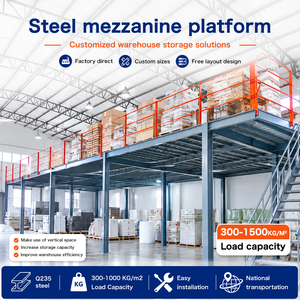
Customized Steel Mezzanine Warehouse Storage Rack Heavy Duty Multi Tier Platform Industrial Shelving Factory Manufacturer
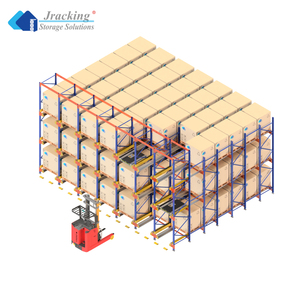
Jracking Automatic Warehouse System Factory Direct Sale High Intelligent Automated Pallet Runner Four Way Radio Shuttle Rack
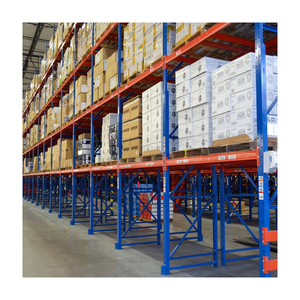
Wholesale Price Heavy Duty Storage Racks Warehouse Stacking Racks Selective Steel Pallet Rack Heavy-Duty Racking For Sale
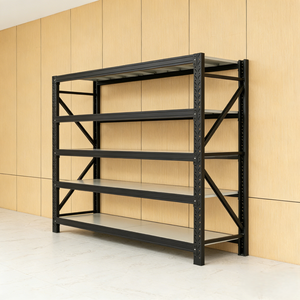
Steel Rack and Stackable Shelving System for Efficient Space Utilization, Providing a Cost-Effective Storage Solution
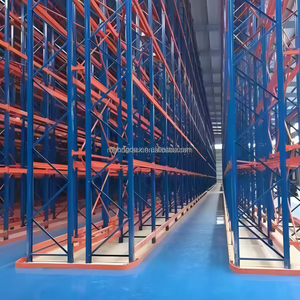
Industrial Warehouse Storage Racks Very Narrow Aisle Racking System VNA Steel Pallet Rack
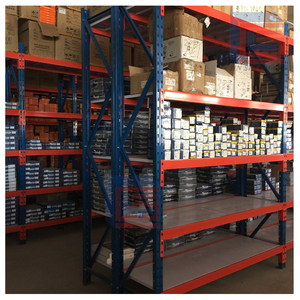
Steel Pallet Rack For Industrial Storage Heavy Duty And Space Saving Design
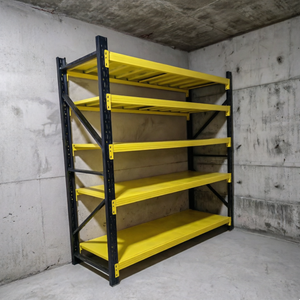
Steel Mezzanine Rack Warehouse Mezzanine Shelving System Pallet Rack Storage Platform Industrial Multi-Level Racking
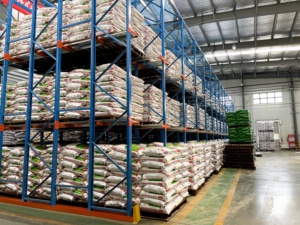
Heavy Duty Radio Shuttle Racking for Cold Storage | Semi-Automated High Density Pallet Runner System | Smart Racking
Engineering White Paper: Cold Storage Pallet Racking Systems in Chicago & Low-Temperature Logistics Environments
Operating a refrigerated or sub-zero freezer warehouse in the Greater Chicago metropolitan area—including logistics hubs across Will, Cook, and DuPage counties—presents unique structural, thermodynamic, and mechanical engineering challenges. Unlike ambient warehouse distribution centers, cold storage facilities incur intense utility costs driven by continuous refrigeration cycles. Consequently, maximizing cubic storage density ($/ft³) while guaranteeing absolute structural integrity under severe thermal shock is the foundational benchmark for cold storage infrastructure.
As a leading international manufacturer and direct exporter of industrial warehouse racking, Zenithrack engineers specialized cold storage racking solutions tailored specifically to the climate conditions, building codes, and logistics demands of the Upper Midwest market. This technical paper details the critical engineering parameters required for long-term operational efficiency in sub-zero applications.
Information Gain Insight: Structural steel undergoes a fundamental shift in yield strength and ductility when exposed to low temperatures. Standard commercial steel components that perform reliably at +20°C (68°F) can experience severe impact brittle fracture at -25°C (-13°F) if the steel chemistry and grain structure are not engineered specifically for low-temperature toughness.
1. Metallurgy & Material Science: Ductile-to-Brittle Transition Temperature (DBTT)
The primary hazard facing racking installations in blast freezers (-30°C to -40°C) and holding freezers (-18°C to -25°C) is brittle fracture caused by the Ductile-to-Brittle Transition Temperature (DBTT). Under ambient conditions, steel deforms plastically when overloaded. However, at sub-zero temperatures, standard low-carbon steel profiles (such as ambient-grade Q235 or ASTM A36) lose their impact absorption capabilities. A sudden dynamic impact from a forklift fork carriage can trigger catastrophic cracking across cold-formed upright profiles.
To overcome this failure mode, Zenithrack utilizes micro-alloyed structural steel grades specifically certified for low-temperature impact resistance, including Q355D and Q355E (equivalent to European Standard EN 10025 S355JR/J2/K2 and high-grade ASTM A572 Grade 50). These steels undergo rigorous Charpy V-Notch (CVN) impact testing at -20°C and -40°C, guaranteeing minimum impact energy absorption of 27 Joules. This metallurgical formulation prevents micro-fissure propagation during high-cycle loading in freezer environments.
| Steel Grade Standard | Yield Strength (MPa) | Charpy Impact Test Temp | CVN Impact Energy (J) | Recommended Cold Chain Application |
|---|---|---|---|---|
| Q235 / ASTM A36 | ≥ 235 MPa | +20°C (Ambient Only) | Not Certified | Ambient Warehouses (+5°C to +40°C) |
| Q355B / S355JR | ≥ 355 MPa | +20°C | ≥ 27 J | Chilled Facilities (+0°C to +8°C) |
| Q355C / S355J0 | ≥ 355 MPa | 0°C | ≥ 27 J | Standard Cold Storage (0°C to -10°C) |
| Q355D / S355J2 | ≥ 355 MPa | -20°C | ≥ 27 J | Deep Freezers (-18°C to -25°C) |
| Q355E / S355K2 | ≥ 355 MPa | -40°C | ≥ 27 J | Quick Freeze / Industrial Blast (-30°C to -40°C) |
2. Thermal Contraction Physics & Mechanical Connection Tolerances
Linear thermal expansion and contraction equations play a critical role in high-bay freezer rack design. Steel exhibits a linear thermal contraction coefficient ($\alpha$) of approximately $12 \times 10^{-6} \text{ K}^{-1}$. In a 40-foot-tall (12.2-meter) drive-in or selective racking structure installed at ambient temperature (+20°C) and pulled down to operating temperature (-25°C), the total vertical thermal contraction exceeds 6.6 millimeters across the upright length.
Without precision tolerances in beam-to-column teardrop or hook connectors, thermal contraction creates internal axial tension forces. Standard press-fit beam safety pins can bind or sheer off due to differential thermal expansion between the heavy upright section and lighter beam profiles. Zenithrack engineers drop-in safety locks with thermal-clearance slotting, ensuring that beam connectors maintain full mechanical engagement without stress concentration during temperature pull-down cycles.
3. Surface Treatment Engineering: Galvanizing vs. Electrostatic Powder Coating
Humidity management in cold storage is complicated by defrost cycles and thermal bridging. When forklifts transition between ambient loading docks and freezer chambers, moisture condenses on cold steel surfaces. If untreated, this condensation accelerates oxidation, leading to premature flaking of surface paint.
Hot-Dip Galvanizing (HDG)
Fabricated components are immersed in molten zinc at 450°C per ASTM A123 / ISO 1461, forming a multi-layer metallurgical zinc-iron alloy (85+ µm thickness). Ideal for high-humidity washdown areas and blast freezers where condensation is continuous.
Thermo-Cured Powder Coating
Utilizes specialized epoxy-polyester resin powder applied via 8-stage automated electrostatic spray lines (80-100 µm dry film thickness). Pre-treated with zinc phosphate washing to guarantee salt-spray resistance exceeding 500 hours.
Pre-Galvanized Coil Forming
Racking members formed from continuously hot-dipped zinc-coated steel coils (Z275 rating / 275g/m² zinc coverage). Provides cost-effective corrosion protection for beam profiles and horizontal bracings in medium-temperature cold rooms.
4. Slab Insulation Integrity & Anchor Bolt Shear Dynamics
Cold storage warehouse floors in Chicago are constructed with complex insulated slab-on-grade assemblies. These typically consist of a sub-slab heating grid (to prevent frost heave), a vapor barrier, 4 to 6 inches of high-density extruded polystyrene (XPS) insulation, and a top reinforced concrete wear slab (typically 6 to 10 inches thick).
Conventional wedge expansion anchors can puncture vapor barriers or transfer concentrated point loads that crush underlying XPS insulation layer under heavy rack upright post loads (up to 35,000 lbs per frame). Zenithrack designs oversized seismic baseplates (thickness $\ge 10\text{ mm}$ to $16\text{ mm}$) paired with chemical adhesive anchor studs (epoxy-acrylate resin) engineered for low-temperature curing down to -15°C. These systems spread point loads evenly across the wear slab, preventing local crushing and preserving sub-slab insulation integrity.
Cold Storage Racking Architectures
Selecting the optimal high-density rack configuration to balance storage capacity against operational handling speed in Chicago freezers.
Automated Radio Shuttle Racking
Semi-automated pallet runner system using semi-autonomous shuttles to transport loads inside deep storage tunnels (up to 30 pallets deep). Eliminates forklift entry into lanes, reducing cold air escape and structural rack damage while maximizing floor space utilization up to 85%.
Drive-In / Drive-Thru Racking
High-density Last-In, First-Out (LIFO) or First-In, First-Out (FIFO) system designed for uniform high-volume SKUs. Features continuous pallet support rails mounted on heavy-duty cantilever arms, engineered to absorb forklift impacts in cold environments.
Very Narrow Aisle (VNA) Racking
Maximizes vertical cube height (up to 15 meters) with aisle widths reduced to 1.6 - 1.8 meters. Paired with wire-guided or rail-guided turret trucks, VNA delivers 100% direct selectivity alongside ultra-high storage density in temperature-controlled facilities.
Chicago & Midwest Cold Chain Logistics: Market Drivers & Localization Trends
Greater Chicago serves as the primary rail, highway, and air logistics nexus of North America. Anchored by the O’Hare Air Cargo Hub, the inland port facilities of CenterPoint Intermodal Center in Joliet/Elwood, and major transportation corridors along Interstate 55, Interstate 80, and Interstate 94, the region handles over 25% of all U.S. freight movement.
Within this ecosystem, cold storage requirements are expanding rapidly across three key industry vectors:
- Third-Party Logistics (3PL) & Public Refrigerated Warehouses (PRWs): Speculative build-outs of 300,000+ sq. ft. refrigerated facilities require highly flexible racking configurations capable of converting between selective selective storage and high-density radio shuttle lanes.
- Food Processing & Protein Distribution: Chicago's rich heritage in food manufacturing—ranging from Fulton Market’s historic meat packing legacy to modern automated bakery and dairy hubs in Elgin and Aurora—demands sanitary rack designs with fully open-channel profiles to allow high-pressure washdowns.
- Pharmaceutical & Life Sciences Cold Chain: Cold storage for vaccines and biologics in compliance with FDA 21 CFR Part 211 and Good Distribution Practice (GDP) standards necessitates strict batch control, cleanroom-compatible powder coatings, and integrated temperature sensor mounting points along upright frames.
Building Code & Seismic Considerations: Greater Chicago falls under the International Building Code (IBC 2021) and RMI/ANSI MH16.1 standards. While Illinois is generally characterized by low-to-moderate seismicity (Seismic Design Categories B & C), cold storage racks loaded to 3,000 lbs per pallet space create immense mass at height. Zenithrack performs structural finite element analysis (FEA) to verify baseplate anchor bolt shear capacity under combined gravity, thermal shock, and seismic load combinations.
Enterprise Advantage: Why Partner With Zenithrack
Direct factory manufacturing strength combined with decades of export engineering expertise for American warehouse operators.
8,000 m² Manufacturing Facility
Equipped with 35 sets of automated roll-forming machines, robotic laser cutting beds, and continuous CNC punching systems capable of processing over 3,000 metric tons of steel per month with strict dimensional consistency.
Rigorous Quality Inspection (QC)
In-house testing laboratories verify steel raw material chemical composition, yield point tensile strength, ultrasonic weld seam integrity, and dry film coating thickness before export packaging.
Free CAD Layout & Structural Stamping
Our engineering team provides comprehensive 2D CAD floor plans, 3D structural elevation models, beam deflection calculations, and installation guides within 24 hours of receiving your warehouse layout.
Chicago Buyer's Procurement FAQ
Answers to common structural, logistics, and engineering questions asked by cold storage project managers purchasing direct-from-factory racking.
Why is steel choice critical when buying pallet racks for Chicago cold storage freezers?
At low temperatures (below 0°C to -30°C), standard carbon steel loses its ductility and becomes susceptible to sudden brittle fracture under forklift impacts. For Chicago cold storage facilities, Zenithrack utilizes certified low-temperature structural steels (such as Q355D and Q355E) tested for impact energy absorption down to -40°C in accordance with international metallurgy standards, preventing structural failure under heavy dynamic loads.
How do you prevent floor slab damage when installing anchor bolts through insulated freezer floors?
Cold storage warehouse floors feature specialized sub-slab insulation and vapor barriers. To avoid puncturing vapor seals or crushing underlying insulation, Zenithrack supplies enlarged baseplates ($\ge 10\text{ mm}$ to $16\text{ mm}$ thickness) engineered to distribute upright loads evenly. We specify low-temperature chemical adhesive anchors (epoxy-acrylate) that cure reliably in freezer environments while providing required tension and shear capacities without damaging the wear slab.
Which racking system offers the highest return on investment (ROI) for high-cost refrigerated space?
Radio Shuttle Pallet Runner systems and Automated Storage and Retrieval Systems (ASRS) offer the highest density ROI for cold storage facilities. By eliminating forklift aisles and utilizing lane depths up to 30 pallets deep, Radio Shuttle systems increase storage cube utilization up to 85%, significantly lowering the refrigeration power consumption cost per pallet position in Northern Illinois energy markets.
Should I choose hot-dip galvanized (HDG) or powder-coated rack finishes for cold storage?
For deep freezer environments with stable dry sub-zero temperatures (-18°C to -30°C), high-quality electrostatic thermo-cured powder coating (80-100 µm) over zinc-phosphate pre-treated steel provides exceptional performance and color coding versatility. However, for washdown zones, blast freezers, or dock transition areas prone to heavy condensation, Hot-Dip Galvanizing (HDG per ASTM A123) is recommended due to its self-healing zinc sacrificial protection.
What are the typical shipping lead times and container loading procedures for direct export to Chicago?
Factory production typically takes 15 to 25 days depending on project size. Shipping directly from our factory via ocean freight to the Port of Chicago or via intermodal rail through West Coast ports (Los Angeles/Long Beach or Tacoma) to Chicago rail ramps takes approximately 22 to 30 days. Products are bundled with steel strapping, heavy-duty wooden skids, and protective plastic wrap to prevent moisture ingress during transoceanic transit.
Do Zenithrack systems comply with RMI, ANSI, and local Illinois building codes?
Yes. All Zenithrack cold storage pallet racking designs are calculated in accordance with the Rack Manufacturers Institute (RMI) Specification for the Design, Testing and Utilization of Industrial Steel Storage Racks (ANSI MH16.1) and International Building Code (IBC 2021) structural design requirements, including local seismic acceleration coefficients for the Midwest region.
Optimize Your Cold Storage Facility Today
Request a complete product engineering catalog, structural load specifications, and a free custom 2D/3D CAD warehouse layout engineered for sub-zero performance.